About the Ability to Say No
0 min.
Read Time
A look at the struggle waged by those who resist the mob’s culture of justice and lynching, as depicted in four classic films.
With the advent of democracy, the majority—by empowering those designated by them—ensured that not only themselves but also the minorities remained subject to that authority. Through the machinations of the majority, crowds emerged that remained bound to that authority economically, culturally, socially, and even physiologically and psychologically.
Unfortunately, even submitting and putting a shiny chain around one’s own neck—only to hand it over to someone else—is not enough to relinquish the responsibility of questioning. By doing so, those who have transformed from masses into unqualified crowds view themselves—as the price of their transformation—as privileged individuals who can trample upon the isolated and the outsiders.
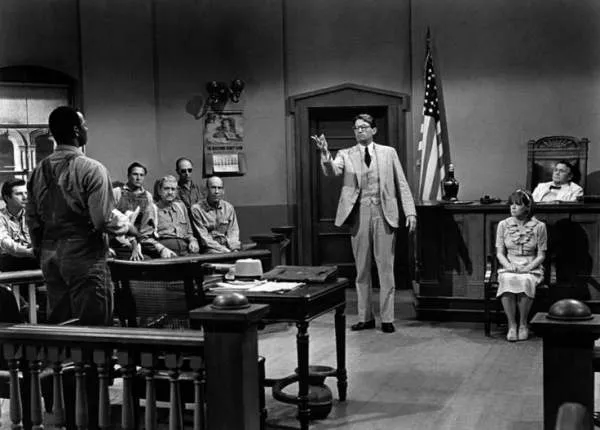
Through four films—the most recent of which is the 1962 adaptation of *To Kill a Mockingbird*—we can see how being part of the majority triggers the dynamics of criminal behavior, as reflected in cinema. The characters we identify as heroes in these films are the ones who question and refuse to be swept along by the flow of the crowd. This allows us to characteristically describe them as the minority and the isolated individuals standing against the masses.
The four films are:
*Fury* (1936), which tells the story of a mob seeking to restore its honor following child rapes in their town by punishing the suspect they’ve captured;
*The Ox-Bow Incident* (1943), the story of the friends and loved ones of Kinkaid—a well-connected, beloved, and wealthy businessman—seeking revenge after his murder and the theft of his property;
*12 Angry Men* (1957), which depicts the difficult hours faced by 12 jurors striving to ensure a fair trial for a young man suspected of killing his father;
And *To Kill a Mockingbird* (1962), which tells the story of Atticus, who views defending Tom Robinson—accused of rape—as a humanitarian duty.
In this analysis, the elements of crime—the crime itself, the criminal, the crowd, the hero, and the ending—found in these four films will be examined separately, followed by a general conclusion.
The Element of Crime
In none of the films do we witness the crime graphically. In fact, in all four films, not a single character—let alone the audience—is an explicit witness to even one of the crimes committed. This is, in fact, very appropriate from a narrative perspective. By reducing crime to a mere ordinary element of the story, it is removed from the climaxes. Other elements—such as democracy, lynching, society, and justice—begin to take center stage in place of this ordinary element. Character development and climaxes can be easily created through shifts in whether the accused person is guilty or not. By leaving the audience, much like the accused characters in the film, in the dark, the film facilitates the development of empathy between the characters and the audience.
In *Fury*, the crime committed is the sexual abuse of a child. Although the crime was committed after the film begins, the audience does not witness it. In the film, the audience—like the townspeople—is informed of the child rapes. Joe Wilson, who happens to be passing by the scene of the rapes by mere coincidence, is arrested on suspicion of being the culprit. In a film that is not particularly full of surprises, the audience—who is certain of Joe Wilson’s innocence—knows from the very beginning that the angry mob, convinced of his guilt, is on the wrong side. In other words, the audience and the mob in the film are on opposite sides.
In *The Ox-Bow Incident*, the crime consists of the murder of Kinkaid—a well-known, wealthy man with a wide social circle—and the subsequent theft of his cattle. The crime was committed before the film’s story even begins. Neither the audience nor the crowd witnessed the crime. Both the audience and the crowd are aware of the crime. However, unlike in *Fury*, neither the audience nor the crowd has any information regarding whether the group of three travelers who were apprehended as suspects is actually guilty. Compared to *Fury*, the audience and the crowd are positioned closer to one another.
*12 Angry Men* and *The Ox-Bow Incident* share similarities regarding the positioning of the audience and the crowd in relation to the crime. In *12 Angry Men*, a man is murdered. The man’s son is held responsible for his death. The crime was committed before the film begins. And again, neither the audience nor the crowd can be said to have witnessed the crime. Both are merely aware of it. The audience and the crowd are positioned close to one another.
In *To Kill a Mockingbird*, the crime is the sexual assault of a white woman. A Black man is portrayed as the rapist and is on trial as the defendant. The crime again took place before the story begins. Again, it is not witnessed by the audience or the crowd. Neither the crowd nor the audience has any information about who is guilty. Although the audience and the crowd may appear to be on the same side due to these uncertainties, the main reason the crowd views the Black man as guilty is clearly rooted in racism; therefore, a sharp distinction can actually be drawn between the two sides —setting aside the racist viewers—.
When examining the positioning of the viewer and the crowd, the further the distance between them widens, the further back in time the issue the viewer is questioning goes, and the more sharply defined it becomes. For example, in *Fury*, the viewer is almost certain of the innocence of Joe Wilson, who is portrayed as the guilty party. Despite this, the mob wants Joe Wilson dead. Here, the viewer focuses more on the right to life and the culture of lynching than on justice. When we look at *12 Angry Men*—which positions the viewer and the crowd at a closer distance—the issue shifts more toward ethics and a fair trial from the viewer’s perspective. Nevertheless, in both films, the likely punishment for the accused is the same: death.
The Guilty
In all four films, although it is not definitively proven, the characters initially portrayed as guilty are ultimately found to be innocent by the end of the film, or their innocence is revealed. This situation provides an excellent opportunity for character development. Character development applies not only to those perceived as guilty but also to those who accuse them and those who defend their innocence. In other words, by focusing on a single character, the changes in that character—along with the element of justice—become a catalyst for the growth of all parties involved. It’s worth singling out *Fury* here, because in *Fury*, the innocence of the accused is more evident to the audience. At the same time, in the second half of the film, a genuine element of guilt begins to emerge regarding Joe Wilson, who is viewed as guilty by the crowd. For this reason, the character developments are compressed into the film’s second half.
*Fury* begins with the marriage plans of two lovers who may one day have children. When Katherine Grant moves to another region to earn more money, the couple grows apart even though they do not break up. That is, until Joe Wilson saves up enough money through his business to marry her and decides to go to Katherine Grant. While driving toward his future wife, a series of coincidences leads to him being mistaken for a long-sought-after child molester and thrown into the town jail. Although the sheriff and his deputy have “conclusive” (!) evidence—such as his passing through the crime scene and peanut shells in his pocket—we, as the audience, know that Joe Wilson is innocent. He and his fiancée have been working in separate places for months to save money, and getting married is their ultimate goal. This journey will culminate in their marriage. The audience witnesses all of this, but at the same time, none of these details are sufficient to prove his innocence. Since Joe Wilson is in the same position as the audience, he cannot prove his innocence to the sheriff and his deputy. And to ensure he receives a fair trial, the sheriff has him thrown in jail.
The culprit is a stranger who is not part of the crowd. He is someone they picked up along the way.
Among the four films, *The Ox-Bow Incident* is the one in which the audience is most skeptical of the guilt of those portrayed as the culprits. Following the death of the wealthy and beloved Kinkaid, the crowd pours into the streets. Kinkaid serves as an avatar for this community—an idol, a target, and a source of motivation. For this reason, the attack is directed more against the community than against Kinkaid himself (!). The crowd sets out to search for the killer(s). They come across a group of three people staying in the countryside with their horses, who are asleep. When they question the trio, the answers they receive are highly suspicious. Not a single claim can be substantiated by the trio, who are bound and restrained. Martin stands out among the three. He has been made a particularly prominent character because he is normally the leader of his team, has a family he would leave behind, and has internalized a sense of justice more deeply than anyone else present. Martin takes on the role of spokesperson for the trio. One of the two people who know where they came from and where they were going is Kinkaid, the very man they are accused of killing. The other is Martin’s wife, who is so far away that he couldn’t possibly reach her. There is no receipt for the cattle they bought from Kinkaid—which, in the eyes of the crowd, means they stole it. A gun belonging to Kinkaid, which the Mexican—one of the trio—found along the way, is discovered on his person. The third member of the trio, the old man, is a senile old man who doesn’t even realize what he’s saying.
The criminals are, once again, strangers who were stopped on the road.
In *12 Angry Men*, the defendant is a child. He had argued with his father before his father was killed. According to witnesses, he shouted at his father, “I’ll kill you!” He himself confirms that he shouted this. Furthermore, his father was killed with a knife (or something similar) that the boy had just purchased. There is also a woman who witnessed the murder and claims to have seen the boy kill his father with her own eyes. The boy has been unable to prove that he was elsewhere at the time of his father’s murder.
This boy is a bundle of problems: he grew up in the slums, is uneducated, has a criminal record, has been involved in knife fights before, and frequently argued with his father.
To the masses, he belongs to a socially and economically marginalized class and is therefore an outsider—more than just an outsider, but among those who deserve to be punished from birth.
In *To Kill a Mockingbird*, the crime involves the sexual assault of a white woman. We encounter the accused, Tom Robinson, much later than in the first three films. Tom Robinson is a Black man who works in the fields in the countryside. He has been accused of rape and assault by a woman he regularly helped. Just as in the other films, there is, of course, little way to prove his innocence—or his guilt, for that matter.
Tom Robinson is Black. He is an outsider in an America that has not yet fully shaken off racism.
When you look at movies, criminals are either outsiders or undesirables. Their crimes, however, are never serious offenses. For example, you won’t find serious fraud, tax evasion, money laundering, or political crimes in these films. The reason for this is that, although the criminals are viewed by the masses as outsiders, they are actually people just like them. These are crimes that were frequently committed by the masses of that era anyway.
The Crowd
In all four films, the crowd’s greatest concern is the need for a sense of purification—even though they themselves are not pure (and perhaps precisely for this reason). To the crowd, paying a price or making a sacrifice seems a far more appropriate way to achieve purification. For this reason, those who are not like them—those viewed as outsiders—are constantly sent to their deaths. The aim is to establish a supposedly proper social structure. Crimes committed against these outsiders, however, will generally be lost within the system—specifically, within a democratic system where the majority holds the decision-making power. When committed by the crowd, a crime is merely a minor act of recklessness.
Chronologically speaking, the behavior of crowds in films, thankfully, shows signs of progress.
*Fury* was released in 1936. The mob chooses to burn the criminal. This is actually the manifestation of a medieval tradition, as seen in *Monty Python and the Holy Grail*. In fact, the mob in *Monty Python and the Holy Grail* is quite similar to the caricatured mob depicted there. This execution is a form of entertainment for them. As in *The Ox-Bow Incident*, there is not even a semblance of a trial by the mob.
*The Ox-Bow Incident* was released in 1943. The mob interrogates and judges the accused among themselves. In fact, the individuals making up the entire mob take on roles such as law enforcement, a jury, and an execution squad as they progress through certain stages. Considering the rural setting and the era in question, this is not an entirely unreasonable situation. Of course, this situation cannot overshadow the sense of catharsis. This time, the criminals are not burned at the stake but are instead punished by hanging—a method that is still accepted in some form even today.
*12 Angry Men* was released in 1957. In this film, the crowd is both within and outside the frame. The crowd consists of 11 of the 12 jurors, and these 11 members are actually both misguided by the witnesses and, driven by ulterior motives, collaborate with them behind the scenes. Just as the crowds mentioned above demand a scapegoat for catharsis, the decision—since the matter has been brought before the court—will ultimately come from the jury, whose views are not all that far removed from those of the witnesses. With the distorted testimonies, more than enough grounds have been presented for the 11 members on the inside to reach a verdict of execution. The jurors come from completely different backgrounds. Nevertheless, when it comes to matching the character to the crime, they all manage to draw their own conclusions from the evidence presented. In *12 Angry Men*, the execution will be carried out by electric chair.
*To Kill a Mockingbird* was released in 1962. Although the mob—much like in *Fury*—gathers at the prison where the defendant is being held, pressing against the gate in preparation for a lynching, it is actually quite fragile. Atticus’s young daughter’s quiet, understated speech breaks their resolve. The small group within the crowd—the victims of the rape—will not back down until the film’s final scene.
The mob’s belief that their own majority constitutes the greatest justification for accusing individuals stems from a misinterpretation of their democratic rights. The majority sees this person as guilty; therefore, at that moment, this person is guilty. And if that is the case, and the majority wants the guilty party punished, then the guilty party must be punished. This is likely the most misunderstood aspect of democracy even today. If you’re part of the majority, you can get whatever you want. These desires, however, consist solely of more radical errors triggered by a constant stream of mistakes. The fact that individuals, as part of the majority, possess the ability to commit crimes becomes the greatest source of pleasure. Massacres will turn into rituals, and rituals will ultimately turn into parties. The analysis from a completely different movie—*Monty Python and the Holy Grail*—is very clear.
The Hero and the End
The following are the heroes within the story. Despite everything, even if they are not certain of their own innocence, they stand by the accused—not to secure their release, but to ensure they are tried fairly. Although the impulse to stand up against injustice exists in all of us intellectually, very few are actually able to reject the will of the crowd and take action because they believe it is the right thing to do. Generally, however, all that happens is turning a blind eye, turning a deaf ear, remaining ignorant, or simply crying.
Because of the different qualities of heroes in movies, we can view the crowd from different perspectives. We can view the hero and the crowd through the eyes of the criminal in *Fury*, through the eyes of the dissidents within the crowd in *The Ox-Bow Incident*, through the eyes of a juror—the decision-maker—in *12 Angry Men*, and in *To Kill a Mockingbird*, through the eyes of the defendant’s attorney. This diversity provides us with a comprehensive perspective that allows us to see the entire issue.
Although *Fury* may be the first example, it contributes the most to this perspective. Joe Wilson, who was imprisoned for child rape while on his way to meet his fiancée, Katherine Grant, is targeted for lynching by the mob. But the mob isn’t satisfied with that and sets him on fire. Although he is believed to have died in the flames, Joe Wilson manages to escape from the prison that was blown up and set ablaze. He must seek revenge for the injustice done to him. He must experience his own redemption. Joe Wilson, who had been innocent and victimized up until that point, suddenly becomes a microcosm of the very mob that victimized him. Keeping his survival a secret and using his loved ones, he sues the entire town (that is, the film’s initial crowd), attempting to punish them as if his non-existent death had actually occurred. And he succeeds. Although the crowd initially burned a man to death, they later find themselves on the brink of being punished for a crime they did not actually commit. In the second half of the film, the audience begins to empathize with the crowd. And this time, Joe Wilson—who was previously seen as the hero—becomes the villain. Although Joe Wilson’s attempt to punish the mob—and his success—may seem to us like the result of being in the right rather than being part of the mob, the situation is different from what it appears to be. The moments when Joe Wilson was thought to have been burned were captured on film. While not a single defendant could be identified until the film footage was presented in court, the camera footage made it possible to identify each person individually. In other words, the concept of an “unaccountable mob” has disappeared, replaced by accountable individuals. Once again, it is the individual who loses. Just as the individuals making up the crowd were about to be punished one by one, Joe Wilson arrives in the courtroom thanks to his future wife, Katherine Grant, and reveals the truth.
In *The Ox-Bow Incident*, there are different people at different times in the film who stand up against injustice. We can see all of them together in a single frame only once. When the time for execution in the open field arrives, a vote is held within the crowd to decide whether the accused should be brought to trial or executed on the spot. During the vote, seven people from the crowd step to the other side to argue that a fair trial must be conducted and that they must wait for it. Although outnumbered, they managed to avoid being implicated in the truth that would emerge at the end of the film. The punishment is carried out according to the majority’s will, and the strangers are hanged. Shortly thereafter, however, the crowd encounters the sheriff and learns that the people they hanged were innocent. Although the seven men appear to be heroes, they have not succeeded. Nevertheless, there is one person who has succeeded: Donald Martin, who was seen as the ringleader of those executed. The letter he wrote to his wife will be read aloud by the crowd at the end of the film, and the impact it leaves will never be erased from cinematic history.
The scene where the seven refuse to carry out the execution is critically important in highlighting that merely having an opinion is not enough—taking action is essential. This is because among those who remain silent as the execution takes place, there are far too many who are neutral or hesitant. They are simply those who choose the comfort of siding with the majority; ultimately, they are guilty.
In *12 Angry Men*, we find ourselves inside the jury room. The boy in the defendant’s chair is an uneducated Black man from the inner city with a criminal record, accused of killing his father. When the jury enters the room to deliberate, a vote is taken on whether to sentence him to death. The decision, which must be unanimous, will be carried out. While all but one juror are likely convinced of the boy’s guilt and vote for the death penalty, one person asserts that the boy is innocent. The eighth juror, as he later explains, simply wanted to give the boy a chance. In a cramped room, sweltering with heat and humidity, he stood face-to-face with 11 jurors holding opposing views—whom he didn’t know—for what some might consider a trivial matter. He argued with each of the 11 jurors one by one, trying to overturn their decision to sentence the boy to death. Looking at the 11 jurors, one might even believe that the Black boy deserved to be executed for 11 different reasons. Disregarding his father, disrespecting elders, a troubled past, coming from a rough neighborhood, buying a knife, and even failing to remember the name of the movie he saw that night are just a few of them. The 8th juror’s outbursts in defense of the boy actually turn into an analysis of the other jurors—and, by extension, society at large. The crowd is the culprit.
In *To Kill a Mockingbird*, Attorney Atticus is our hero. Defending a black man accused of rape—that is, being the “unwanted man” from the very start—unfolds differently for Atticus than it does in other films. This case is offered to him by Judge Taylor, his superior, almost as a fait accompli. Atticus has the chance to refuse, but he does not want to shirk his duty. Ultimately, he will work to ensure justice is served, no matter which side he is on. Atticus goes beyond the call of duty to protect his client, saving him from a lynching attempt. He is taking on a lost cause. Even accepting the case would have been enough to earn him admiration, yet he successfully conducts his defense and actually proves that his client could not have committed the crime. However, the jury finds his client guilty. Just as they are about to pursue an appeal, news arrives that his client escaped during a transfer and was shot and killed by the police. Although the exact circumstances of this death remain unclear, the fact remains that, in the eyes of the white community, a black rapist has been killed. The matter is closed.
Conclusion
Told through four films—even though there are people who deserve the death penalty—this is the story of the struggle of those who refuse to conform to the crowd. As crime and its perpetrators are quickly stylized, becoming the arena in which this struggle is waged, the crowd and those who resist begin to be glorified within the film. For this reason, the outcomes and the identities of the actual criminals lose their significance. What matters is who can resist and take action; what matters is how much the crowd can evolve and move away from its very nature as a crowd. Films serve as roadmaps for those who reject what is imposed upon them. In all four films, those who resist go through a journey ranging from being left alone to facing threats and physical violence. Despite this, they never back down in any of them.
Additional Notes:
When viewed in chronological order, the four films offer us the opportunity to observe the process of rejection through the eyes of a stranger, the crowd, the jury, and finally, a lawyer. Nevertheless, if we set *To Kill a Mockingbird* aside, we can still find ourselves examining the subject through the eyes of the accused, the outsider, and the crowd in the same chronological order. The films’ narratives make this possible.
Every film contains narrative layers that are just as rich as its crime plot. In *Fury*, the psychological turmoil experienced by Joe Wilson; in *The Ox-Bow Incident*, the relationship between Maj. Tetley and his son Gerald Tetley; in *12 Angry Men*, the past of the third juror’s child and the character of the eighth juror; and in *To Kill a Mockingbird*, Scout and Jem’s introduction to life through Atticus. jury member’s past and his relationship with his child, and the character of the eighth juror; and in *To Kill a Mockingbird*, the coming-of-age stories of Atticus’s children, Scout and Jem—these are among the most prominent examples.
In all four films, those portrayed as guilty were found innocent or came very close to having their innocence proven. The real culprits were not even mentioned. With these characteristics, the films transcend the genre of crime films. The focus is centered on denial.
In various scenes throughout the films, crowds that point the finger at the accused are revealed to have actually committed crimes themselves. At the same time, the crowds that go to such lengths to send the wrong person to their death have, in fact, merely diverted attention and increased the real culprits’ freedom of movement.
When viewed in chronological order, an evolution in the crowd’s approach is also evident. In *The Fury* (1936), the culprit is to be punished by being burned at the stake without a trial. In *The Ox-Bow Incident* (1943), the crowd conducts a superficial investigation of the accused and seeks to hang him. In *12 Angry Men* (1957), there is a fair trial process, yet the child is still sentenced to death. In *To Kill a Mockingbird* (1962), there is again a fair trial, and the film depicts a court process that could lead to an appeal.
Despite these four films, there may still be other films worth watching to understand what triggers the act of rejection. Robert Bresson’s *Procès de Jeanne d’Arc*, which recounts the trial of Saint Joan of Arc, and *M* by Fritz Lang—who also directed *Fury*—could serve as complementary additions to this series.
Related Films
Home
Film
Curation
Criticism
Menu