French Impressionism
0
Films
0 min.
Read Time
1.9k
Views
Contents
Introduction: French Impressionism
Following the Cinema of Attractions and Film d’Art, France was home to another movement that shaped cinema. French Impressionism, an avant-garde movement, soon replaced the Film d’Art movement, which rose to prominence with adaptations of theatre productions. French Impressionism was going to provide its audience with a cinema experience very similar to today’s cinema at a fairly early stage in the history of cinema.
BM
Bahadır Mahmut
Curator
Related Movements & Themes
14k reads
Kara Filmler (Film Noir) Listesi
120k reads
Klasik Filmler Listesi
What Is French Impressionism?
French Impressionism is a movement that has been formed with non-narrative avant-garde movements and carries the innovative cinematic language to the main movement. Cinema techniques developed in avant-garde movements have been conveyed to a larger audience in France with the narrative structure of French Impressionism.
Origin of the Term İzlenimcilik
French Impressionism was an art movement that emerged in the 1870s and 1880s. In this movement, the artists who produced works moved away from reality in their depictions and produced depictions and narrations in accordance with the feeling they wanted to be perceived. To put it simply, instead of depicting the facts, there was a depiction in accordance with the desired emotion to appear in an art lover. Over time, the movement made ground in many art disciplines, including cinema.
Claude Monet, Impression, soleil levant (Impression, Sunrise)
The word impressionism is used to describe this method of depiction and narration in art disciplines.
Historical Development of the French Impressionism Movement
Background
There were many different cinema movements in France in the late 19th and early 20th centuries. Cinema of Attractions and Film d’Art were the two most prominent of these movements. Especially with the Film d’Art, cinema transformed into an industry in France. The world’s largest studios such as Pathé and Gaumont, as well as some of the world’s most important movie theatres, were in France. Alongside main movements, many avant-garde movements also found their way into the French cinema.
In parallel to the financial ecosystem created by the Film d’Art, avant-garde cinema was also on the rise. Although avant-garde cinema was on the rise across Europe compared to Hollywood cinema, the diversity in France was greater than in other countries. There were many films shot in non-narrative avant-garde movements such as Surrealism, Dada and Cinema Pure in France. Avant-garde movements were not the main movements. They did not have very large audiences, distribution networks or large production budgets, but they were critical for cinema. Avant-garde movements were a field where the experimental experience of cinema was accumulated. The ones who produced works in this field were filmmakers who could not be included in the main movement, did not want to be included or wanted to change it. Examples are Abel Gance, Jean Epstein, Marcel L’Herbier, and others.
With Avant-garde cinema, the components of cinema such as camera movement, shape, light, rhythm, frame and narrative changed in an unprecedented way. The cinematic components within the films were manipulated at an advanced level, removed from the film or made the main element of the film. All these took place within the motivation to create an aesthetic cinematic language. Over time, the techniques of non-narrative movements such as Surrealist Cinema, Dada Film and Cinema Pure in avant-garde cinema were conveyed to the main movement. In this transfer, French Impressionism played an important role with its narrative structure.
French soldiers march past the Petit Palais (1916)
Before and after the First World War, like in all other European countries, filmmakers in France were assigned by the state to the battle line. Filmmakers and cinema equipment were used for documentation purposes on the battlefield. This meant a halt to the cinema industry for France. Pathé, which started with the equipment business and became one of the world’s largest production companies, and its biggest rival, Gaumont, were significantly affected by the 1st World War.
Pathé and Gaumont had large movie theatres that they set up especially for the Film d’Art. The decline in film production due to the shifting of the crew and equipment to the 1st World War caused the movie theatres to remain empty. The resulting film deficit opened up a wide screening area for Hollywood movies. During and after the war, Hollywood films were watched much more than French films. Many of the French filmmakers who could not find a place in their own movie theatres began to pattern their films after Hollywood films. This happened not only in France but also in all European countries with cinemas.
Beginnings
French cinema was affected by many negativities such as the expansionist policy of Hollywood cinema, the Film d’Art movement that brought the cinema under the influence of capital, and the 1st World War. Despite everything, some companies continued to support innovative directors such as Abel Gance, Louis Delluc, Germaine Dulac, Marcel L’Herbier and Jean Epstein, who did not lose their artistic motivation. Some of these directors responded to all negativity and obstacles with the French Impressionism movement.
Abel Gance
Before innovative directors, cinema turned into an extension of theatre or literature, especially under the influence of the Film d’Art movement. The talents of cinema were put aside and theatrical productions or literary works were filmed. Innovative directors argued that cinema should feed on itself and its techniques should come out within itself. Gance, Delluc, Dulac, L’Herbier, Epstein, and other leading directors of the movement began to put this perspective into practice in many avant-garde movements, particularly French Impressionism.
It was very difficult for avant-garde productions to find a place in the French cinema industry shaped by Pathé and Gaumont. Non-narrative avant-garde movements were not easy to understand for the audience of main movement films. Watching these films despite their short duration required serious effort. The narrative, which was the most important habit of the audience, was not in the film. The shootings could be disturbing because they were experimental. Funding for non-narrative avant-garde films was difficult because the audience could not watch these films. Impressionist films increased the viewing rate of avant-garde films by main movement audiences with their narrative-including structures. Thus, both avant-garde approach met with the audience and avant-garde films started to be funded.
Main Period
There were many financial difficulties during the main period of the French Impressionism movement. Directors developed different funding methods in order to continue producing in an avant-garde movement that is not accepted by the main movement.
Some impressionist directors had the opportunity to divide their time between avant-garde projects and more profit-oriented films. For example, Germaine Dulac, who spent most of his career producing traditional dramas, made some notable Impressionist films, including La souriante Madame Beudet (The Smiling Madame Beudet) (1923) and Gossette (1923). Similarly, Jean Epstein, one of the leading directors of French Impressionism, directed many costume films. Jacques Feyder was among the commercially successful French directors in the 1920s and besides this, he managed to shoot very important Impressionist films.
Abel Gance began his career as a screenwriter in 1911 and made his first impressionist film in 1918. Later, he started his own production company and got the chance to make a lot more impressionist films in number.
Some directors, on the other hand, founded their own companies and continued to produce impressionist films. After his successful work for Pathé, Gance founded Films Abel Gance in 1919. In 1922, Marcel L’Herbier founded Cinegraphic after a conflict with Gaumont over Don Juan et Faust (1922). This company was involved in the production of many of L ‘Herbier’s later works. Epstein founded Les Films Jean Epstein in 1926. He made some of the most important films of the Impressionist movement with this company.
Main movement companies also contributed to impressionist films. Gaumont, who created Théâtro-Film, earned most of his money from TV series shot by Louis Feuillade. Some of this money was transferred to the films of the impressionist directors. For example, some of the films of Marcel L’Herbier, whose first work Rose-France (1919) was an impressionist film, were brought to life by Gaumont. The films that have been supported financially did not attract much attention. But these films were crucial to the rise of avant-garde cinema and ultimately French cinema.
Another company, although not of French origin, made great contributions to impressionism in its early years. After the October Revolution, the Russian production group Yermoliev, who fled Russia after the Soviet Government nationalized the film industry, settled in Paris in 1920. Yermoliev changed its name to Films Albatros in 1922. Although Films Albatros shot popular fantasies and melodramas, it also undertook the production of some impressionist films.
Another source of funding for films was to establish small cinema clubs. There were directors appearing in closed groups who were able to make successful films independently by screening avant-garde films.
Soviet Rhythmic Montage
While the French Impressionism movement continued its development, it was also influenced by other movements. French Impressionism was characterized by the pictorial movement from 1918 to 1922, and the Soviet Rhythmic Montage in parallel with the rise of Soviet Montage cinema from 1923 to 1925.
The End of the French Impressionism Movement
The positive results of the innovative approach brought to the main movement by avant-garde features gave the impressionist filmmakers the hope that their films would outpace Hollywood films. With this motivation, a lot of financial burden and responsibility was taken and films were made. But making money through impressionist films was generally not easy. The audience preferred Hollywood films. Impressionist films were sometimes difficult to understand due to their avant-garde components. The failure of the expected success at the box office economically eroded the impressionist directors and filmmakers. The continued impact of the war economy was also one of the economic difficulties.
Some impressionist filmmakers brought their films closer to the main movement in order to escape the economic downturn. Many directors gave up their independence. But that did not work either. By 1929, many producers and companies were on the verge of bankruptcy.
The arrival of talking pictures in the cinema affected a lot of things during this period. Impressionist filmmakers focused on conveying emotion using visual narration techniques. With the advent of sound technology in the cinema, it was possible to convey the emotion to the audience without the need for any visual narration technique. This was, in general, inconsistent with the method of impressionism. Although the audience improved their approach to impressionist films over time, watching talking films was a brand new experience. The audience preferred to focus on main movement films where they could best experience talking films instead of impressionist films.
With the sound coming into the cinema, the technical team and equipment needs arose. Workload and duration of employment increased at every stage of production. As a result, film production costs also increased. The French film industry contracted financially and there was no more spending on avant-garde movements, including French Impressionism. Impressionist filmmakers and companies either went bankrupt or were sold to large companies. With these developments, the number of impressionist films produced decreased considerably.
Characteristics of the French Impressionism Movement
Impressionist Theory
The main purpose of the impressionist films was not to leave the transfer of emotion between the film and the audience to the statements of the characters or the very expressive acting performances. It was intended to use the abilities of cinema to convey emotion and create the character. Impressionist films conveyed the emotion they had to convey by successfully using the camera, light, depth of field, time-space shifts, effects, montage and other techniques.
The techniques used in French Impressionism are classified by David Bordwell as follows.
1.
Camerawork
1.1. Camera distance: close-up (as synecdoche, symbol or subjective image)
1.2. Camera angle (high or low)
1.3. Camera movement (independent of subject, for graphic effects, point of view)
1.
Mise-en-scene
2.1. Lighting (single source, shadows indicating off-screen actions, variety of lighting situations)
2.2. Décor
2.3. Arrangement and movement of figures in space
1.
Optical devices
3.1. As transitions
3.2. As magical effects
3.3. As emphasizing significant details
3.4. As pictoral decoration
3.5. As conveyors of abstract meanings
3.6. As indications of objectivity (mental images, semi-subjective images, optical subjectivity)
1.
Characteristic editing patterns
4.1. Temporal relations between shots (Flashback or fantasy)
4.2. Spatial relation between shots (synthetic, glance/object, crosscutting)
1.
Rhythmic relations between shots
French Impressionism was not only in response to movements such as Film d’Art, but also to Hollywood cinema, which was spreading rapidly in France and all over Europe. Impressionist films cared about conveying emotions as well as narrating events. In Impressionist films, manipulating storyline and subjectivity, using flashbacks, making memories and dreams part of the story, using optical techniques, special effects, and camera movements in unusual ways were important tools of narration and emotion transfer.
La souriante Madame Beudet (1923) consists almost entirely of the main character’s fantasy life and her imaginary escape from a dull marriage.
In La Roue
In La Roue (1923), Norma’s image appears on the smoke of the locomotive engineer who fell in love with her.
In L’argent (1928), L’Herbier’s camera floats through gigantic rooms then ironically falls from the dome of the Paris stock exchange towards the crowd.
These and many more were techniques that provided important gains for the transfer of emotion in cinema. Adjusting the plan times according to the emotion to be conveyed, screen ratios, moving the camera on cars, rails or locomotives to give the camera dolly experience, diversification of lens use, use of filters or distorted shots, shadows, dark areas, and depth of field formed the characteristic structure of impressionist films.
The biggest reason impressionist films successfully used unconventional techniques was because of their avant-garde backgrounds. Impressionist films used the techniques that had been used and developed for a long time in avant-garde movements, within the narrative structure. In doing so, it effectively benefited both storytelling and avant-garde movements. French Impressionism’s narrative avant-garde structure evolved in a way that can be accepted by audiences caught between Hollywood and Film d’Art films. Eventually, it took place in the history of cinema as a widely accepted movement.
Influences of the French Impressionism Movement
The revolutionary approaches brought by French Impressionism caused the emergence/shaping of different trends and movements in cinema. German Expressionism, Film Noir, and Soviet Montage cinema were among the early cinema movements where the effects of impressionist cinema were prominently noticeable. Over time, the impressionist theory became a theory that became valid for the whole of cinema.
German Expressionist filmmakers were greatly impressed by the narrative techniques of the French Impressionist theory. Many of these narrative techniques were transferred to German Expressionism and continued to be developed and used.
These techniques developed by German Expressionism were later taken to America with Film Noir. With Neo Noir and Future Noir, which came after Film Noir, other sub-movements were prominently shaped by the impressionist theory. The influences of French Impressionism had a wide impact on cinema that has survived to this day. The methods of conveying emotion and understanding the personality of the character permanently changed in cinema.
Best French Impressionism Directors
•
Abel Gance
•
Jacques Feyder
•
Jean Epstein
•
Marcel L’Herbier
•
Jean Renoir
Best French Impressionism Films
References and Further Reading
Routledge
Wikipedia
Cinecollage
European Film Theory and Cinema: A Critical Introduction
By Ian Aitken
Selection List
Curator's Order
1. El Dorado (1921) – Marcel L'Herbier
The scent of tobacco rising from the sweltering streets of Andalusia and the weary dance moves echo through a gloomy cabaret in the back alleys of Granada. As a mother struggling with an abortion turns her helplessness into a battle for survival under dim lights, masks are worn on the city’s affluent streets.
This drama, bearing the signature of Marcel L'Herbier, intertwines lives caught between the cold walls of the aristocracy and the harsh reality of poverty. Secret meetings and secrets hidden in the shadow of the Alhambra drag the characters toward an inevitable reckoning as the night deepens.
2. Nana (1926) – Jean Renoir
When a quiet sense of disappointment replaces the applause on the stage of the Théâtre des Variétés, the real curtain rises for Nana. Leaving the dust of the stage behind her as she steps into the backstage world of the aristocracy, the young woman turns her charm into a weapon. This ascent, which captivates the minds of influential figures like Count Moffat, is a dangerous game echoing through the opulent salons of Paris.
This drama, directed by Jean Renoir, shines a spotlight on the decay lurking behind the glamorous facade of 19th-century France. As an adaptation of a novel, it brings to the screen the character’s ambition for social climbing and the web of artificial relationships woven around her. Beneath the dazzling costumes and glittering salons, a story of inevitable corruption—driven by human desire—unfolds silently.
3. L'Argent (1928) – Marcel L'Herbier
As the cold sound of money echoes through the marble halls of the Paris Stock Exchange, the massive gears begin to turn. Speculations born of a thousand and one ambitions and the cutthroat world of traders lay bare the decay of the first quarter of the twentieth century. In this black-and-white drama, director Marcel L’Herbier documents with detached objectivity how financial capital grinds down the human spirit.
Nicolas Saccard, at the center of capital and ambition, devises a risky game as he struggles to stay ahead of his rivals. This cycle, into which the aviator Jacques Hamelin is also drawn, reveals the loneliness behind great fortunes and the destruction born of greed.
4. The Fall of the House of Usher (1928) – Jean Epstein
As Roderick Usher races against time to break the pitch-black curse of his lineage, the walls of the crumbling mansion seem to stop breathing. Adapted from Edgar Allan Poe’s timeless novel, this silent film draws the audience into a slow, psychological descent into madness.
Directed by Jean Epstein, this horror film builds tension through the gloomy atmosphere deep within the mansion and a strange portrait. Every detail places the burden carried by the characters squarely on our shoulders.
5. Napoleon (1927) – Abel Gance
This is a breathless portrait that spans from his childhood days—when a snowball fight under the snow turned into a massive military campaign—to the turbulent days in Paris when the revolution spilled into the streets. Amid the labyrinth of 18th-century politics shaped in the shadow of the guillotine, the ambitious steps of a military academy cadet gradually lead him toward the empire.
Directed by Abel Gance, this historical epic brings the complex atmosphere of the era to the screen with the overwhelming power of black-and-white frames. Spanning from the Toulon front to the dusty roads of Italy, this military and biographical narrative plunges the audience right into the heart of the revolutionary storm.
6. The Late Mathias Pascal (1925) – Marcel L'Herbier
His married life, spent in the shadow of a domineering mother-in-law, turns into an unbearable dead end for Mathias as his safe havens at home crumble one by one. Directed by Marcel L'Herbier, this silent film follows a man shaken by a series of blows dealt by fate, leading him all the way to the casinos of Monte Carlo. Returning with his newly acquired fortune, he stumbles upon his own obituary in his hometown, and a nameless body dumped in the river offers him a brand-new identity. This fragile freedom, severed entirely from old ties, is an attempt to build a new life amidst the ghosts of the past.
7. The Little Match Girl (1928) – Jean Renoir
In the freezing cold of New Year’s Eve, a homeless little girl tries to sell the matches she holds in her hands on the snow-covered streets. Jean Renoir reimagines Hans Christian Andersen’s fairy tale in this short film format through black-and-white frames, plunging the viewer into the heart of a ruthless urban loneliness.
Every single match she lights to warm herself when she finds a secluded corner to take shelter creates fleeting dreams that open up beyond the cold reality. This dramatic and fantastical atmosphere, oscillating between the harsh walls of reality and the sanctuaries of the imagination, draws the viewer into a quiet melancholy.
8. The Three-Sided Mirror (1927) – Jean Epstein
The mind of a wealthy businessman is torn apart by the traces left by three different women who enter his life one after another. In this drama and romance directed by Jean Epstein, the characters Pearl, Athalia, and Lucie are not merely objects of desire, but become mirrors in which the man loses himself within his own inner world. Shaped by the avant-garde language of early cinema, this film depicts how each wave of passion pulls the character a little further away from his own reality. Amid visual layers and fluid transitions, the modern individual’s search for belonging envelops the viewer with a quiet yet jarring rhythm.
9. Faces of Children (1925) – Jacques Feyder
The biting cold of the Swiss Alps merges with the frozen anger within the inner world of a young boy. This drama, directed by Jacques Feyder, follows a boy who has lost his mother as his equilibrium is shaken by his father’s new marriage, all against the backdrop of the mountains. As the new stepmother and her daughter upend the old order of the household, the child navigates the boundaries of silent resistance. A sense of loss and jealousy turns into a suffocating gloom amidst the snow-capped peaks.
10. Six and a Half by Eleven (1927) – Jean Epstein
Jean Epstein turns his camera toward a perilous path that stretches from shadowy rooms to the stage lights. The tranquil lives unfolding in the medical offices are shaken to their core by the arrival of a singer.
As the siblings’ fates become entangled in the scent of stage dust and sudden decisions, drama and romance draw the audience into a quiet tension. Traces of the past and hidden photographs will change everything.
11. The Inhuman Woman (1924) – Marcel L'Herbier
In a mansion on the outskirts of Paris, there is a woman in the midst of a crowd, yet completely alien to them. As the famous singer Claire plays with the attention of the men surrounding her as if it were a game, her aloof demeanor weighs heavily on the atmosphere in the ballrooms. The arrival of a young scientist begins to upset the balance. Marcel L’Herbier portrays humanity’s inner coldness and relationships cast in the shadow of technology within an avant-garde dramatic universe. This dark loneliness behind the glitzy parties transforms into a visual experience that slowly draws the viewer in. Amid the reactions rising in the concert halls and news of death, the circle around Claire grows tighter.
12. Cœur fidèle (1923) – Jean Epstein
On the docks of Marseille, a faint melody echoes amid heavy machinery and waves. Jean Epstein, drawing on the full visual potential of French Impressionism, carries the essence of silent cinema into the farthest corners of the human soul. Marie’s bleak life at the port is weighed down by her fate, caught between two men.
On one side is Paul, lost in a wretched quagmire; on the other is Jean, an honest dockworker shaped by the harsh winds of the docks. Far from grand claims, this drama focuses on the contradictory and silent struggles of the human heart. The camera whispers the dust of the streets, the scent of alcohol, and dreams of escape onto the silver screen.
13. The Burning Crucible (1923) – Ivan Mosjoukine
The tension that stretches from the gloomy streets of Paris to the quiet of a country mansion takes root in the distant marriage of a wealthy industrialist and his wife, whose mind is filled with doubts. As Ivan Mosjoukine turns his camera on this bourgeois impasse, he weaves a strange puzzle that oscillates between comedy and drama.
While the young woman remains under the spell of the detective stories she has been reading, her husband brings that very same mysterious detective to her doorstep in an attempt to win her back. This bizarre chase, where reality and paranoia become intertwined, reveals the absurdity lurking behind the scenes.
14. La Belle Nivernaise (1924) – Jean Epstein
This is the sound of rusty iron carried by the wind on the deck of a barge gliding slowly across the water. Directed by Jean Epstein, this silent film examines the quiet bonds that blossom among lives swept along by the flow of rivers. As the distance between a young adopted boy and the captain’s daughter who takes him in gradually transforms into a different kind of feeling, the weary texture of the black-and-white imagery envelops everything.
15. La Roue (1923) – Abel Gance
It all begins with the rattling of the iron tracks and a heavy sorrow filtering through the steam. In the years when cinema was still silent, Abel Gance portrays the life of Sisyphus, a railroad worker, on the iron tracks and the great secret he keeps buried within himself. We witness the gradual inner decay of a father who, having rescued a girl from the midst of a train wreck and raised her as his own child, slowly crumbles from within as the years pass. This drama focuses on the darkest and quietest corners of the human soul.
As the roar of the tracks fills the house, the passions suppressed by a father’s love for his child become entangled. Suitors knocking on the young girl’s door only weigh down the burden on Sisyphus’s shoulders even further. The weariness in his eyes deepens a little more with every train that departs. This time, the engineer’s hands are not trying to stop a train, but the web of fate she has woven with her own hands.
16. Crainquebille (1922) – Jacques Feyder
For Jérôme Crainquebille, a street vegetable vendor who has spent forty years on the streets of Paris, life consists solely of the sound of his handcart’s wheels rolling over the cobblestones. One day, a minor altercation with the police is enough to set the massive machinery of bureaucracy in motion against him. This drama, penned by Jacques Feyder, brings to the streets, in all its raw honesty, the silent and helpless crushing of an ordinary man by the law. Stepping away from the glittering halls of justice, it opens the door to a quest for justice that echoes in the shadowy corners of Paris.
17. J'Accuse (1919) – Abel Gance
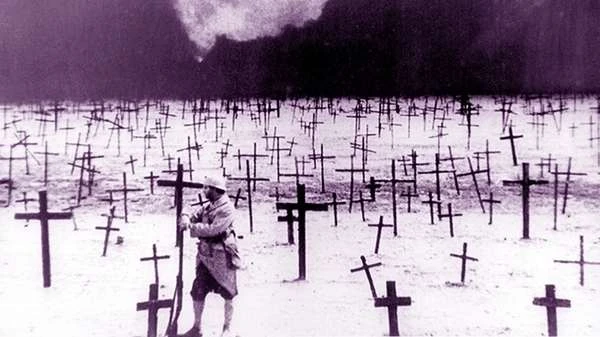
The smoke rising from the trenches and the exhausted faces lay bare the devastating reality of World War I. Abel Gance’s camera focuses on that narrow, muddy stretch of the front where the paths of two men, both in love with the same woman, cross. As the din of war swallows up their personal conflicts and jealousies, all that remains is the struggle for survival.
This silent film, which radically transformed the cinematic language of its time, directly conveys the era’s brutal atmosphere to the audience. Even the gaps created by fragmented and lost scenes do not disrupt the film’s harsh texture. This drama, which bears witness to one of history’s darkest periods, shows just how easily the human spirit can be broken.
18. The Tenth Symphony (1918) – Abel Gance
A dark secret echoing among the piano keys silently gnaws at the fragile peace within the house. Composer Enrid Damor is unaware of the dark shadows in his new wife’s past—until those shadows come knocking at the door, threatening her innocence with blackmail. In this drama from the early days of cinematic impressionism, Abel Gance weaves together musical notes and the darkest corners of the human soul. As the visual frames are crafted like canvases, jealousy and anger slowly transform into a symphony.
Related Movements & Themes
14k reads
Kara Filmler (Film Noir) Listesi
120k reads
Klasik Filmler Listesi
Home
Film
Curation
Criticism
Menu