Italian Neorealism
0
Films
0 min.
Read Time
1.7k
Views
Contents
Introduction: Italian Neorealism
Italian neorealism is a film movement that started after the fascist Benito Mussolini administration after the Second World War, in which the effects of the war and socio-economic collapse in Italy are conveyed. Italian neorealism is one of the cinema movements in which the foundations of today's modern cinema are laid.
BM
Bahadır Mahmut
Curator
Related Movements & Themes
120k reads
Klasik Filmler Listesi
What Is Italian Neorealism?
Telephone Bianchi films for propaganda and entertainment shot under the influence of the Mussolini regime, films imported from America and Italian films similar to American films were set between the realities of the country and the cinema audience. With the fall of Mussolini and the end of World War II, Italian film directors took to the streets to bring the realities of Italy to the cinema. These directors shot innovative films with non-professional actors in line with the economic, sociological, technical and financial opportunities of the period. These films, which would later affect many directors and film movements in the world, were categorized within the Italian neorealism movement.
Origin of the Term Yeni Gerçekçilik
The term neorealism refers to a new definition of reality in different art disciplines or a new methodology developed to convey reality. The concept of neorealism has found a place in Italy since the 1920s in literature and in cinema since the 1940s.
Historical Development of the Italian Neorealism Movement
Background
Benito Amilcare Andrea Mussolini, named after two Italian socialists (Andrea Costa and Amilcare Cipriani) by his blacksmith father, was raised with revolutionary and leftist views from his childhood. Even at a young age, Mussolini was violent, had personality disorders, and described himself as the chosen one. He was highly motivated to change Italy by overthrowing the feudal order. He was imprisoned for rioting at a young age. He was skilled at writing. He increased the circulation of the socialist newspaper socialist Avanti!, for which he was appointed editor, up to 5 times. Before the First World War, he was expelled from the Socialist Party due to his articles on the necessity of Italy's entry into the World War. Thereupon, Mussolini left Avanti and founded Il Popolo, which would later become his fascist newspaper. He continued to constantly call for War through his writings. In World War I, he enlisted in the army and fought at the front. Although Italy was on the side that won the World War I, the economic problems continued to deepen. Like other European countries, the Italian people thought that the rising communist revolution in Russia would change the entire economic structure and social life styles. Mussolini dictated to the people through his newspaper and people around him that only he could save Italy from these threats.
Mussolini saw the ability of the concept of nationalism to mobilize people quickly and effectively on the front lines during the first world war. He was highly influenced by Italian futurists. Futurists argued that development and a new world would come only through destruction and war. Mussolini was highly committed to these views. He was in close contact with the futurists. The founder of futurism, Filippo Tommaso Marinetti, would contribute to Mussolini in the Italian Fascist Manifesto, which would be written later.
Against the threat of high inflation, economic destruction, and spreading communism, Mussolini, combining futurism, nationalism, capitalism, the dream of a great Italy with the vision of revolution he took from leftist views, established his own system of government: Fascism. Mussolini later established the fascist party, declaring his dictatorship and ensuring the implementation of the fascist regime in Italy until his assassination in 1943. During this period, many fascist practices were carried out that would trigger the emergence of realism and neorealism movements: Terrorism, propaganda, monotony in the press, use of violence, assassination, controlling the elite, creating enemies, a phenomenal administrator elected at the head of the administration.
Since the 1920s, many works against the fascist regime were written in the literary discipline in Italy. With these works, the neo-realism movement emerged in literature. The neo-realism movement contained many references to the realism movement that emerged before it, called Verismo. However, neorealism was shaped in a harsher style than Verizmo, under the influence of intense emotions, experiences, economic collapse and resistance to fascism brought on by the war. Authors such as Alberto Moravia, Ignazio Silone, Carlo Levi, Vasco Pratolini, Carlo Bernari, Cesare Pavese, Elio Vittorini, Carlo Cassola, Italo Calvino, Curzio Malaparte, and Carlo Emilio Gadda made significant contributions to Italian neorealism in literature.
While these developments were taking place in literature, neo-realistic ideas could not find a place in the cinema. It was almost impossible to shoot any film that did not benefit the fascist regime, finance it or bring it to the audience in the cinema. However, with the end of the fascist regime in 1943, new realism films were started to be made.
Beginnings
From the 1920s until the end of World War II, the ideal lifestyle was presented to the Italian people by the fascist regime through films imported from America. The fascist regime also led the people to show loyalty to authority and capital with films called Telefoni Bianchi. What was tried to be explained with the films of Telefoni Bianchi was that one could be a part of a prosperous life by showing commitment to power and capital. Subjects such as family values, class hierarchy, respect for authority and conservatism were glorified in the films.
While Italian cinema remained artistically stagnant, trends that would affect the history of cinema emerged in the cinemas of countries under other authoritarian regimes: German Expressionism, Soviet Montage.
Italian neorealism took as a reference the techniques in films such as newsreels and the British documentary movement. Italian directors discovered that they do not need large sets, expensive decors, master actors, and classical methods and approaches, which are already difficult to reach, in order to shoot films.
In a time like 1935, when the conditions were not very favorable, anti-fascist journalist Leo Longanesi urged directors to go to the streets, barracks and train stations to shoot films, arguing that a new cinema could only emerge in this way.
After the death of Mussolini in 1943, with the effects of the fascist regime diminishing rapidly, Italian filmmakers landed on the field. The directors created the Italian neorealism movement by using the techniques of news reels, British Documentary, Soviet Montage, French Poetic Realism and neorealism in Italian literature in their films. Italian directors started making films about the economic collapse, the fascist regime and the effects of World War I.
In 1943, Luchino Visconti's Ossessione (1943), which will be known as the first neorealist film, met with the audience.
Main Period
Visconti's Ossessione was a groundbreaking film, especially in approach. The story of the movie, the passion of the characters, the use of camera and framing, the compositions were quite innovative for cinema. The distorted relationship featured in the film caused the film to be targeted by the authorities. Some copies of the film were burned. With the onset of the "Italian Spring" in 1945, many Italian directors developed and expanded Visconti's approach and started making similar films. Among these directors were those who made films for power during the fascist period, and there were also Marxist directors who had never worked for the fascist administration. Some of the neorealistic directors were film critics. Nearly a hundred films were shot in a period of about 10 years, which can be described as neo-realistic. Among these films, only a few films by a few directors came to the fore and helped to define the boundaries of the neorealistic movement.
Neorealistic films were made to create contrast. This opposition was not only against the authority in the country's administration, but also all the pro-authority films that were screened in Italy. The most obvious aim of neorealism was to differ in content and technique from Telefoni Bianchi and Hollywood films released during and after the fascist period.
Approaches towards neo-realistic films began to consolidate as the number of films increased and the characteristics of the movement formed. Films began to be evaluated differently by the Italian government and the Italian people, and differently by the world cinema community and audiences.
The End of the Italian Neorealism Movement
The new government in Italy did not want the situation they were in to be told by neo-realistic films. The films both told the truth and drew a rather pessimistic picture and ended with unhappy stories. This situation was quite challenging for the government, which was trying to create an outlet in the post-fascist era. The approach of the Italian public to neorealistic films was not much different from the government. The public wanted to see the cinema as a point of relaxation and motivation in their difficulties. When audiences went to the movies to escape their own lives, what they encountered was neo-realistic films about economic, political and social collapse.
Even in the period when neorealism was most effective, the audience preferred to go to American films or Italian productions that tried to prove the existence of a good life as in American films. This resulted in the inability to finance neorealistic films that were not supported by the government. In a short time, neorealism ended up inspiring too many current directors and films behind it.
Neo-realistic films were also shot, which suited the approach of the government and the public. These films became known as Pink Neorealistic films.
Characteristics of the Italian Neorealism Movement
In the movies, the cities of Italy, which were destroyed after the Second World War, hunger, poverty and deprivation were the subjects. No effort was made to increase the motivation of the audience or to leave the theater with a happy ending.
Neorealism has frequently resorted to documentary filming methods. Storytelling did not come to the fore much in the movies. The classic story structure was often broken. The public and the working class were often featured in the films. The people included in these classes were made heroic.
Technically speaking, the films were shot outdoors, in real environments, with amateur actors, under natural light. Innovative camera angles, cuts, and framing were commonplace. The use of negative space and post synchronized sound were frequently featured in the films. Neorealism had no manifesto or rule set.
Cesare Zavattini, an Italian journalist and scriptwriter for Italian neorealist cinema, has worked particularly productively with director Vittorio De Sica. Zavattini has completed 126 scripts, 26 of which are as De Sica. He has written screenplays for names such as Alessandro Blasetti, Giuseppe De Santis, Luchino Visconti and Alberto Lattuada. Zavattini became one of the most important figures of Italian neorealism in the decade following the end of World War II.
Influences of the Italian Neorealism Movement
Italian neorealism was not widely accepted in Italy and within 10 years the main wave was over. Despite this, it had a very significant impact on world cinema. The Italian neorealism movement influenced German Rubble film, Free Cinema, British social Realism, Cinema Vertie, French Nouvelle Vague, and Latin American and Indian cinemas.
Italian neorealism continued in Italy, with a secondary wave that followed the main wave. Directors such as Federico Fellini, Michelangelo Antonioni, Pier Paolo Pasolini, Roberto Rossellini, Vittorio De Sica became the carriers of the second wave.
The pink neo-realistic films that put aside the pessimistic approach and made beautifications about Italy were also films that made reference to neorealism.
Best Italian Neorealism Directors
•
Vittorio De Sica
•
Roberto Rossellini
•
Luchino Visconti
•
Giuseppe De Santis
•
Luigi Zampa
Best Italian Neorealism Films
References and Further Reading
•
https://web.archive.org/web/20220104111851/
•
http://cinecollage.net/neorealism.html
•
https://en.wikipedia.org/wiki/Italian_neorealism
•
https://youtu.be/Fq0mvAbzUrY?t=2166
•
https://www.britannica.com/art/Neorealism-Italian-art
•
https://www.youtube.com/watch?v=Q6DUYeUaY0A
•
https://www.jstor.org/stable/44018624
Selection List
Curator's Order
1. Difficult Years (1948) – Luigi Zampa
In the stifling Italy of the 1930s, the life of Aldo, an ordinary civil servant, is overshadowed by the obligation to wear a badge. As the fascist regime takes over the streets and homes, he dares not do more than quietly criticize the regime in the kitchen. In this dramatic film, Luigi Zampa lays bare, with quiet yet sharp observation, how major historical upheavals crush ordinary people. When war comes knocking at the door and his son is called to the front, Aldo’s sense of guilt turns into an ever-growing burden. In a system where everyone conforms, defending the truth amounts to nothing more than a belated realization.
2. Bellissima (1952) – Luchino Visconti
It all begins in the dusty, noisy streets of Rome, amid the children’s screams echoing through the gates of Cinecittà. In this gritty drama by Luchino Visconti, the ambition and desperation of a working-class mother clash with the bright and ruthless lights of the film world.
Maddalena puts everything she has on the line to make her young daughter a star of the big screen. As the boundaries between dreams and reality blur in the studio corridors where auditions are held, every moment in front of the camera lays bare the mother’s stubborn struggle and the inner workings of the system.
3. Miracle in Milan (1951) – Vittorio De Sica
In the outskirts of Milan, as makeshift shacks rise from a barren patch of land, life is rebuilt in its purest form. Vittorio De Sica blends poverty with a fairy-tale-like tone in this tragicomic and fantastical world.
Totò, who has moved from the orphanage courtyards to the streets, never loses his cheerfulness or kindness. Filling every moment with hope, this young man seems to change the very flow of life in the gloomy streets.
But when the shadow of capital and greed falls upon this poor neighborhood, things change. For the people trying to protect their land, all that remains is solidarity and miracles.
4. The Path of Hope (1950) – Pietro Germi
Left in a hopeless predicament under Sicily’s scorching sun following the closure of the mines, the people find their only hope in crossing the mountains to the north. Directed by Pietro Germi, this harrowing drama centers on the struggle for survival of crowds torn from their homeland.
This route, charted through clandestine paths, is not merely an attempt to cross a geographical border. On the icy peaks where snowflakes begin to fall, it becomes a grueling trek that tests the limits of the human spirit.
5. Angelina (1947) – Luigi Zampa
A piercing voice echoing through the dilapidated streets confronts us with the harsh reality of postwar Italy. With her boisterous and unyielding demeanor—which even her husband finds intimidating—Angelina single-handedly launches a rebellion against the profiteers who have shut the doors on the poor.
This hard-hitting drama, directed by Luigi Zampa, follows our heroine’s unpredictable journey from the streets to the floor of parliament. She is now a respected member of parliament, yet she remains that same stubborn woman who still won’t give up fighting tooth and nail for her husband’s attention at the neighborhood tavern.
6. La Terra Trema (1949) – Luchino Visconti
Off the coast of Sicily, the scent of salt and the sea mingles with the sharp shadow of poverty. Fishermen are forced to leave the bread they’ve earned with their own two hands at the mercy of greedy wholesalers. In this drama, which draws from the most raw and jarring vein of the Italian Neorealist movement, Luchino Visconti turns his cameras directly into the heart of life. A family puts everything they have on the line to break free from the spiral of market stalls and debt. This relentless struggle to buy their own boat and gain independence echoes across the rough waters of the Mediterranean. There is neither a tale of heroism nor cheap consolation here; only the heavy, real rhythm of the struggle to survive.
7. Bitter Rice (1949) – Giuseppe De Santis
In the endless rice paddies of Northern Italy, it all begins with the footsteps of women who work for hours on end, waist-deep in water. Francesca, a petty criminal on the run from the police, hides right in the midst of this damp and crowded labor. This crime- and drama-driven film by Giuseppe De Santis breathes life into a growing ambition and repressed desires amid mud-caked boots.
The hot air, the songs echoing through the fields, and the tension seeping through sweaty skin slowly envelop the characters. As Walter sneaks into the fields, this grueling workday—which at first seems like ordinary manual labor—evolves into a dangerous game with an unpredictable outcome. This landscape, where nature and human ambition intersect, offers the viewer a breathless atmosphere.
8. La Strada (1954) – Federico Fellini
It all begins on the dusty roads of the Italian countryside, amid the echoes of drums reverberating in the shadow of circus tents. Gelsomina, a girl with a pure and fragile soul, is sold by her impoverished mother to Zampanò, a street performer who relies on brute force. This harrowing drama, bearing the signature of Federico Fellini, centers on the arduous journey of two mismatched souls through damp caravans and desolate towns.
Faced with Zampanò’s silent rage and coldness, Gelsomina tries to survive through the absurd movements she has memorized. The sadness brought on by the nomadic life takes on a new dimension when the tightrope walker enters the circus tent. The sound of trumpets echoing between stone walls and a life trapped between calloused hands draw the viewer into a melancholy they will not easily forget.
9. Europa '51 (1952) – Roberto Rossellini
In the cold, gray streets of Rome, the echo left by a lost child reverberates amid the winds of neorealism. Roberto Rossellini turns his camera from the decaying splendor of the bourgeoisie to neighborhoods of poverty that rival hell itself.
Shaken by guilt after her child’s tragic death, Irene leaves behind the comforts of her affluent life. As she searches for meaning among factory workers and the sick, she finds herself caught in the midst of class conflicts. These steps, which push the boundaries of her own world, begin to be seen as madness by those around her.
10. Shoeshine (1946) – Vittorio De Sica
In the dusty streets of post-World War II Rome, two children chase the dreams they’ve built with their own hands by working as painters. Within the narrow confines that life has imposed on them, the desire to own a horse takes precedence over everything else. But the wheels of fate, turning in the shadow of poverty and the black market, unwittingly draw them into the heart of crime.
Vittorio De Sica’s drama captures that fine line where childhood innocence collides with harsh reality. As the damp concrete behind the orphanage walls and the cold presence of the military police slowly erode their friendship, the camera records this descent—from the streets of Rome to the cells of a juvenile detention center—with an unflinching eye.
11. Stromboli (1950) – Roberto Rossellini
With the ruins of the war now behind her, Karin hastily marries a fisherman whose name she barely knows in order to escape the internment camp. In this rugged corner of the Italian countryside, life bears no resemblance to anything she has ever known. This harrowing drama by Roberto Rossellini shows, in its simplest form, how the land and the sea can trap a person.
The stone houses rising in the shadow of an extinct volcano and the unfamiliar faces constantly out hunting for tora gradually become suffocating cages for Karin. The islanders’ strict rules and the sense of isolation drive this forced marriage into a dead end, while nature’s crushing silence weighs heavily on the woman’s shoulders.
12. L'Amore (1948) – Roberto Rossellini
A broken voice clinging to the phone receiver tries to fill the emptiness echoing through the room. Woven from just a few words, this moment of waiting forces us to confront modern loneliness in its purest form. This two-part drama by Roberto Rossellini delves into the most vulnerable corners of the human soul. In the second act, we hear the footsteps of a devout woman searching for miracles in the desolation of the countryside. Two distinct love stories bring to light the harsh reality lurking behind the curtain.
13. Bicycle Thieves (1948) – Vittorio De Sica
In the streets of Rome, cast in the shadow of the ruins, unemployment is a form of despair that has taken up residence on the streets. Vittorio De Sica places the burden of the struggle for survival in postwar Italy upon our shoulders through black-and-white frames. On the very day Antonio seizes that one chance to keep his family afloat, he loses his bicycle. The city he navigates with his young son is a labyrinth where survival instincts, not justice, reign supreme.
14. Germany, Year Zero (1948) – Roberto Rossellini
The silence echoing among the piles of rubble is the only thing that defines post-World War II Berlin. The streets are in shambles, and the buildings are nothing but ruins. Twelve-year-old Edmund is fighting to survive in the concrete labyrinths of this devastated city.
Directed by Roberto Rossellini, this drama centers on the heavy responsibilities placed on a child’s shoulders. Bearing the hallmarks of the Italian neorealist movement, the film weaves its tragedy not with grand rhetoric, but through streets reeking of hunger and weary footsteps.
Set against the gray tones of an orphaned city, the film shows how innocence is crushed beneath the rubble.
15. Paisan (1946) – Roberto Rossellini
Set against the backdrop of Italian streets reduced to ruins, this drama—unfolding along the paths where American soldiers and the local population cross—weaves the human faces into the rubble left behind by the war. During this relentless 18-month retreat—stretching from Sicily’s scorching hills to the misty valleys of the north—temporary bridges built amid different languages and scarred landscapes greet the viewer. Roberto Rossellini turns his camera not toward grand strategies, but toward the eyes of ordinary people struggling to survive amid the destruction. At every stop, there is a fresh wound; in every street, an unspoken tension. Though the din of war does not subside, human stories continue to flow silently.
16. Rome, Open City (1945) – Roberto Rossellini
A Rome where the clatter of German boots echoes through the streets, a city barely able to breathe under the shadow of curfews. Roberto Rossellini turns his camera not toward studios, but directly into the rubble. There are people trying to find their way in the hell of fascism.
Giorgio Manfredi, who has become a symbol of the resistance, is a target of the Gestapo. This jarring example of the Italian Neorealist movement navigates the fine line between betrayal and courage. Every street corner harbors a new danger.
17. Obsession (1943) – Luchino Visconti
Under the scorching Italian sun, the oppressive atmosphere of an inn by a dusty roadside is enough to turn an ordinary existence upside down. Luchino Visconti, placing the stories of marginalized people at the center, shows how bodies trapped in the heat and humidity are consumed by passion.
The path of a young traveler crosses that of a woman living in the shadow of her elderly husband. This forbidden, sinful closeness is brought to the silver screen through the raw and realistic cinematic language of the early film era. This tangled web of passion, as the atmosphere closes in with heavy steps, silently marches toward its inevitable end.
18. Umberto D. (1952) – Vittorio De Sica
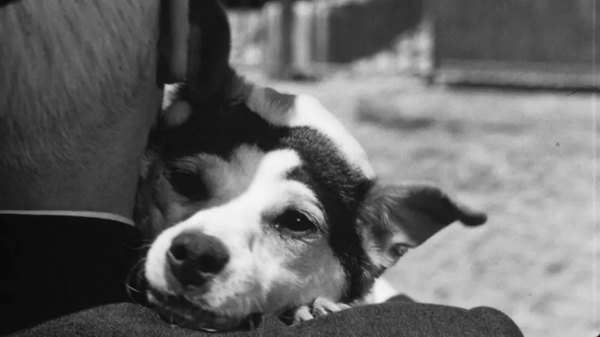
Amid the economic hardship gripping the streets of Rome, Umberto D., an elderly retiree who spent years working in government service, struggles to cope with unpaid rent and a landlord knocking at his door. In this drama by Vittorio De Sica, which examines the human spirit, the city’s cold and ruthless atmosphere seeps into the cramped rooms he shares with his most loyal companion, his dog. As one of the purest examples of the Italian Neorealist movement, it portrays with jarring simplicity the quiet decline of a man fighting to maintain his dignity.
Related Movements & Themes
120k reads
Klasik Filmler Listesi
Home
Film
Curation
Criticism
Menu