Soviet Montage
0
Films
0 min.
Read Time
1.8k
Views
Contents
Introduction: Soviet Montage
Russian filmmakers developed the theory of Soviet Montage, which shaped the history of cinema as well as Russian history during and after the First World War. In accordance with the developed theory, many Soviet montage films were shot for about 10 years. Soviet Montage films brought a brand new competence to the cinema with their innovative montage techniques.With this competence that strengthens the narrative, cinema has become an important propaganda tool for the manipulation of the masses in Russia, which was dragged from the 1st World War to the October Revolution and the civil war.
BM
Bahadır Mahmut
Curator
Related Movements & Themes
120k reads
Klasik Filmler Listesi
What Is Soviet Montage?
The Soviet montage movement is a movement that was developed theoretically and experimentally in cinema schools in order to convey the aims of the Lenin government to the public in Russia and also to construct the ideological motivation in the field. With this movement, radical changes were experienced for cinema in many subjects, especially in montage, camera angle, framing, cutting and camera movement.
Origin of the Term Montaj
Montage in the cinema: It is the whole of the processes such as cutting and combining the film in accordance with the narrative style desired to be used after the image is recorded on the film.
Historical Development of the Soviet Montage Movement
Background
After the import stopped during the First World War, film companies working in Russia released quality films for the domestic market. These films were melodramas that were based on the bravura performances of the actors, had emotional intensity and generally progressed at a slow tempo.
Russia, like all other European countries, was in a great economic recession. With World War I, this recession led countries to economic collapse faster than expected. After the economic collapse, the February revolution against Tsar Nicholas II took place at the beginning of 1917 and the tsar was overthrown. The Russian Provisional Government took over the administration. Although the Provisional Government came to power with the hope of overthrowing the tsar and making great change, it failed to meet expectations. During the spring and summer of 1917, the economic recession in Russia continued to increase. Major industrial centers in Uralo, Donbas and other regions were closed. Russia’s national foreign debt rose to a record high in a very short time.
The Bolsheviks, consisting of workers, peasants and soldiers, organized under the leadership of Lenin (Vladimir Ilyich Ulyanov), were the class most affected by the negativities. The economic crisis was soon added to the sociological and political crises. The tension over the worker, peasant and soldier classes increased even more during this period. The working class organized against the boss and his representatives in the factories. Mining, oil, railway and textile workers, on the other hand, made serial strikes to defend their diminishing rights and working conditions during this period. Tensions between peasants and landowners increased day by day. The peasants wanted to have more initiative and to get a bigger share of the land they cultivated.
Strikes and uprisings in all classes did not lead the current government to a solution. The income level of the people has decreased, the access to food and basic needs has decreased.
The decision of an armed uprising was taken with the voting held in the Bolshevik Central Committee on October 23, 1917. With the speech of Lenin after the decision taken, the Bolsheviks successfully carried out the October Revolution.
After the October Revolution, a new government was formed under the leadership of Lenin. The newly established government would show its effectiveness in every field to save the country from the bad economic, sociological and political conditions it was in. Cinema was one of these areas.
Beginnings
Russian film companies resisted the move to nationalize private property immediately after the October Revolution. They refused to provide films to theaters operating under the new government’s control. In July 1918, the film department of the government-controlled State Commission of Education established tight control over existing film stock. It also banned the import of film stock. As a result, some of the film production companies began to stockpile film stock. Some companies fled to other countries with all their equipment due to the oppressive nature of the new regime, especially the lack of film stock. The reasons for leaving some of the companies that left Some of the film companies that did not leave Russia continued to make films at the direction of the government, hoping that the Bolsheviks would lose the Russian Civil War in 1918 and then conditions would return to pre-Revolutionary conditions.
With the civil war of 1918, a new genre of filmmaking emerged called Agitka. Agitkas were movies that were also seen during the First World War before the civil war. Its general purpose was to raise the morale of the Soviet army fighting at the front. In Agitkas made for the civil war, formats developed in the pre-Revolution propaganda films that emerged during the First World War were utilized.
Russia had Agit trains. Agit trains housed wagons where the films shot at the front were assembled and post-production processes were completed. At the same time, film screenings were held on Agit trains. The agit trains, which had pictures of the famous actors of the period on their exteriors, were responsible for performing all the services such as production, logistics, production and screening for the cinema.
Agitka films were made for the Red Army of the Bolshevik Government during the civil war. Agitka films were usually shot on the battlefields. Using innovative montage techniques, often unconnected images collected from the field, from the conflict areas, and from the Bolshevik presence close to the conflict areas were put together and turned into a film. Apart from the montage methods used in Agitka, the shooting (camera movements, especially the framing camera angles) and post-production methods were also quite different from other films due to the conditions. The experience gained with the solutions developed to produce films under adverse conditions in Agitka formed the basis of Soviet montage cinema.
The Bolshevik Government developed successful policies both to rebuild the national film industry and to train the next generation of filmmakers. The Bolshevik Government established “The People’s Commissariat for Education”, known as Narkompros, in 1918. In 1919, Lenin issued a decree nationalizing the film industry and entrusted Narkompros with the responsibility of regulating the entire photography and cinema industry.
In the same year, Narkompros founded The Gerasimov Institute of Cinematography (VGIK), which will train filmmakers who will bring the Soviet Montage theory to the cinema and shoot many films under the Soviet montage movement. VGIK was the world’s first film school. The motivation behind the Bolsheviks giving such importance to cinema was to develop propaganda cinema and effectively convey the government’s ideas to the masses. At the same time, it was expected that new and more effective methods for the withdrawal of agitka, necessary for the motivation of the red army in the civil war, would be developed in such schools.
Main Period
One of the founding instructors of VGIK was Lev Kuleshov, who was also involved in agit trains before. Lev Kuleshov worked at the State Film School before the revolution and directed films. While Lev Kuleshov was teaching under VGIK, he also had an autonomous workshop within VGIK. Kuleshov Workshop carried out work outside the formal education of VGIK. The Kuleshov Workshop, like the rest of Russia, did not have film stock. For this reason, Kuleshov, together with his team, focused more on film theory and screenplay technique development.
After the screening of D.W. Griffith’s Intolerance: Love’s Struggle Throughout the Ages (1916) in Moscow in 1919, Lenin found the propaganda and agitation elements he was looking for in this film. Numerous copies of the film were ordered by Lenin’s direction and delivered to all possible locations in Russia. In a short time, Intolerance has also become the most important reference source of VGIK and Kuleshov Workshop.
Kuleshov Workshop did a lot of work on Griffith’s Intolerance. Much of the work involved cutting and re-editing the film. With Intolerance, Griffith brought the continuity editing technique to the highest level. With continuity editing, the concepts of time and space in the film were formed exactly as they should be. There was no space or time shift in the transitions.
This montage method greatly increased the intelligibility of the film. In the Kuleshov Workshop, a lot of work was done on continuity editing, which is the most important feature of Intolerance. Many variations of the film’s scenes and plans were created by changing their locations. As a result of the studies, montage techniques in which there is no continuity and time and space shifts have emerged, unlike continuity editing. Among these techniques, the main assembly methods that will be named after Kuleshov were: Kuleshov effect and creative geography. In a short time, these two effects and others started to have an important place in Soviet Montage movement films.
Mikhailovich Sergei Eisenstein was another director who would produce works within the Soviet Montage movement. Eisenstein, who was interested in art and circuses from an early age, studied engineering under the direction of his father. Eisenstein actively participated in the revolution and built bridges during the civil war, worked on Agit trains, and helped design many theatrical sketches for the Red Army. Eisenstein’s work, combined with engineering and artistic work, created an image in harmony with the Constructivism movement. After the end of the civil war, Eisenstein went to Moscow and worked at the Proletkult Theater. From here, he made the transition to cinema by making short films.
Eisenstein included the montage techniques he developed, inspired by Karl Marx’s Dialectical Materialism, in his films. The basis of these assembly techniques was based on Kuleshov. In his films, Eisenstein created a thesis and an antithesis against the thesis, staged the collision of these two concepts, and then created a synthesis. In his films, motion and tempo were at a high level compared to the films of the period. With his montage technique in his films, Eisenstein made montage an effective component of narrative.
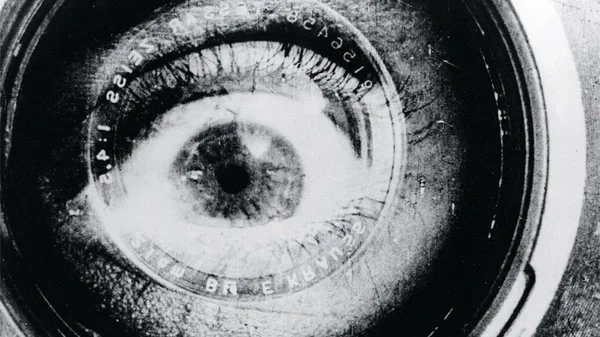
Dziga Vertov first founded the Kino-pravda (Film Truth) movement and then the Kino-eye (Kino-glaz) movement with the cinema group Kinoks (cinema-eye men). Films shot in the Kino-eye movement were created using real-life images and montage techniques without any script. This movement, which tries to remove all foreign elements coming from cinema, theater and other fields, was based on the camera’s ability to replace the human eye and detect life as it is everywhere at any time.
Over time, VGIK played an influential role in the development of the Soviet Montage theory and hosted very important students and teachers. Film directors who taught at VGIK included such filmmakers as Lev Kuleshov, Marlen Khutsiev, Aleksey Batalov, Sergei Eisenstein, Mikhail Romm and Vsevolod Pudovkin. VGIK graduated filmmakers, including Sergei Bondarchuk, Elem Klimov, Sergei Parajanov, Alexander Sokurov and Andrei Tarkovsky.
The End of the Soviet Montage Movement
The decline of the Soviet montage film movement was not primarily due to industrial and economic factors as in Germany and France.
The inclusion of sound in cinema had drawn some of the Soviet montage filmmakers into sound film production. But more important than that was the change in State administration. With the coming to power of Joseph Stalin in 1924, the government’s perspective on cinema also changed. Over time, Stalin changed the structures of state institutions that played a role in the emergence of Soviet montage cinema. Under Stalin’s direction, the Soviet authorities encouraged filmmakers to create simple films that could be easily understood by all viewers. Formal experiments or unrealistic topics were often criticized or censored.
This trend became more widespread when the government launched a new artistic policy called Socialist Realism. Socialist realism was dictated to artists to practice. The government aimed to remove the unrealistic narrative methods that emerged with the Soviet Montage movement. With Socialist realism, the stories became clear in the films, and the cause and effect relationships were clearly revealed. With Socialist Realism, Russian cinema methodically approached Hollywood. Socialist Realism’s effectiveness in Russian cinema increased in a short time with the use of sound in the film.
The policy of socialist realism dictated that all works of art must depict revolutionary development with strict adherence to realism. Great Soviet directors continued to make films and make masterpieces, but 1920s Montage techniques were not supposed to be incorporated into films. Eisenstein managed to continue his work on the montage, but at times came under the wrath of the authorities. It can be said that the Soviet Montage movement ended in 1933 with the release of the last films of the movement, such as Vertov’s Entuziazm Simfoniya Donbassa and Pudovkin’s Dezertir (Deserter, 1933).
Characteristics of the Soviet Montage Movement
Kuleshov Effect
This effect, named after Kuleshov, is also the most well-known form of montage in Soviet montage cinema. The classic example given to explain the assembly is as follows.
With this effect, the player who displays an unresponsive face is emotionally charged with the content included in the plan shown before the player’s unresponsive face. The same image of the actor, who was initially described as unresponsive by the audience, is interpreted as “hungry” after the image of soup, “sad” after the image of a corpse in the coffin, and “desirous” after the image of an attractive woman.
Creative geography
With the creative geography effect, very fast transitions can be achieved between different places. For example, what the police officer shows when he is moving in the vehicle to the person next to him is in a completely different place independent of the place they are in and the ones in that place. With a simple cut, the change of place is provided perfectly. Creative geography effect can also be found in door transitions. In a scene, the person who opens the door and enters through the door can actually enter into a completely different space by cutting. With the creative geography effect, the integrity of the independent spaces in the cinema is ensured.
Metric Assembly
In the metric montage method, the length of the film meter most suitable for narration and stock footage is determined. The film is cut according to the determined length and the plans are added one after another. While making cuts, the strictly determined film meter is adhered to and the emotional connection with the content of the cut film is completely broken.
Rhythmic Montage
Rhytmic montage, like metric montage, has another reference outside of the footage where the cuts are to be made. This is the reference rhythm. The film is cut and combined in lengths suitable for the rhythm, which corresponds to the emotion desired to be conveyed to the audience. Since the rhythm is low in the parts where the excitement element is low, the length of the film between the two cuts is kept longer. When it is desired to increase the excitement element, the number of cuts is increased and the time between cuts is shortened.
Tonal Montage
It is created by concentrating the images shown one after the other on a certain emotion to support the emotion desired to be conveyed to the audience. For example, the images of a flower blooming, a small child and the sunrise shown one after the other convey to the audience that a new beginning has been reached in the main subject of the new scene.
Over-tonal Montage
Over-tonal montage refers to combinations of metric montage, Rhythmic montage and tonal montage used together.
Intellectual or Ideological Montage
This type of montage, as the name suggests, is a type of montage whose successful realization depends on the intellectual accumulation of its audience. It is aimed to reveal a meaning by matching the images shown one after the other by the audience. For example, in the movie Strike, the images of the Bolsheviks attacked by the soldiers and the images of a slaughtered animal are blended together and take their place in the movie. The viewer is expected to link the two images with the reference from the events that took place and to match the Bolsheviks with the slaughtered animal.
Influences of the Soviet Montage Movement
The montage technique developed within the Soviet montage movement was accepted in the world cinema. With the methods used in the movement, montage became a distinct tool for expressing time, space and meaning, rather than just a simple film cutting process. The montage techniques that emerged as a result of theoretical and experimental studies in the movement turned into unchangeable components of cinema.
Filmmakers in other countries, especially those with leftist, communist and sociolist views, used the propaganda elements of the Soviet montage movement to propagate leftist tendencies in their own countries. Similarly, the authorities who wanted to turn the cinema into a propaganda purpose also resorted to the innovative methods of the movement.
Many filmmakers fleeing the regime in Russia carried the effects of the movement to the cinemas of the countries they migrated to. Many movements, especially British Documentaryism, French Poetic Realism and Italian Neorealism, managed to impress their audiences with the techniques of the Soviet Montage film movement.
The theoretical writings of Pudovkin and Eisenstein, which had a profound effect on cinema, were discovered by critics and filmmakers from the moment they were translated into other languages. A lot of criticism, academic articles and experimental films were produced on these articles.
Best Soviet Montage Directors
•
Sergei Eisenstein
•
Dziga Vertov
•
Lev Kuleshov
•
Vsevolod Pudovkin
•
Aleksandr Dovzhenko
Best Soviet Montage Films
References and Further Reading
http://cinecollage.net/soviet-montage.html
https://www.classicartfilms.com/category/film-movements/soviet-montage
https://en.wikipedia.org/wiki/Soviet_montage_theory
https://en.wikipedia.org/wiki/Agit-train
The Oxford History of World Cinema : Nowell-Smith, Geoffrey
Selection List
Curator's Order
1. Enthusiasm. Symphony of Donbas (1930) – Dziga Vertov
In the dark tunnels of the Donbas coal basin, the rhythm of metal and steel never ceases. In this region, where the wheels turn thanks to the miners’ sweat, the Soviet Union’s first five-year development plan permeates every aspect of life. Dziga Vertov’s camera captures the echoes of the industrialization drive and collective faith in the streets.
Woven with the radical sound and visual experiments of the Ukrainian avant-garde, this documentary brings the roar of factories and the dust of the mines directly to the screen. Anti-religious campaigns and mass marches flow by as ideological rituals that shaped the fabric of the era. This mechanical symphony, in which the gears turn ceaselessly, captures the mood of an era in its rawest form.
2. The Eleventh Year (1928) – Dziga Vertov
The blackness of coal, the cold gleam of steel, and sunlight filtering through the steam. Dziga Vertov documents the changes taking place across Ukraine in the eleventh year of the October Revolution. Workers sweating amid factory machinery and hands holding plows in the fields come together in the construction of a new world. The camera does more than simply observe; it seems to etch the era’s ambition and ideological transformation into the very fabric of the space itself. This dense tapestry, woven on the editing table, transcends the boundaries of a documentary to become a visual manifesto that carries the political winds and collective memory of that era into the present. The rhythm of industrial transformation and a society being rebuilt draws the viewer into that era with every frame.
3. Earth (1930) – Oleksandr Dovzhenko
The scent of the earth and the rustling of the wind herald a changing order in the Soviet steppes. In this silent film classic, Oleksandr Dovzhenko brings to the screen the tension brought about by agriculture and collective life, set against the raw reality of the rural landscape.
As Vasyl redraws the boundaries of the fields with the newly arrived tractor, traditional village life comes into conflict with the rising tide of the proletariat. The fate of those tied to the land is swept toward an inevitable rupture amid this great transformation.
4. The Overcoat (1926) – Grigori Kozintsev, Leonid Trauberg
On the icy stone streets of St. Petersburg, the weight of a life reduced to a mere shadow bears down on the shoulders. Directed by Grigori Kozintsev and Leonid Trauberg, this tragicomic drama reimagines the small-town figure distilled from Gogol’s pen within the mechanical and ruthless atmosphere of the era. For an ordinary civil servant, the new coat he slips on is more than just a piece of fabric—it becomes the sole proof of his struggle to exist in the world. The camera follows the silent cry of those lost in the city’s crowds with an unembellished yet keen observational eye. This gloomy loneliness, intensifying with every step, leaves the viewer right in the midst of the winter’s bitter cold.
5. The House on Trubnaya (1928) – Boris Barnet
Having broken free from the quiet of the provinces and blended into Moscow’s overwhelming crowds, Parasha searches for ways to survive in the massive apartment building where she now lives. The creaking of wooden stairs and the sounds of people rushing about, echoing from room to room, stand out as details that capture the spirit of the era in its purest form.
Captured through Boris Barnet’s lens, this comedy brings to the screen the daily struggles of ordinary people crushed by the gears of the big city. Even within the rigid confines of Soviet realism, the characters—who never lose their joy or resilience—offer viewers a glimpse into an era free from artificiality.
6. Zvenigora (1928) – Oleksandr Dovzhenko
An old man searching for a treasure hidden in the ancient hills of Ukraine finds himself caught between the ghosts of the past and the harsh realities of the present. Oleksandr Dovzhenko brings this story to the screen, weaving local myths into the fierce conflict between tradition and revolution.
Echoing across the lands of Zvenigora, this epic narrative transports the viewer beyond a mere historical snapshot, taking them on a haunting journey through the collective memory of the people.
7. Storm Over Asia (1928) – Vsevolod Pudovkin
As the cold wind of the steppe fades away on the accounting desks of exploitative merchants, the rage weighing on the shoulders of a young Mongol herder engulfs the entire region. Vsevolod Pudovkin uses the possibilities of silent cinema to bring the harsh landscape of Mongolia and the tension of the occupied lands to the screen. An injustice that begins with the pursuit of a hunting pelt quickly escalates into a massive front where empires clash. The occupying forces’ attempt to create a puppet leader collides with the wave of rebellion building within the son of the steppe.
8. The New Babylon (1929) – Leonid Trauberg, Grigori Kozintsev
In the streets of Paris in 1871, where the smell of gunpowder hangs in the air and marches echo through the streets, the excitement of a provisional order established against capital is in the air. Directed by Leonid Trauberg and Grigori Kozintsev, this historical drama unfolds during those dusty and tenacious days of the revolution.
On one side is a young soldier enlisted in the army; on the other, a female shopkeeper at the barricades. This bond, budding at the threshold of two different worlds, is put to the test in the shadow of the impending violent upheaval.
The human spirit, resisting the crushing power of capital and authority, finds itself trapped between the gears of the era.
9. My Grandmother (1929) – Kote Mikaberidze
A aimless civil servant, lost in the gears of bureaucracy, is left alone at his desk facing the cold reality of being fired. His only hope for clinging to life lies in a mysterious letter of recommendation. Kote Mikaberidze satirizes the absurdity of the Soviet system with tragicomic flair in this silent film masterpiece. Every frame that unfolds on screen brings together the harsh mechanical order of the era and the individual’s sense of entrapment with humorous sharpness. At this extraordinary intersection of comedy and drama, the ordinary person, crushed between the iron gears of the bureaucratic machine, seeks a momentary breathing space.
10. October (Ten Days that Shook the World) (1928) – Sergei Eisenstein, Grigori Aleksandrov
The sound of boots echoing on the marble stairs of the Winter Palace heralds that pivotal moment when the tsarist regime was overthrown. As Sergei Eisenstein and Grigori Aleksandrov capture the anger and hope in the streets of Petrograd through their lens, the revolution abruptly alters the course of history.
The dust of the streets and the resolute determination of the masses, spreading in wave after wave, reflect the spirit of the era on the silver screen through the aesthetic of Soviet realism. This silent film traces the journey of a people taking their destiny into their own hands and striving to establish a new order along the cobblestone streets.
11. The End of St. Petersburg (1927) – Vsevolod Pudovkin
The curtain rises amid the gray smoke from factory chimneys and the deafening roar of the factories. Just before World War I, a young peasant who has left his homeland to blend into the crowds of St. Petersburg is just one of thousands of poor people scrambling to earn a living. Vsevolod Pudovkin’s camera records with great detachment how the individual is crushed between these massive cogs. One of the harshest and most striking examples of the Soviet Realism movement, the film weaves together the raw anger and helplessness of the era with the sounds of the street. These steps, which begin with the frantic search for work, take a completely different turn in the city’s dark streets. The winds of revolution, blowing on the brink of war, begin to stir silently but deeply at every corner.
12. Arsenal (1929) – Oleksandr Dovzhenko
A weary figure in a soldier’s uniform rises from the silence that remains amid the wreckage of a derailed train. Oleksandr Dovzhenko follows the footsteps of a soldier returning to Kyiv, having left the devastation of World War I behind. The city is shaken by clashes erupting in the post-revolutionary streets. The absurdity cast by tear gas intersects with the harsh reality of the trenches on the very same street. As the Bolshevik resistance rising at the Arsenal factory becomes the target of nationalist forces, the inner turmoil of those left behind points to a reality as harsh as the iron rails.
13. Mother (1926) – Vsevolod Pudovkin
Caught between the relentless rhythm of factory sirens and the gears of the Russian Revolution, a mother seeks refuge within the walls of her home. Captured through Vsevolod Pudovkin’s lens, this drama focuses on a woman’s silent resistance and her struggle to protect her son. When the wave of strikes in the streets spills into the home, traditional bonds are pushed to the breaking point. Drawing on the raw texture and powerful visual language of black-and-white silent cinema, this film tells the story of an ordinary person’s transformation during one of history’s most turbulent periods.
14. Strike (1925) – Sergei Eisenstein
In the dusty, stifling workshops of Tsarist Russia, when the chimneys stop smoking, silence becomes the loudest weapon. Sergei Eisenstein weaves the tension of the pre-revolutionary era around street clashes and workers’ resistance, in an era when cinema had not yet embraced sound.
The struggle for justice that began at the factory gates is driven into the back alleys by the brutal intervention of law enforcement. This dramatic film meticulously documents, layer by layer, the rage rising from the strike tents and how human dignity was crushed by the industrial machinery.
15. The Extraordinary Adventures of Mr. West in the Land of the Bolsheviks (1924) – Lev Kuleshov
The moment Mr. West, an American, has his bag stolen at the train station, he finds himself in the unfamiliar labyrinth of Moscow’s streets. The prejudiced Bolshevik myths in his head are instantly swept away by the station’s wind, leaving only the struggle to survive. This silent comedy, in which Lev Kuleshov masterfully establishes the language of early cinema, breaks down ideological barriers with physical slapstick humor. Together with his loyal bodyguard Jeddie, who has gotten lost in the slums, they wander endlessly along that absurd fault line where East and West collide.
16. Kino Eye (1924) – Dziga Vertov
The camera’s eye never blinks; it constructs a new reality in every frame. Dziga Vertov does not merely document the geography of the Soviet Union at the beginning of the 20th century and the new life sprouting on this land. As he captures the frenetic hustle and bustle of young revolutionaries in the streets, the posters hung on walls, and the calls for cooperatives, he pushes the limits of the mechanical eye.
One of the most original examples of the Soviet Realism movement, the film defies the flow of time with its reverse-play sequences. These experimental moments—where loaves of bread return to the oven and slaughtered animals come back to life—redraw the boundaries of documentary cinema with a mechanical rhythm.
17. Man with a Movie Camera (1929) – Dziga Vertov
A man roaming the streets with a camera slung over his shoulder captures the flow of life on the streets of the Soviet Union in the early 1920s. The dynamism of major cities like Moscow and Odessa is brought to life on screen through the possibilities of silent cinema.
Dziga Vertov uses rapid editing techniques to transform ordinary moments into a mechanical symphony. Factories, streets, and working people take their place in the frame as elements that shape the city’s rhythm.
This documentary simply shows, without questioning what it means to view the world through the lens of a camera.
18. Battleship Potemkin (1925) – Sergei Eisenstein
The maggots on the rotten meat are the first spark of the uprising that erupted in the port of Odessa. Directed by Sergei Eisenstein, this silent film portrays the grassroots anger against the injustices of Tsarist Russia through the eyes of the crew aboard the battleship Potemkin. It is not merely a historical drama, but a revolutionary manifesto woven with the rhythm of its editing.
The sound of boots echoing on the stairs and the crowd spiraling out of control lay bare the mechanical coldness of violence. That moment, which altered the course of history, merges with the narrative power of cinema to leave an indelible mark on the silver screen.
Related Movements & Themes
120k reads
Klasik Filmler Listesi
Home
Film
Curation
Criticism
Menu