List of Movies About Justice, Law, and the Courts
0
Films
0 min.
Read Time
0k
Views
Contents
The films on this list tell the stories of characters seeking justice and revenge in the face of injustice. With narrative structures that closely mirror real-life experiences, the films in this genre quickly establish a connection with their audience.
BM
Bahadır Mahmut
Curator
Related Movements & Themes
120k reads
Klasik Filmler Listesi
There is an intricate relationship between the themes of justice, law, and the courtroom and the craft of short story writing. The way the content of works centered on the themes of justice, law, and the courtroom manifests in real life—such as a quest for justice, a legal process, or a trial—consists of distinct beginning, middle, and end phases. Causal links between events are established, accusations and defenses are presented, climaxes occur, characters undergo value shifts, and truths and surprises are revealed. When these elements are aligned with the corresponding components of the narrative structure, the result can be works to which the audience can adapt very quickly.
This adaptation allows the audience to experience the events in the film as a more personal and emotional journey. Whether characters are fighting for justice or suffering injustice, this can evoke strong emotional responses in viewers, such as anger, sadness, grief, or joy.
12 Angry Men (1954)
At the same time, films centered on justice and the law can profoundly influence the way viewers think. These films encourage viewers to reflect on important issues such as social justice, human rights, ethical responsibility, and the definition of justice. Viewers have the opportunity to understand the complexities of law and justice.
From a sociological perspective, these types of films can contribute to social change and awareness. In particular, films addressing issues of social justice can help society become more sensitive and aware of specific problems. By reflecting on the injustices and inequities depicted in the film, viewers may feel motivated to fight for greater justice and equality in the real world.
Best Of
Selection List
Curator's Order
1. The Verdict (1982) – Sidney Lumet
Frank Galvin, taking refuge in the dim light of pinball machines on Boston’s foggy streets, is now nothing more than a man of days without cases and cheap drinks. This former lawyer, on the verge of being forgotten in the cold corridors of courtrooms, is shaken by an ordinary medical malpractice case that lands on his desk.
Directed by Sidney Lumet, this drama tells the story of a man’s tense transformation as he rejects an easy settlement offer and sets out in pursuit of justice. As Galvin confronts his conscience, he must stand alone against injustice to atone for his professional sins.
2. Fury (1936) – Fritz Lang
His ordinary life at the gas station turns into a nightmare the moment he arrives in town. While Joe waits to be reunited with the woman he loves, he finds himself caught up in a crime he’s never even heard of. This dark crime drama by Fritz Lang explores, in a quiet yet forceful tone, how lynch mob culture and rage enslave the human spirit. The crowd swelling in the town’s streets is determined to take justice into their own hands. The rapidly spreading wave of rage shatters an innocent man’s life piece by piece, leaving nothing but ashes in its wake. When Joe manages to survive, the only thing left in his hands is a thirst for revenge. As the wheels of the system turn, the concept of conscience has long since been forgotten.
3. Amistad (1997) – Steven Spielberg
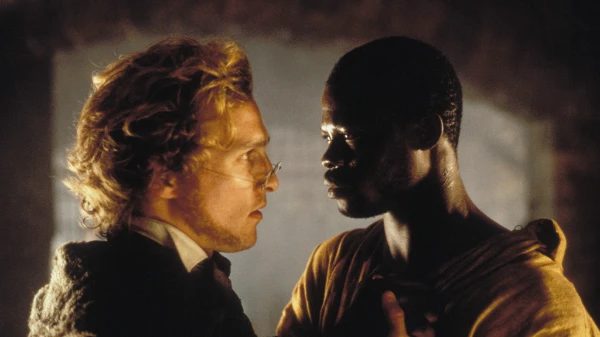
It all begins on the deck of a wooden ship rocking in the middle of the ocean. In 1839, the slave ship Amistad, which set sail off the coast of Cuba, became the scene of a rebellion in which the slaves broke the chains of their captors. As Steven Spielberg brings this dark historical truth to the big screen, he leaves the audience face-to-face with the cold walls of courtrooms and the tough negotiations behind the lawyers’ desks. The struggle for justice waged by the captives in their quest for freedom ignites a major trial that will shake the political balance of the era.
4. Anatomy of a Murder (1959) – Otto Preminger
In a cold, quiet town in Michigan, a murder trial begins, enveloped by the sounds of jazz and the heavy atmosphere of the courtroom. Otto Preminger pits the sharp boundaries of justice against the complex nature of human desires. Paul Biegler, a lawyer on the verge of retirement, finds himself defending a soldier accused of killing his husband. As truth and lies intertwine in the courtroom, this trial leaves the audience in the midst of a legal puzzle.
5. Judgment at Nuremberg (1961) – Stanley Kramer
In Nuremberg, amidst the rubble, a heavy wind of reckoning blows through the black-and-white frames. In the icy atmosphere of the post-World War II era, the courtroom of the military tribunal places not only legal professionals but also the conscience of a nation in the defendant’s chair.
This drama, directed by Stanley Kramer, pushes the boundaries of justice as it navigates the dark corridors of crimes against humanity. As those sitting on the bench confront the ghosts of the past, every word spoken from the witness stand slowly peels back the most shameful pages of history.
6. To Kill a Mockingbird (1962) – Robert Mulligan
In the scorching Alabama heat of the 1930s, the sounds of children’s voices echoing from a treehouse pierce the sleepy atmosphere of the town of Maycomb. As Scout and Jem struggle with the growing pains of adolescence in the shadow of their mysterious neighbors, a sense of injustice in the town’s narrow streets has already reached their very doorstep. Directed by Robert Mulligan, this harrowing drama lays bare the prejudices echoing off the cold walls of a courtroom and the sharp shadow of racism, all seen through the eyes of a child. The impossible defense taken on by Atticus Finch is not merely one man’s fight for innocence, but also the story of innocence quietly slipping away on the wind.
7. ...And Justice for All (1979) – Norman Jewison
In the heavy, stifling corridors of the Baltimore courthouse, the scales of justice have long since tipped. Directed by Norman Jewison, this gritty legal drama places the weight of an honest lawyer’s predicament—crushed between the gears of the system—squarely on your shoulders.
Caught between professional ethics and corrupt dealings, Arthur Kirkland is threatened with having to defend a judge he despises. As the tension in the courtroom spills out onto the streets, every decision erodes his conscience a little more.
8. Primal Fear (1996) – Gregory Hoblit
Behind Chicago’s night lights lies a bloody crime scene, and in front of the cameras stands an ambitious lawyer who loves the spotlight. Directed by Gregory Hoblit, this suspenseful legal drama unfolds on the streets of Illinois, shaken by the murder of the archbishop.
The silent altar server in the defendant’s chair whispers that things aren’t always what they seem. As the heavy atmosphere of the courtroom fills with the sordid secrets hidden behind the church’s thick walls, the paths of the prosecutor and the defense cross, and the truth slips through their fingers like a dangerous puzzle.
9. The Passion of Joan of Arc (1928) – Carl Theodor Dreyer
Amid the cold stone walls of the fifteenth century, the trial of a young woman who claims to have spoken with God unfolds on screen through the most incisive visual language of silent cinema. Carl Theodor Dreyer weaves a courtroom—trapped within close-ups and tears—into a breaking point of faith and justice.
In the oppressive atmosphere of the interrogation room, Jeanne resists the judges’ pressure and is left alone to face the accusations leveled against both her body and her soul. The suffocating atmosphere created by the black-and-white frames plunges the viewer into the midst of one of history’s most ruthless judicial processes.
10. 12 Angry Men (1957) – Sidney Lumet
On a sweltering summer day, the stifling atmosphere of the courtroom is trapped within the rusty walls of the jury room. Directed by Sidney Lumet, this classic is centered on the tense balance that twelve men strike between innocence and guilt, far from the clamor of life outside.
As the shadow of a knife and the smell of hot concrete fill the room, the deliberations seem set to begin with a silent consensus. But a single objection raised from the ranks brings the mechanical workings of justice to a halt. Every person in the room is forced to confront their own prejudices.
11. The Ox-Bow Incident (1943) – William A. Wellman
On the dusty roads of Nevada, the clatter of horseshoes echoing in the harsh winds of the nineteenth century captures the crowd’s fury. William A. Wellman explores the fine line where justice and lynch mob culture intersect in this bleak Western atmosphere. Three strangers, arrested on suspicion of cattle rustling, find themselves caught between the town’s rowdy mob and common sense. Anxious whispers seeping from the saloon doors suggest that the verdict has already been decided.
Related Movements & Themes
120k reads
Klasik Filmler Listesi
Home
Film
Curation
Criticism
Menu