List of B Movies
0
Films
0 min.
Read Time
0k
Views
Contents
The "B Movies" list consists of a selection of B movies that emerged during Hollywood's Golden Age due to financial difficulties and were later replicated around the world, featuring significant examples of cult, independent, and exploitation cinema.
BM
Bahadır Mahmut
Curator
Related Movements & Themes
22k reads
Bağımsız Filmler Listesi
1.2k reads
Cinema of Attractions
B-Movie
B movies are low-budget films that the film industry—which had been brought to the brink of economic collapse by the Great Depression during Hollywood’s Golden Age—incorporated into the system to attract more audiences to theaters.
B movies emerged as low-budget films—generally lacking in artistic and technical merit—that were shown in theaters following the A movies, which were the main films intended to reach the audience.
What Is a B Movie?
"B movie" is the term used to refer to films shown after those classified as "A movies," listed in alphabetical order. It is often mistakenly believed that B movies are named after the first letter of the word "bad" because they are low-budget and lack professionalism.
A Brief Historical Overview of B Movies
The Great Depression, which began in the United States in 1929, negatively affected the film industry, just as it did all other sectors. As the costs of film production and exhibition rose, economically strained moviegoers began going to the movies less often in an effort to save money. To stem the decline, movie theaters in New England began showing two films back-to-back (double features) for the price of a single ticket. This approach made movie tickets seem like a better value in an environment of economic contraction. The solution worked, and attendance increased. Within a short time, the “two-for-one” practice began to spread across the country in various forms.
Despite the widespread adoption of the “two-for-one” system, screening two high-level films—particularly for theaters affiliated with major film studios—unexpectedly drove up costs. To address this issue, major movie theaters first opted to screen a top-tier film—classified as an “A” film—followed by a low-cost film—classified as a “B” film. During the release period, “B” films began to be categorized based on cost, runtime, and quality:
Major Studio B Film
“Major studio B films” produced by the so-called “Big Five”—MGM, Paramount, Warner Bros., Twentieth Century Fox, and RKO.
Major-Studio Programmers
"Major-studio programmers" are B-movies that could be screened as either A or B films depending on the theater’s programming needs.
Smaller Company Bs
“Smaller company Bs” produced primarily by companies such as Monogram, Republic, and Producers Releasing Corporation (PRC).
Poverty Row
Very low-budget B-movies produced by small production companies in Hollywood from the 1920s to the 1950s, known as “Poverty Row.” There were generally significant differences in artistic and technical quality among these financially distinct types of B-movies. For example, major studio programmer films were far superior to smaller company B movies in both technical and artistic terms. The double-feature screening method yielded positive results for audiences, movie theaters, industry workers, and film producers amid an economic downturn. Moviegoers gained the advantage of watching two films—one of type A and one of type B—with a single ticket. This was significant not only as a simple financial benefit but also in terms of mitigating the psychological effects of the economic collapse on individuals. B movies, in particular, were capable of completely transporting the audience away from the economic collapse they were experiencing.
Movie theaters increased ticket sales at very low cost and boosted their profitability by scheduling low-cost B movies immediately after high-cost, low-attendance A movies. B movies, which emerged during the Great Depression for economic reasons, quickly became a testing ground for every component of the film industry—from producers to audiences. Despite their low production costs, B movies continued to be produced after the Great Depression due to the profits they generated. This aspect of cinema—accessible to nearly everyone and widely accepted—played a crucial role in the development of cinema not only in the United States but around the world. Unlike mainstream films, B movies around the world constantly pushed boundaries by taking significant risks and creating a shock effect to draw audiences into theaters. Filmed in this manner, B movies created a vital space for the emergence of many cult, absurd, banned, and independent films. Alongside cult, absurd, banned, and independent films, the exploitation film genre—which challenges legal, moral, and social boundaries on topics such as sex, nudity, race, social class, violence, and many others—also expanded under the umbrella of B movies. Just as risks were taken in terms of technique and content, certain risks were also taken with the cast and crew. B-movies became an easy first step for launching a film career. Many people who began their careers in B-movies gained the experience necessary to continue their careers in A-movies and, later, on television.
Until the 1950s, B-movies were generally shown in theaters, but with the spread of television, they began to find their way into homes as well. Films classified as “midnight movies” frequently featured B-movies. B-movies served as an important launching pad for independent cinema and exploitation cinema. The content of these films could be provocative. Due to fluctuating censorship restrictions and financial constraints, B-movies—which fell outside the mainstream—gradually found their place in various screening venues over time. Drive-ins and grindhouses were important venues and revenue sources for B-movies. With the widespread adoption of VHS and, later, the internet, B-movies reached their widest distribution channel in history. With P2P technology, the audience base began to solidify in the late 20th century. Magazines, blogs, websites, and festivals dedicated to B-movies helped them gain partial acceptance even among mainstream audiences over time.
The Characteristic Structure of B Movies
A common misconception about B movies is the belief that they are all “bad.” It is often assumed that the abbreviation “B” comes from the word “bad.” While there are indeed many films in this category that could be described as bad, there are also numerous B movies that have achieved cult status or become classics. B movies are low-budget productions. For this reason, cost-cutting measures are taken across multiple aspects of the film. Art direction, costumes, makeup, technical crew, visual effects, cinematography, and all other disciplines are at risk due to the limited budget. Issues that distinctly give the film its "B-movie" flavor are immediately noticeable. These issues are accepted by audiences as part of the B-movie’s character. Over time, the B-movie evolved from its origins in Hollywood’s Golden Age into a distinct film genre and spread worldwide. Recurring critical errors in low-budget films have led to their classification as “B-movies” worldwide. Most B-movies attempt to overcome problems stemming from a lack of funding through bold storytelling in their screenplays. In this way, despite their low budgets, topics that typically require substantial funding, extensive research, and technical, artistic, and acting skills are tackled boldly: interplanetary wars, giant creatures invading cities, and so on.
Notable B-Movie Directors
•
Sam Raimi
•
Peter Jackson
•
Lloyd Kaufman
•
John Waters
•
Edward D. Wood Jr.
•
Tobe Hooper
•
Edgar G. Ulmer
•
Ed Wood
•
Godfrey Ho
•
Roger Corman
The Best B Movies
Selection List
Curator's Order
1. C.H.U.D. (1984) – Douglas Cheek
The steam enveloping the streets of New York and the heavy stench seeping from the manhole covers are signs of another life beneath the city. The increasing number of mysterious disappearances on the streets leaves the police force and the homeless who have made the dark tunnels their home caught in the midst of a tense standoff. This blend of horror and science fiction by Douglas Cheek centers on the absolute darkness of the underground and the world of the homeless as it tracks the trail of mutant creatures hiding in the city’s lower levels. Far from the city’s lights, deep within the sewers, a nightmare born of nuclear waste is about to surface. A police detective and a photographer on the trail of a story search for the truth in this labyrinth teeming with far more than just sewer rats.
2. The VelociPastor (2018) – Unknown Director
A priest who travels to China after losing his family comes into contact with what seems to be an ancient curse in the midst of a spiritual journey. As he struggles to control the rage within him, he realizes he can transform into a massive dinosaur. He is not alone in this absurd blend of horror and comedy. A sex worker emerging from the darkness of the streets inspires him to use this savage ability against criminals and ninjas. This film, which fully embraces low-budget aesthetics and the spirit of independent cinema, completely stretches the boundaries of genres. From camera movements to the period-specific texture, every detail deliberately and willingly treads the line of B-movie aesthetics. Bloody scenes and cheap special effects, combined with the film’s unpretentious attitude, result in a unique late-night entertainment experience.
3. Miami Connection (1987) – Y.K. Kim, Richard Park Wu-sang
On the sun-scorched streets of 1980s Miami, street gangs and drug dealers are turning the city upside down. A martial arts group—who sweat it out in computer classes by day and perform rock music on stage by night—is determined to stand up to this dark network. Directed by the duo of Y.K. Kim and Richard Park Wu-sang, this action- and crime-filled film brings to the screen a bizarre battle set on Florida’s hot asphalt. This unique street fight, pitting motorcycle-riding ninjas against musician heroes, offers one of the most intriguing showdowns in period cinema.
4. It Came from Beneath the Sea (1955) – Robert Gordon
A giant octopus, mutated by nuclear tests in the dark waters of the Pacific, is heading toward the California coast. This science fiction and adventure classic by Robert Gordon brings a radioactive threat from the depths of the ocean to the screen. As the giant creature takes the coastline hostage and underwater tension escalates, submarine commanders and scientists find themselves in a race against time. Blending stop-motion animation, the film conveys the silent panic gripping coastal cities and the weight of the impending disaster.
5. Female Trouble (1976) – John Waters
When Dawn Davenport runs away from home on Christmas morning after failing to find the special shoes she wanted, she suddenly finds herself in the middle of the roads where she’s been hitchhiking and the crime-ridden streets. Directed by John Waters, this absurdist comedy chronicles the step-by-step journey of a rebellious spirit—one who defies the rules of family and society—toward fame and chaos.
After days on the streets, an illegitimate child, a bumbling husband, and the dark promise of fame emanating from a hair salon shape Dawn’s life. Painted with the sharpest tones of dark humor, this journey reveals the aesthetics of crime and marginalization while inviting the audience into a world without rules.
6. Sharknado (2013) – Anthony C. Ferrante
That massive hurricane battering the Los Angeles coastline isn’t just flooding the streets; it’s also propelling the ocean’s most vicious predators straight into the sky. In this absurd maze of horror and comedy directed by Anthony C. Ferrante, the flood-filled streets turn into finned nightmares. In this struggle for survival—which bears no resemblance to chasing waves on a surfboard in a coastal town—the rules of nature are being rewritten. Fin and his friends make their way through rooftops and flooded boulevards to find their families, who are trapped in the city center as the waters rise. In this apocalyptic scenario filled with chainsaws and explosions, the terror of the ocean crawls onto land with unprecedented ferocity.
7. The Incredible Melting Man (1977) – William Sachs
An astronaut returning to Earth after being exposed to cosmic rays behind Saturn’s rings begins to slowly dissolve. This science-fiction horror experiment by William Sachs centers on the process of melting and bodily deformation, which unfolds as the action shifts from a hospital room to a wooded area.
The process of following a melting body as it vanishes into nature transforms into a dark tale of metamorphosis. The silent, eerie footsteps of a molten mass searching for its victims draw the viewer into a claustrophobic nightmare.
8. Destroy All Monsters (1968) – Ishirō Honda
As the new millennium approaches, the world keeps giant creatures under control on a secure island called Monsterland. However, this peaceful isolation is suddenly shattered by the threat of an alien invasion.
In this science fiction film directed by Ishirō Honda, colossal creatures under mind control target metropolises from Tokyo to New York. In this chaotic world, where the purest form of tokusatsu aesthetics is brought to the big screen, humanity must confront both the threat from the sky and the monsters it has created.
9. Class of Nuke 'Em High (1986) – Lloyd Kaufman, Richard W. Haines
Tromaville High School, cast in the shadow of a radioactive leak, is slowly spiraling out of control amid the strange laughter echoing through its hallways and contaminated street drugs. This film, directed by Lloyd Kaufman and Richard W. Haines, brings the genre of horror—blended with sexism and absurdity—to the screen in the rawest form of B-movie aesthetics.
School life right next to the nuclear power plant descends into total chaos as the students undergo mutations. This reckless blend of science fiction and comedy transforms an ordinary high school day into a bloody and entertaining struggle for survival in a matter of seconds.
10. Them! (1954) – Gordon Douglas
It all begins with strange footprints stretching across the scorching sands of the New Mexico desert. The hidden toll of nuclear testing has warped the laws of nature and turned the ants beneath the ground into colossal nightmares. In this classic blend of science fiction and horror by Gordon Douglas, it is not the wind that shatters the silence of the desert night, but the buzzing of approaching giant insects.
State police and scientists begin tracking the trail at an abandoned store in the middle of the desert. This horrific mutation caused by radiation draws military units and FBI agents into a tense chase. Trapped in the dark tunnels of the ant nests, humanity must close this Pandora’s box opened by the atomic age.
11. A Bucket of Blood (1959) – Roger Corman
Walter, who remains invisible in the corner of a crowded café, is a clumsy waiter who constantly messes up while trying to fit in with the bohemian crowd of artists around him and Carla, whom he admires. When he covers the body of a cat he accidentally killed in plaster and displays it as a sculpture, it erases all his self-doubt overnight, and this dark farce triggers a proto-slasher tone that treads the line between absurd comedy and horror. In this film directed by Roger Corman, ambitions fueled by applause transform into a bizarre creative process that leads to murder. Walter’s hands are now stained not only with plaster but also with the lives of people he sacrifices to create new and terrifying sculptures.
12. The Tingler (1959) – William Castle
Screams echoing through a dark movie theater feed a parasitic creature that has taken root in the spinal cord and grows with fear. This blend of horror and science fiction, directed by William Castle, centers on the human body’s most vulnerable moment.
A pathologist conducts experiments on a deaf and mute woman who dies of fear because she cannot scream. Black-and-white frames blend the sterile atmosphere of the laboratory with humanity’s primal terror. The redemptive power of the scream creates an unsettling tension that seeps from the screen into the theater.
13. The Giant Claw (1957) – Fred F. Sears
On Canadian radar screens, beneath the polar cold and desolate skies, an inexplicable activity begins. This mysterious object, coming from the depths of space, defies every known law of physics. This horror and science fiction short story by Fred F. Sears chronicles, in shades of black and white, how a colossal celestial threat takes civilian life hostage. As the sound of wings tears through the sky, cities succumb to a silent panic.
14. Chopping Mall (1986) – Jim Wynorski
A massive shopping mall where the neon lights are beginning to fade, and a group of young people trapped behind the rolling shutters. This blend of horror and science fiction, directed by Jim Wynorski, evokes the anxiety about the future that prevailed in the late ’80s through thick plastic cases and flickering screens.
The shiny, metal-bodied robots, installed to serve as Park Plaza’s new guardians, suddenly transform into deadly weapons due to a malfunction in the main computer. Every mechanical step echoing through the steel corridors further narrows the struggle of the young people inside to make it out alive by morning.
15. Hard Ticket to Hawaii (1987) – Andy Sidaris
Under the Hawaiian sun, shady dealings lurking behind the beach waves and the pleasures of the hot tub cut through the cool breeze. A DEA agent on a secret mission and his friend find themselves right in the middle of a drug and diamond trafficking ring. In this action-packed film directed by Andy Sidaris, danger surrounds every corner of the island. The characters turn to their friends—experts in martial arts—for help to survive. As the tropical paradise transforms into the epicenter of criminal networks and explosions, the pace never lets up for a moment.
16. Samurai Cop (1991) – Amir Shervan
As a Japanese organized crime network takes root on the streets of Los Angeles, things start to spiral out of control. In this absurd crime-action experiment directed by Amir Shervan, the police’s only hope is Joe Marshall, with his intense gaze and sharp sword.
As the duo patrols the streets to combat the Yakuza gang’s bloody trade, they find themselves caught in the middle of a never-ending chase under the California sun. Subverting the dynamics of the classic police partnership, the film is packed with scenes that push the aesthetics of B-movie cinema to the limit.
17. X: The Man with the X-Ray Eyes (1963) – Roger Corman
The mind of a scientist who, through a drop he developed himself, begins to see the world’s bones, layers, and secrets directly is ultimately put to the test by this relentless vision of his own making. This thriller-science fiction hybrid from Roger Corman traces the irreversible fissures in human perception opened by a dark laboratory experiment.
Spanning from the neon lights of Las Vegas to sterile hospital rooms, this relentless journey lays bare not only the outside world but also the pitch-black depths of the human soul. Every new layer the eye perceives erodes the comfortable boundaries of reality a little further.
18. The Valley of Gwangi (1969) – Jim O'Connolly
On the dusty Mexican border of the 1900s, a faded Wild West show that can’t fill its circus tents stands on the brink of a dangerous discovery that will change its fate. It’s not just a fictional adventure—it’s a primal nightmare in which cowboys struggling to survive in the harsh landscape of the era suddenly find themselves trapped.
Directed by Jim O’Connolly, the film draws viewers into the Forbidden Valley—a place forgotten by time—with the eerie atmosphere created by stop-motion animation. A massive allosaurus, emerging from prehistoric times, is too wild and enormous to be contained within man-made cages. This colossal creature, intended to be displayed in town squares, is not merely a spectacle—it is the inevitable destruction resulting from human interference with nature.
19. Basket Case (1982) – Frank Henenlotter
Under the yellow glow of the streetlights, a young man clutching a large wicker basket strides along the sidewalks of New York. This horror comedy, directed by Frank Henenlotter, unfolds in the city’s dark and eerie back alleys. The secret carried within the basket holds not only the pain of the past but also a strange thirst for revenge, split in two by a surgical knife. Tracking the trail of an extraordinary bond in the frosty night, this grotesque partnership drags the viewer from seedy hotel rooms into a grotesque hunt for revenge.
20. The Incredible Shrinking Man (1957) – Jack Arnold
The toxic haze left in the air by radiation and pesticides is consuming Scott Carey’s body a little more each day. In this science fiction and adventure classic directed by Jack Arnold, the home transforms into a wild, untamed environment filled with colossal dangers. Amid the dim shadows of the basement, a giant tarantula and a house cat are no longer the home’s inhabitants—they have become ruthless participants in the struggle for survival. As the bonds between husband and wife dissolve, the existential loneliness emerging in the mind of a shrinking man echoes through the rooms. In the eerie atmosphere created by the black-and-white frames, the furniture turns into massive mountains, and the basement into a merciless labyrinth. For Scott, every moment is the very essence of the most fundamental struggle for existence.
21. Hobgoblins (1988) – Rick Sloane
In the silent corridors of a dimly lit film studio, a chase that begins in the dead of night opens up a world of cheap plastic masks and low-budget effects. The path of a group of misfit teens, who can’t seem to stay out of trouble with the security guard, crosses that of tiny creatures that have escaped from the lab. Directed by Rick Sloane, this film blends elements of horror and comedy, dragging the audience into an absurd chaos. These tiny freaks, which turn people’s deepest fantasies into reality while simultaneously leading them to their deaths, turn the studio set into a veritable hunting ground. Hovering in the cheapest and most entertaining corner of the sci-fi genre, the film wraps up the night with its lighthearted tone.
22. The House with Laughing Windows (1976) – Pupi Avati
In a village in northern Italy cut off from the outside world, Stefano is tasked with restoring a haunting fresco on the crumbling wall of a church. This classic by Pupi Avati gradually transforms what begins as a routine art restoration project into an eerie mystery. Strange whispers echoing through the village’s narrow streets and the dark secrets of the past tighten the noose around the young man’s neck a little more each day.
23. The Gingerdead Man (2005) – Charles Band
Fresh out of the oven, a cinnamon-scented cookie filled with age-old rage takes its thirst for revenge to the streets. Directed by Charles Band, this horror-comedy offers an ironic feast of absurdity.
In this absurd world where a murderous spirit merges with crushed flour, the clang of knives mingles with the clatter of baking sheets. The nightmare that begins on the kitchen counter transforms into a sugar-coated killer that spreads terror throughout the town.
24. Army of Darkness (1992) – Sam Raimi
How long can a man—who steps out of a supermarket aisle and suddenly finds himself in the stone castles of the thirteenth century—survive with a shotgun and a chainsaw in hand? In this absurd fantasy world where Sam Raimi blends horror and comedy, he does away with the concept of time travel, leaving the audience fully immersed in the filth and chaos of the Middle Ages.
Armies of skeletons and zombies seeping through the cursed gates opened by *The Book of the Dead* tear our hero’s modern arrogance to shreds, while the clanging of swords and the roar of catapults echo through the wooden barricades. Ash is neither a knight nor the savior of a sacred prophecy; he’s just a weary shopkeeper who wants to go home.
25. Inferno (1980) – Dario Argento
Amid the concrete jungles of New York, an ancient curse seeping from the pages of an old alchemy book envelops the apartment buildings. Dario Argento draws the viewer into an eerie corridor stretching between Rome and Manhattan. Drawing on the darkest veins of the horror and suspense genres, the film depicts the ever-narrowing circle of a young man tracking the trail of death as he searches for his missing sister. This atmosphere, dominated by witch lore and eerie shadows, blurs the line between dream and nightmare. That apartment building, harboring a different secret around every corner, never lets those who enter go free.
26. The Brain That Wouldn't Die (1962) – Joseph Green
A young woman—now reduced to nothing more than a body and a head, transported to the dimly lit laboratory in the wake of that horrific accident in the middle of the asphalt—stands at the center of this absurd nightmare bearing the signature of Joseph Green. The boundless nature of scientific ambition transforms into a hair-raising experiment echoing through the operating room at midnight.
In this dark narrative, deeply imbued with elements of horror and science fiction, the surgeon’s mind is driven by a rigid obsession. Within the laboratory’s sterile yet decaying atmosphere, the quest to find a missing body brings with it hours of tension and a silent scream.
27. Killer Klowns from Outer Space (1988) – Stephen Chiodo
Aliens hunting humans inside a tent that smells of cotton candy shatter the town’s silence. Directed by Stephen Chiodo, this film blends the aesthetic of ’80s B-movies with a neon-colored nightmare. Set against the backdrop of an ice cream truck and shadow plays, the narrative blends horror and humor in perfect balance.
An ordinary hangout spot for teenagers quickly turns into the epicenter of absurdity. At this strange intersection of science fiction and humor, a sense of menacing otherness lurking behind the clown makeup engulfs the entire town.
28. Attack of the 50 Foot Woman (1958) – Nathan Juran
Suburban life, set against the scorching sun of the California deserts, is interwoven with marital lies and endless betrayals. In this sci-fi nightmare, where Nathan Juran blends B-movie aesthetics with psycho-electronic suspense, he focuses on the state of mind of an unhappy woman trapped in the middle of a small town.
On the night of a UFO sighting and contact with an alien force, everything turns upside down. Transforming into a colossal silhouette to take revenge on a world that no longer fits her, the woman sets out after her unfaithful husband. Amid dusty roads and gigantic shadows, a bizarre reckoning that straddles the line between horror and melodrama awaits the audience.
29. The Room (2003) – Tommy Wiseau
Set on the hilly streets of San Francisco, this is a bizarre universe where plastic American footballs fly through the air. This absurd drama, directed by Tommy Wiseau, shows just how strange ordinary relationships and friendships can become. The perfect life Johnny has carefully crafted begins to unravel quietly in small rooms filled with his closest friends. Those lost in the ordinary flow of life collide with one another in the shadow of betrayal and passion.
Hidden in every facial expression and every strange smile of the characters lies one of the most unconventional tones in cinematic history. Set under the California sun, this romantic dead end establishes its own unique rhythm, far beyond clichéd narratives.
30. Bad Taste (1987) – Peter Jackson
In a quiet coastal town in New Zealand, the peace is shattered by an alien fast-food chain’s plan to add human flesh to its menu. As the townspeople vanish, only horror and absurd chaos remain. Directed by Peter Jackson, this sci-fi-comedy-infused horror film blends gore aesthetics and chainsaw sounds with pitch-black humor. With the arrival of the Astro-Investigation and Defense Service in town, a blood-soaked and mind-bending operation begins. Pushing the boundaries, this film brings the strangest alien invasion in cinema history to the screen.
31. The Toxic Avenger (1984) – Lloyd Kaufman, Michael Herz
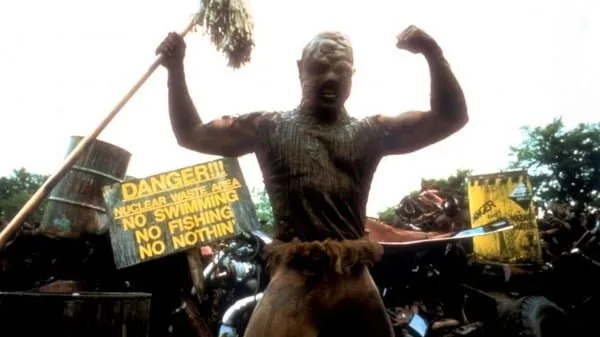
In the dark streets of Tromaville, a scrawny janitor whom no one ever looks at falls into barrels overflowing with the town’s toxic waste. This absurd film by Lloyd Kaufman and Michael Herz centers on the story of an extraordinary antihero born in the midst of a system rife with filth and decay. The cycle of contempt and bullying that begins in the town’s squalid gym evolves into a pitch-black thirst for revenge. In these grindhouse-inspired streets, where horror and comedy intertwine, the concept of justice takes on a completely mutated form. Emerging from the darkness of the night with a mop in hand, this freak of nature embarks on a ruthless purge against corrupt officials and con artists.
Related Movements & Themes
22k reads
Bağımsız Filmler Listesi
1.2k reads
Cinema of Attractions
Home
Film
Curation
Criticism
Menu