List of Independent Films
0
Films
0 min.
Read Time
0k
Views
Contents
The list of independent films (indie movies) consists of films that diverge from the mainstream, created by directors and producers who largely disregard the prevailing norms and industry requirements of their time and employ innovative methods and approaches.
BM
Bahadır Mahmut
Curator
Related Movements & Themes
221k reads
Kült Filmler Listesi
16k reads
B Filmler Listesi
1.2k reads
Cinema of Attractions
Independent Film
Independent films are those in which filmmakers showcase their liberal views and/or innovative narrative styles, and often find ways to achieve this outside the mainstream system. As a result of being independent, these films generally lack access to financing, distribution channels, and professional crew and equipment. This situation pushes filmmakers to come up with innovative solutions not only for the film itself but also for securing these resources.
A Brief History of Independent Films
From its earliest days, when it began to be recognized as an art form, cinema has had a multidisciplinary structure. For this reason, throughout the history of cinema, the cost of producing professional works and bringing them to art lovers has been higher than in other artistic disciplines. Due to high production and distribution costs, the formation of industry cartels was inevitable from the very beginning. The primary motivation behind the emergence of independent cinema stemmed from filmmakers’ desire to produce films with the content and methods of their own choosing. The cartels and authorities dominating the industry used the capital, crew, equipment, set facilities, and prestige at their disposal to pave the way for the films they favored while blocking those they did not. This situation forced independent filmmakers to create a new form of cinema separate from the mainstream. One of the most prominent and notable examples of the emergence of independent cinema is the rise of American independent cinema.
Hollywood: The First Independent Cinema
American cinema was established under the monopoly of a single individual: Thomas Edison. Although Edison is often described as a scientist and inventor, he was just as much a businessman. He generated commercial revenue through his inventions and ventures in many fields, ranging from communication devices to chemicals, from mining to cinema. The Kinetograph was the first “motion picture” camera patented by Edison. Many other inventors worked alongside him at his company. Following the Kinetograph, Edison also patented other camera types, such as the Kinetoscope and the Vitascope. Edison was also a film producer. His studio produced approximately 1,200 films, including classics such as *Sneeze* (1894), *The Kiss* (1896), *The Great Train Robbery* (1903), *Alice’s Adventures in Wonderland* (1910), and *Frankenstein* (1910).
The Motion Picture Patents Company (MPPC), known as the “Edison Trust,” was an organization that held numerous cinema-related licenses and rights. This cartel included companies such as Edison, Biograph, Vitagraph, Essanay, Selig, Lubin, Kalem, American Star, American Pathé, George Kleine, and Eastman Kodak. These companies served as producers, distributors, and film manufacturers. Virtually everything—from cinema-related equipment and consumables to studios and licenses—was consolidated under the Motion Picture Patents Company cartel. The Edison Trust came to an end following two rulings by the United States Supreme Court. In 1912, the patent on raw film was invalidated. In 1915, all MPPC patents were invalidated. While these rulings succeeded in legalizing independent filmmaking, they were not very effective in addressing the de facto bans and restrictions on small-scale productions. Some small film producers who were not part of the Edison Trust and had fled to Southern California when the laws went into effect laid the foundations for the studio system of classic Hollywood cinema. These producers were the first group to be called independent filmmakers.
The Studio System
With the development of new production and distribution systems, the system previously controlled by the Motion Picture Patents Company began to shift to the initiative of newly established companies. By the 1930s, many companies had broken free from the Edison monopoly and declared their independence. The “Big Five”—20th Century Fox, Metro-Goldwyn-Mayer, Paramount Pictures, RKO Pictures, and Warner Bros.—along with other companies such as Columbia Pictures, United Artists, Universal Studios, Grand National, Republic Pictures, Monogram Pictures, and the Producers Releasing Corporation, were among them. Hollywood, which had begun with independent studios, quickly transformed from a monopoly into an oligopolistic structure. There were now multiple players dominating the market rather than just one. Over time, many new independent filmmakers attempted to change this situation through both individual and collective actions.
As a result of these collective efforts, two major organizations emerged. In 1919, “United Artists” was founded with participants such as Mary Pickford, Charles Chaplin, Douglas Fairbanks, and D. W. Griffith. In 1941, the “Society of Independent Motion Picture Producers” initiative was established within United Artists, with participants including Mary Pickford, Charlie Chaplin, Walt Disney, Orson Welles, Samuel Goldwyn, David O. Selznick, Alexander Korda, and Walter Wanger. These groups of filmmakers not only produced independent films but also waged an important legal battle to ensure that independent cinema could continue to exist on a legal platform. In 1948, thanks to the efforts of the Society of Independent Motion Picture Producers, the U.S. Supreme Court issued a ruling that put an end to the monopolies and theater chains created by the major studios. The closures resulting from these rulings indirectly brought an end to the period known as Hollywood’s Golden Age. Having achieved all its goals, the Society of Independent Motion Picture Producers dissolved itself.
Obstacles to the Emergence of Independent Cinema and Their Solutions
Authority
In all countries where independent cinema has emerged, there is a trend away from the authority, power, and consequently the mainstream that dominates cinema—similar to the situation in the United States. In areas where there is no monopoly, oligopolistic structures—again, similar to those in the United States—prevent independent content and methods from being realized in cinema. The system is designed so that every film produced must contribute commercially to these structures.
Liberal Ideas
The acceptance and spread of libertarian, democratic, and liberal movements following World War II led to a similar liberation of cinema.
Auteur Cinema
With the emergence of auteur cinema, directors were able to gain loyal audiences by creating cult films, which in turn gave them much more say in the films they would make in the future. This significantly increased the number of independent films.
Independent Film Festivals
With the emergence of film festivals dedicated to independent films or topics that would not be accepted by the mainstream, the financing, production, distribution, and audience for films in these genres saw a rise. The visibility of the films, the perspectives they explored, and their directors and actors increased in proportion to the size of the festival. At the same time, festivals and awards began to play a critical role in the financing of independent films.
•
Sundance Film Festival
•
Slamdance Film Festival
•
South By Southwest (SXSW) Film Festival
•
Raindance Film Festival
•
Telluride Film Festival
•
Palm Springs Film Festival
•
The European Independent Film Festival
and many other independent film festivals emerged. Paradoxically, filmmakers and directors striving for success at these festivals—which are meant to support independent cinema—began to raise doubts about their independence as they gradually adapted their films to meet festival standards—essentially starting to make films designed to succeed at festivals.
Technological Advances
As a result of technological advancements, the decline in costs for equipment and supplies used in film production, the increased use of special effects, and the reduction in distribution channel costs have expanded production opportunities for independent films. The fact that independent films often addressed topics that were not covered in mainstream films, along with the growing acceptance of B and Z movies by audiences, was also crucial to the spread of independent cinema. The sensation created by independent films that became cult classics or were banned contributed to the growing influence of independent cinema.
The Characteristic Structure of Independent Films
Independent films are generally low-budget. Many B and Z movies are produced as independent films. It is common to see actors, crew members, directors, screenwriters, and producers at the beginning of their careers working on independent films. They tend to focus more on regional or period-specific themes than mainstream films. Independent filmmakers often resort to shock value to get their films noticed. For this reason, their narrative styles can be very harsh or may include depictions of abuse that could be classified as exploitation cinema. In contrast, some independent film directors try their luck with highly minimalistic, slow-paced films in an effort to have their work recognized as art films and brought to the forefront. Independent films, like mainstream films, are subject to market, commercial, artistic, and reputational concerns. For this reason, even though they may have broken away from the mainstream, films are generally shot in a way that will be accepted by specific film festivals, audiences, and distribution channels, depending on the director’s concerns.
Notable Independent Film Directors
•
Wes Anderson
•
Jim Jarmusch
•
Quentin Tarantino
•
Darren Aronofsky
•
Spike Jonze
Best Independent Films
Selection List
Curator's Order
1. Dogville (2003) – Lars von Trier
This quiet town at the foot of the Rocky Mountains serves as a refuge for a woman fleeing the outside world, while in the background, a harsh American Dream turns into a nightmare. Lars von Trier weaves elements of crime and suspense into a portrait of an eerie village life.
Grace, a target of the mafia, accepts the protection offered by the townspeople in exchange for hard labor. But for this wanted outsider, this state of refuge slowly transforms into a form of silent servitude and a test of conscience. As boundaries are pushed, the darkest layers of human nature are laid bare.
2. What We Do in the Shadows (2014) – Taika Waititi, Jemaine Clement
In the dimly lit streets of Wellington, four vampires who have made the night their home for centuries are struggling with the ordinary rules of roommate life under one roof. This mockumentary, directed by Taika Waititi and Jemaine Clement, shows that being immortal is no cure for paying rent or taking turns doing the dishes, as the residents grapple with the absurdities of modern life. Straddling the line between comedy and horror, the film brings to the screen the incongruity of old-world dark grandeur and modern suburban life, complete with midnight cleaning squabbles and the trials of getting into clubs. The age-old loneliness that comes with being a bloodsucker transforms into a tragicomic ritual within the vampires’ shared living space.
3. The Blair Witch Project (1999) – Daniel Myrick, Eduardo Sánchez
The final footage captured on the handheld camera of three students who went missing in the misty depths of the Maryland woods bears the hallmarks of a dark nightmare where reality and fiction blur. Directed by Daniel Myrick and Eduardo Sánchez, the film meticulously traces the growing paranoia and helplessness of the young people who lost their way while out filming a documentary. The invisible threat lurking among the trees, the echoing sounds of stones in the forest, and the compass needle going haywire make visible the pressure that nature and local legends exert on the human mind. This dark journey, in which the raw aesthetic of found footage is brought to the big screen, draws the audience into the same sense of entrapment as the characters.
4. Stranger Than Paradise (1984) – Jim Jarmusch
Willie, who spends his monotonous days in New York’s cramped, gray rooms, is shaken by the sudden visit of his cousin Eva, who has come from Hungary. Directed by Jim Jarmusch, this minimalist comedy-drama follows their aimless wanderings from the city’s brick walls to the icy streets of Cleveland.
This friendship, forged amid old plaid shirts, cheap cigarette smoke, and vacant stares, turns into a sluggish journey that ends on Florida’s sunless shores—a far cry from the glittering promises of the American Dream.
5. Henry: Portrait of a Serial Killer (1986) – John McNaughton
In the concrete-gray back alleys of Chicago, John McNaughton turns the camera directly into the mind of a killer. Henry, who shares a home with Otis—a former convict—amid Illinois’s stifling atmosphere, transforms ordinary murders into a cold-blooded and systematic routine.
In this spiral of crime and suspense, violence is never a spectacle; rather, it is a suffocating reality felt at every moment. This dark partnership, stretching from the streets into the privacy of homes, paints a detached portrait that leaves no room for emotion.
6. THX 1138 (1971) – George Lucas
Every shade of white is so overwhelming it could blind a person, and the sterile corridors are utterly silent. In this underground city, where cold codes have replaced names, life flows silently to the mechanical rhythm of the machines. In his first foray into science fiction, George Lucas traps the audience in a claustrophobic future. The masses, drugged by pills distributed by the state, are nothing more than a labor force under the watchful eye of a totalitarian regime. THX 1138, an ordinary technician, begins to see through the fog in his mind when he stops taking his daily dose. As he rediscovers his suppressed human emotions and the sense of touch, the cold cogs of the system—which it believed to be flawless—begin to creak. This awakening, triggered by a forbidden encounter, drags him into a harrowing struggle for escape, surrounded by robotic police and surveillance cameras. The mechanical sounds echoing in the background serve as a constant reminder of just how far freedom truly lies.
7. Happiness (1998) – Todd Solondz
In the sterile streets of the New Jersey suburbs, ordinary people—carrying secret loves and repressed desires—lose themselves in their loneliness. In a dark comedy that subverts traditional values, Todd Solondz weaves together these lives, each intertwined with unhappiness. As each character makes shocking decisions in their search for human connection, family conflicts and dark secrets come to light.
8. Tangerine (2015) – Sean Baker
Under the faded neon lights behind Los Angeles’s glittering streets, Christmas never looks quite like it does on postcards. This blend of comedy and drama from Sean Baker begins with the rage of Sin-Dee, who learns she’s been cheated on the very day she’s released from prison. Together with her friend Alexandra, the duo turns the city upside down, finding themselves trapped in the chaos of a hectic day spent on crowded streets and in laundromats.
Set in the outskirts of California as the Mediterranean sun fades, this quest transforms into an absurd and melancholic urban symphony by the end of the day. The eerie rhythm of the back alleys, combined with the characters’ tireless energy, draws the viewer into a Christmas tale unlike any other.
9. The Thin Blue Line (1988) – Errol Morris
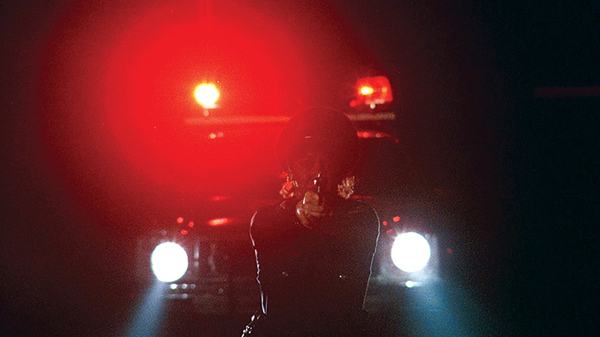
A police bullet echoing through the darkness of the Dallas freeway leads to a years-long deadlock in a blind spot of the Texas justice system. This harrowing crime documentary by Errol Morris meticulously sifts through archival dust and conflicting testimonies to trace the path of truth.
As a man remains trapped in the shadow of the death penalty, the camera reassembles the rationality of the streets and the missing pieces of the courtroom. This investigation into the legal labyrinth surrounding innocence awaiting execution on the gallows leaves the viewer face to face with a dark reality.
10. Pulp Fiction (1994) – Quentin Tarantino
Time, flowing through the streets of Los Angeles amid milkshakes and cheap coffee, shatters and reassembles itself in Tarantino’s hands. As the idle faces of the criminal underworld—grinning gangsters and boxers—melt together in the same crucible, a familiar tension hangs in the air at every street corner. With the threads of chronology tangled together, this black comedy sets the rhythm of the dark streets.
11. Do the Right Thing (1989) – Spike Lee
On that sweltering summer day when the asphalt was melting, the streets of Brooklyn were breathing in the hip-hop beats streaming from the radio and the tension seeping into the concrete. In the heart of the Bedford-Stuyvesant neighborhood, the sounds rising from every street corner and the mounting anger ignite the fuse of an inevitable clash. This drama, directed by Spike Lee, conveys the raw reality of a street battle where cultures collide—starting with the photographs on the wall of the corner pizzeria—through the very voice of the street. In this crowded atmosphere, where everyone on the street carries their own truth and anger, the heat rising from the asphalt gradually turns into a suffocating chaos.
12. Natural Born Killers (1994) – Oliver Stone
As bloody breaking news seeps into our homes through television screens, glorifying violence and turning it into an entertainment industry, two young lovers become the system’s most sought-after figures. In this crime-thriller directed by Oliver Stone, Mickey and Mallory—shaped by their traumatic pasts—set off on a highway escape, leaving a trail of bodies in their wake. The media’s insatiable appetite and the intoxication created by popular culture turn this duo’s killing spree into a massive spectacle. Every explosion that flashes across the screen flows by like a silent testament to how the system cheers on its own monsters.
13. Memento (2000) – Christopher Nolan
Set against the backdrop of Los Angeles, this neo-noir atmosphere seeps into the mind of a man wandering the streets with Polaroid photos in his hands and clues tattooed on his body. Christopher Nolan reverses the flow of time as he follows Leonard, who suffers from amnesia; this backward-unfolding puzzle draws the viewer into the character’s disoriented state of mind. In this dark hunt that stretches from motel rooms to police stations, as each new tattoo attempts to part the fog of the past, the truth itself grows even more blurred.
14. Gummo (1997) – Harmony Korine
In the back alleys of the town of Xenia, time seems to stand still amid the rubble left behind by a hurricane that swept through in the past. Solomon and Tummler try to fill this void with graffiti and aimless wanderings among the concrete walls. This dark comedy by Harmony Korine brings to the screen the rawest form of rule-breaking male friendship and suburban decay. Lonely faces wandering the streets create their own absurd rhythms in the town’s dusty air. This aimless drift, leading nowhere, leaves the audience face to face with a bleak mental map of modern life’s outlying neighborhoods.
15. Pi (1998) – Darren Aronofsky
Amid the concrete jungles of New York, a man struggling to endure the buzzing inside his throbbing skull. In the eerie atmosphere created by black-and-white frames, Darren Aronofsky paints a portrait of a genius trapped between the absolute order of mathematics and the fragile limits of the human mind.
Pages upon pages of number sequences, complex codes flickering on screens, and that constant headache gnawing at his mind. This mysterious and tense journey conveys, in a resonating state of mental disintegration, how a mathematician striving to decipher the universe’s code slowly severs his connection to reality.
16. Eraserhead (1977) – David Lynch
The gray streets, with that sound of steam coming from behind the radiator and a strange sense of emptiness, set the stage for Henry Spencer’s world. This nightmare, crafted by David Lynch, traps the viewer inside an industrial dream. That unbearable scream echoing through the house at midnight is not just the cry of a newborn baby; it turns into a mechanical torture that triggers a sense of claustrophobia. Amid the black-and-white palette and eerie silence, the horror of parenthood wanders the boundaries of surrealism. Henry finds himself trapped within this mutated universe, alongside his strange mother-in-law and his angry girlfriend. There’s a different kind of unease lurking around every corner.
17. Donnie Darko (2001) – Richard Kelly
The quiet of the 1980s suburbs is shattered by an airplane engine falling from the sky and the strange void it leaves behind. In this film by Richard Kelly, the tension of high school hallways and family dinners is warped within the mind of a teenager who sleepwalks. Navigating between mental breakdowns and fantastical elements, this mysterious atmosphere draws the viewer into a puzzle that pushes the boundaries of reality. The whispers of an invisible rabbit costume gradually transform the ordinariness of the suburbs into a surreal nightmare. An eerie journey that, as it gets lost in the labyrinths of a young mind, makes one feel just how fragile time and parallel universes truly are.
18. Pink Flamingos (1972) – John Waters
In a dilapidated trailer park on the outskirts of Baltimore, a provocation knows no bounds. This comedy-crime hybrid from John Waters defies all the conventions of popular culture to write its own rules. Divine, the queen of the underworld, faces off against a corrupt couple determined to dethrone her. This absurd clash—which transforms the concept of filth into an aesthetic act of resistance—shatters traditional family values and social norms piece by piece. With every frame functioning like a non-conformist installation, the film completely uproots the viewer from their comfort zone. When the squalor of trailer parks collides with obsessive competition, the result is a scene of utter chaos.
19. The Room (2003) – Tommy Wiseau
Set on the hilly streets of San Francisco, this is a bizarre universe where plastic American footballs fly through the air. This absurd drama, directed by Tommy Wiseau, shows just how strange ordinary relationships and friendships can become. The perfect life Johnny has carefully crafted begins to unravel quietly in small rooms filled with his closest friends. Those lost in the ordinary flow of life collide with one another in the shadow of betrayal and passion.
Hidden in every facial expression and every strange smile of the characters lies one of the most unconventional tones in cinematic history. Set under the California sun, this romantic dead end establishes its own unique rhythm, far beyond clichéd narratives.
20. Being John Malkovich (1999) – Spike Jonze
A miserable puppeteer pulling the strings amid New York’s concrete jungle discovers a narrow tunnel behind a filing cabinet at work that leads to another reality. This absurd blend of comedy and drama, directed by Spike Jonze, promises a strange journey through the dark recesses of the human mind and the twists and turns of the subconscious. This secret passage, which seeps into the skull of a famous actor, triggers the individual’s desire to abandon his own identity and body, while dragging everything left behind into absurd chaos. Beginning in a cramped office, this mental heist brings to the screen the state of alienation from one’s own self.
21. Clerks (1994) – Kevin Smith
An ordinary day spent behind the shutters in the biting cold of New Jersey. Kevin Smith uses humor to explore the monotony of two clerks trapped within a black-and-white frame and the hockey games taking place on the roof.
Set amid constantly whining customers, snacks, and endless dialogue, this comedy explores the sense of being stuck experienced by the underdogs right in the thick of life, as well as the bond of male friendship.
Related Movements & Themes
221k reads
Kült Filmler Listesi
16k reads
B Filmler Listesi
1.2k reads
Cinema of Attractions
Home
Film
Curation
Criticism
Menu