List of Films About Religion, Faith, and Culture
0
Films
0 min.
Read Time
0k
Views
Contents
The list of religious films includes films related to religion, faith, and cults. The films on the list also offer perspectives on Islam and the Abrahamic religions, as well as on prophets, atheism, deism, and agnosticism.
BM
Bahadır Mahmut
Curator
Related Movements & Themes
221k reads
Kült Filmler Listesi
120k reads
Klasik Filmler Listesi
The list of religious films includes films related to religion, faith, and cults. The films on this list offer perspectives on Islam and the Abrahamic religions, as well as on prophets, atheism, deism, and agnosticism.
What Are Religion, Belief, and Cults?
First, it is helpful to examine the concepts that form the basis of this film list.
What is religion?
T.D.K. Dictionary: A social institution that systematizes belief in and worship of God, supernatural powers, and various sacred beings; religion.
What Is Faith?
TDK Dictionary: A wholehearted commitment to a belief.
What is a cult?
T.D.K. Dictionary: 1. Religion (I) – A social institution that systematizes belief in and worship of God, supernatural powers, and various sacred beings; the religious establishment.
…
3. A movie or similar work that attracts excessive attention during a specific period.
Oxford Dictionary: A way of life, attitude, or idea that has become popular.
Upon examining the concepts above, it becomes clear that their common thread is the act of attachment. The core action is not knowing, learning, struggling, fighting, loving, or anything else—it is attachment. Once the motivation is there, the object of attachment can easily be found. This is one of the reasons why there are thousands of religions, sects, and prophets. The motivation to become attached can be redirected from religions to art, nature, family, a lover, a child, money, justice, life, a music group, or any other object. For this reason, when you look at it closely, this list of films can be interpreted as films about “irrational, excessive attachment” to just about anything, transcending many broader and narrower categories. Although these films may appear to be different movies telling different stories, their central theme is “irrational, excessive attachment.” The subject of this attachment can vary.
The Importance of the Theme of Attachment in the Context of Religion, Belief, and Cults
Religion, faith, and cults provide the most fertile ground for irrational, excessive attachment. References to eras before the advent of science; propositions you can never know but can only believe in; sacred entities capable of crushing any rational thought…
Whether you believe it or not, when we look back, the concepts of religion, belief, and cults have shaped the world and world history from beginning to end. Even if these concepts lack a rational foundation, their effects are vast and distinct. Whether directly or indirectly—from wars to discoveries, from borders to cultures, from life’s motivations to financial institutions and art—when you dig deep enough into any of these areas, you will inevitably encounter references to religion, faith, or culture.
The Relationship Between Art, Religion, Belief, and Cultures
Artworks have not only contained references to these concepts but have themselves gradually become points of reference for them over time. The primary reason for this is that these concepts lack concrete, tangible references in the literal sense. Art disciplines have become a lifeline for establishing a connection to these concepts.
The relationship is two-way. While religion, faith, and cults influence and transform artistic disciplines—a fresco can alter the entire history of a religion, or a musical composition can become an integral part of another religion’s rituals—the story of one man’s suffering can influence the billions who follow.
This two-way relationship has yielded various outcomes. For example, church choirs, whirling dervishes, and hymns. Or the Quran, whose artistic value serves as proof that it was revealed by God. Films made to convey religious messages, or songs, choreographies, and dances created to elevate spiritual presence and enable the community to act in unison.
As a result, both sides of this intricate relationship have drawn immense inspiration from one another. The film list below will explore the relationship between cinema and religion, faith, and cults. While some of the films on the list support and exalt these concepts, others will focus on the lack of foundation in these concepts and attempt to undermine them.
Religion, Beliefs, Cults, and Cinema
A person’s approach to the concepts of religion, faith, and cults mirrors the way a viewer engages with cinema and the motivation behind that engagement. When watching a film, cinema viewers initially accept the ideas and methods of the filmmakers. Films are, of course, subject to scrutiny, but generally, this space for questioning opens up only after their own universes have been accepted. For example, once you accept the Middle-earth of *The Lord of the Rings*, you then question the elements within the film that do not belong to that universe. It works similarly with concepts of religion, faith, and culture: since you’ll be immersed in a creator’s world, you begin to live within the universe you’ve accepted. There’s just one catch: in this universe, questioning—except within certain narrow boundaries—may not be well received.
The Film List’s Approach
The films included in the list of movies about religion, faith, and cultures can be categorized under different headings and the intersections of these headings.
Films About Islam or Other Divine Religions
In fact, all of these films have taken on the task of reaffirming their own religion and establishing an outward reference. All ideas, views, and religions begin to weaken over time. For this reason, the more they are repeated, the more opportunity they have to maintain their existence. Art—and cinema in particular—is one of the most suitable channels for this purpose today. Narratives that have been repeated countless times through literature, painting, and sculpture are now being conveyed through the medium of cinema.
Films falling under this category are more likely to receive funding compared to other films.
Prophet Films
Films in this category include both those featuring official prophets recognized by the monotheistic religions and those featuring characters who take on prophetic qualities for the purposes of the film. A common theme in these films is the prophet’s struggle against the corrupt system in which he finds himself due to his mission, as well as the hardships he faces because he is different from those around him. Some of the prophets depicted in these films serve religion, while others present an anti-religious stance.
Films on Atheism, Deism, and Agnosticism
Films based on atheist, deist, and agnostic ideas make up a significant portion of the list. Although these films seek to refute religions through logic, they may contain internal contradictions regarding the ideas they advocate.
Best Of
Selection List
Curator's Order
1. Rosemary's Baby (1968) – Roman Polanski
Behind the gloomy, Gothic facades of Central Park West, that apartment—where a couple had settled with the dream of building a new life away from the hustle and bustle of Manhattan—slowly turns into a nightmare. In this classic thriller and horror film by Roman Polanski, a young couple’s desire to have a baby is overshadowed by the strange interest of their nosy neighbors.
Whispers seeping through the walls and strange nightmares gnaw at the pregnant woman’s mind, while her self-centered husband quietly circles this dark vortex, driven by his own ambitions. In this claustrophobic atmosphere where paranoia escalates step by step, every new neighbor’s door is the gateway to a hidden trap.
2. Carnival of Souls (1962) – Herk Harvey
The sharp smell of asphalt and a heap of scrap metal. Mary Henry, the sole survivor of a fatal car accident, tries to cling to the void left behind. When she steps into the quiet town in Utah, she hopes to soothe the strange loneliness enveloping her soul by playing the organ at the church.
But this fearful escape is interrupted by ghostly visions that take hold of her mind. As the female protagonist’s grip on reality weakens, the abandoned amusement park on the outskirts of town beckons her with an irresistible pull. This mystery and fantasy-laced tale, directed by Herk Harvey, draws the audience into a breathless nightmare, while the secrets of the past lie in wait in the darkness.
3. Jesus Camp (2006) – Rachel Grady, Heidi Ewing
Under the scorching summer sun, children’s laughter gives way to deep-voiced hymns and fervent prayers. This harrowing documentary by Rachel Grady and Heidi Ewing offers a glimpse into a radical summer camp in North Dakota. Those moments when the children, flags in hand, lose themselves in the moment quietly raise the question of where the boundaries of faith end and manipulation begins.
It is unsettling to witness how children’s innocence is molded by dogmatic discipline. The camera records these minds—shaped by the ambitions of adults—from a distance yet with a keen eye.
4. The Holy Mountain (1973) – Alejandro Jodorowsky
It all begins in the middle of the desert, with the footsteps of a handless thief echoing through the void. Alejandro Jodorowsky invites seven characters—clinging to their material desires in a decaying world—and a messianic figure to a bizarre ritual interwoven with alchemy and surrealism. On this journey toward the Holy Mountain, the struggle to shed worldly burdens transforms into a complex and psychedelic visual experience that pushes the boundaries of cinema. Under the mind-bending weight of esoteric symbols, that mysterious ascent—one that will shake the throne of the gods—slowly takes shape.
5. The Ten Commandments (1956) – Cecil B. DeMille
A life that stretches from the waters of the Nile to the marble halls of the palace begins with a magnificent illusion. Directed by Cecil B. DeMille, this monumental production brings to the screen the fate of a people enslaved under the ancient Egyptian sun and the inner awakening of a prince.
Confronted with his Hebrew roots, Moses breaks free from the palace’s powerful shadow and sets out on the dusty paths of the desert. Embracing all the grandeur of the historical drama genre, the film conveys to the audience the most ancient embodiment of faith and the struggle for freedom.
6. Zeitgeist: The Movie (2007) – Peter Joseph
Built around the hidden mechanisms of credit systems and the backdrop of global capital, this documentary takes the viewer far beyond the conventional historical narrative. Directed by Peter Joseph, the film navigates the intersection of economic theory and social beliefs, laying bare the mechanisms of power that have been in place for centuries. Secret agreements and monetary policies that shape the course of the modern world are laid out on the table.
By examining the workings of these systems and backdoor diplomacy from a different angle, this historical documentary offers a perspective that challenges conventional wisdom. While questioning the manipulations that have become an inescapable part of our daily lives, it shares unsettling details about how the masses are steered.
7. Holy Smoke (1999) – Jane Campion
The story begins with a young woman seeking enlightenment amid the desert winds of India who falls under the influence of a cult, and evolves into a series of confrontations set in barren landscapes. This blend of dark comedy and drama, directed by Jane Campion, brings to the screen the tension between two wills that clash in an isolated cabin far from Sydney. A mind-programming specialist held captive by her family is forced to forget everything she knows in the face of her stubborn victim, as the power struggle between them grows increasingly absurd and exhausting. Amid the drought, the concepts of faith and manipulation intertwine without overwhelming the viewer.
8. The Sentinel (1977) – Michael Winner
That magnificent apartment building in the old, Gothic streets of Brooklyn Heights was waiting for its new resident. A young model who steps into this dilapidated building, leaving behind the glitzy pace of the fashion world, soon realizes she is not surrounded by ordinary neighbors. Strange sounds echoing through the hallways and eerie faces slowly draw her into a nightmare beyond reality.
Directed by Michael Winner, this dark journey of horror and mystery brings to light the ancient secrets hidden within New York’s stone walls. Traces of secret cults and eerie events that open the gates of hell transform the apartment building into a suffocating trap. Each new floor pushes the young woman deeper into despair and fear.
9. Life of Brian (1979) – Terry Jones
In the dusty streets of Bethlehem, Brian—who is trying to lead an ordinary life in the shadow of the Roman Empire—suddenly finds himself cast as a false messiah, with crowds chasing after him. Directed by Terry Jones, this anarchic comedy satirizes the dogmas of antiquity and independence movements with absurd humor. Caught between his overprotective mother’s scolding, show-off Romans, and organized ignorance, Brian is right in the middle of a satire-filled chaos woven around the concept of faith. While tracing the origins of sacred texts, the film uses sharp humor to lay bare the masses’ desire for blind faith.
10. Ordet (1955) – Carl Theodor Dreyer
In the windy countryside of Denmark, the silence echoing within the black-and-white frame envelops the Borgen family’s home. Father Morten’s rigid faith clashes in different ways within his sons’ minds; some wander on the fringes of piety, while others lose their minds and proclaim themselves the Messiah. Carl Theodor Dreyer weaves this deeply rooted crisis of faith and religious bigotry into the most fragile moments of the human spirit.
The balance within the home is upended by the pregnant daughter-in-law’s difficult labor. Trapped within the narrow confines of the village, the family members find themselves caught between voices from the beyond and rigid dogmas, while the concept of a miracle takes its place at the table. In this landscape, where everyone’s truth and faith are weighed in their own consciences, the fine line between hope and reason begins to slowly fade.
11. The Passion of Joan of Arc (1928) – Carl Theodor Dreyer
Amid the cold stone walls of the fifteenth century, the trial of a young woman who claims to have spoken with God unfolds on screen through the most incisive visual language of silent cinema. Carl Theodor Dreyer weaves a courtroom—trapped within close-ups and tears—into a breaking point of faith and justice.
In the oppressive atmosphere of the interrogation room, Jeanne resists the judges’ pressure and is left alone to face the accusations leveled against both her body and her soul. The suffocating atmosphere created by the black-and-white frames plunges the viewer into the midst of one of history’s most ruthless judicial processes.
12. The Message (1976) – Moustapha Akkad
The scorching desert winds of the sixth century are shaken by a new voice echoing through the stone streets of Mecca. In this epic historical production, Moustapha Akkad weaves the birth of monotheism and the walls of oppression erected by the pagan aristocracy not as a breathless adventure, but as a patient epic drama. The fear growing in the shadow of Abu Sufyan clashes with the resistance of a handful of people struggling to survive through their faith.
The camera’s frame conveys the raw texture of the era in every detail, from the dust kicked up by feet walking through the desert to the majestic presence of the Kaaba. The political tension underlying the battle scenes and the exiles endured for the sake of faith form the dramatic backbone of the film. While Akkad paints a large-scale historical fresco, he does not push the human story into the background.
13. The Man from Earth (2007) – Richard Schenkman
Belongings crammed into cardboard boxes and ordinary paintings hanging on the wall. John Oldman’s farewell party begins not in a crowded hall, but in the coolness of an empty house in the midst of a move. Sitting around this table, his academic friends realize they’ve never actually heard the real story of the man they’ve known for years.
Directed by Richard Schenkman, this drama completely turns the conventions of the science fiction genre on their head. Rather than hiding behind visual effects, it is woven together with the smell of tobacco in the room and the growing silence. The weight of a ten-thousand-year-long life is put into words in an ordinary living room.
14. The Tree of Life (2011) – Terrence Malick
On the dusty afternoons of the 1950s Texas prairie, bathed in the sun’s yellow glow, the eldest son, Jack, experiences his first clash between innocence and authority. Terrence Malick’s camera merges the tensions within the family and the stark distance between father and son with the infinity of time and the universe.
The fragile memories of childhood and a cosmic inquiry into existence melt together in the same crucible. Blending elements of drama and fantasy, this narrative transforms a personal grief into a universal memory, inviting the viewer to confront their own roots.
15. There Will Be Blood (2007) – Paul Thomas Anderson
The drilling derricks that rose across California at the turn of the century brought much more to the surface than just black gold buried beneath the earth. Directed by Paul Thomas Anderson, this drama explores how greed and ruthless capitalism corrode the human spirit, all within a quiet and tense atmosphere. Daniel Plainview, along with his adopted son, manipulates landowners while engaging in a relentless power struggle with a young preacher who crosses his path. Money, faith, and loneliness intertwine in this landscape.
16. Nazarín (1959) – Luis Buñuel
Amid dusty roads and destitute towns, there is a priest who carries his faith not as rigid dogma, but as pure compassion. This drama by Luis Buñuel examines the strange anger and unease that the desire to do good stirs up in people. As Nazarín navigates the poverty and superstitions around him, he is tested by the hypocrisy of ordinary people.
As the dust of the streets settles on the priest’s cassock, the fine line between faith and breath grows ever thinner with every step. Buñuel does not offer the audience easy answers as he examines the concept of morality. We simply witness the solitary journey of a man woven with devotion.
17. Takva: A Man's Fear of God (2006) – Özer Kızıltan
In the old neighborhoods of Istanbul, Muharrem leads a quiet life interwoven with prayer and poverty. His days are spent in remembrance of God and in seclusion, cut off from the outside world. Directed by Özer Kızıltan, this drama focuses on the conflict between faith and the ruthless order of the modern world.
An unexpected offer from a wealthy religious order forces him to confront the relationships with money and property that he has long avoided. As Muharrem takes to the streets on a fundraising mission, he is drawn into an identity crisis that challenges the boundaries of his faith. Disturbing dreams that interrupt his nights completely upend his inner balance.
18. Faust (1926) – F. W. Murnau
In a town where darkness envelops the streets and the plague is ravaging the people, he finds himself trapped in the shadow of Gretchen, an elderly alchemist nearing the end of a life woven with knowledge. F. W. Murnau’s camera brings the weaknesses of the human spirit and the stench of decaying flesh to the screen through the grotesque lines of German Expressionism.
That dangerous bargain with the devil begins with the promise of eternal youth, but the price is to set everything left behind ablaze. Drawing on mythology, this Gothic fantasy leaves the viewer in the midst of a breathless darkness at that ancient threshold where faith and greed collide.
19. Andrei Rublev (1966) – Andrei Tarkovsky
A painter making his way step by step along the muddy roads of the fifteenth century, in the shadow of famine and slaughter. Andrei Tarkovsky paints a portrait of a monk trapped between faith, art, and the fragility of the human spirit in this gloomy medieval Russian atmosphere.
Amid the Mongol invasions and the ruthless world beyond the monastery walls, an artist who creates icons seeks tranquility. The black-and-white frames, bearing the weight of time, allow the viewer to directly feel the cost of creation and the depth of silence.
20. The Last Temptation of Christ (1988) – Martin Scorsese
Set against the backdrop of the desert and the cross, this harrowing story brings to its peak the intense spiritual weight carried by Martin Scorsese’s camera. Living as an ordinary carpenter on the scorching soil of Jerusalem, Jesus is crushed under the weight of his divine destiny and loses his way in a perilous labyrinth where faith and desire intertwine.
Caught between the bloody atmosphere of the Roman occupation and that ancient, inner desire, his soul is torn between the weaknesses of an ordinary man and the destiny of a savior. The steps of a man walking toward the cross—seeking love instead of violence—leave the viewer face to face with the darkest and most human corners of the sacred.
21. Breaking the Waves (1996) – Lars von Trier
In a remote, deeply religious Scottish village cut off from the outside world, strict traditions and the weight of religious belief suffocate every moment of life. Lars von Trier focuses on the lives of those shaken by an oil rig accident in this troubled landscape.
Bess, who maintains a strange and dangerous bond with her bedridden husband, is gradually driven to the brink of the abyss under the insidious shadow of the church and authority. On the fine line between drama and romance, faith and subjugation become intertwined.
22. Wings of Desire (1987) – Wim Wenders
In the grayness of a divided city, two melancholic observers wander beyond the bounds of time. Angels flitting through the streets of Berlin listen to the whispers of humanity, touch upon loneliness in the silence of libraries, but can never break the rules. This drama by Wim Wenders weaves, in black-and-white frames, the desire to abandon the coldness of immortality and immerse oneself in the sorrows of a mortal world. The dreams of a trapeze artist suspended beneath a circus tent trigger the fall of a celestial being to Earth.
23. The Exorcist (1973) – William Friedkin
Set against the cold streets of Washington, D.C., this William Friedkin classic begins inside an ordinary apartment, caught in a spiral of crisis and disbelief. That first moment when the silence is broken evokes not so much the shifting of objects in the room as the unease of a person’s alienation from their own sense of the sacred.
As a mother’s helplessness echoes within the stark walls of the Roman Catholic Church, the cold breath of the supernatural traps the viewer in those dimly lit corridors as well. The darkness deep within grows with whispers and begins to shake even the sturdiest pillars of faith.
24. The Devils (1971) – Ken Russell
The sound of bells ringing through the streets of Loudun in the late sixteenth century opens the gates to a hell where bigotry and passion intertwine. This harrowing period drama by Ken Russell exposes the sordid alliance between faith and politics while plunging the audience into an eerie atmosphere. Desires locked away within the monastery walls poison the fate of a town under the guise of a witch hunt. The screams echoing through the streets and the chaos created by obsessed minds leave the audience in the midst of a dark chapter of history.
25. Häxan (1922) – Benjamin Christensen
That strange scent of incense rising from the dark recesses of the Middle Ages comes to life through Benjamin Christensen’s camera at the eerie intersection of history and fear. Under the guise of witchcraft and sorcery, we witness how mental anguish, repressed urges, and social paranoia are intertwined.
Woven with the possibilities of silent cinema, these black-and-white scenes lay bare an obsessive witch hunt stretching from the Inquisition’s interrogation tables to the monasteries. This folkloric nightmare, which illustrates how superstitions enslave the human mind, invites us on an unsettling journey through history’s strangest pages.
26. The Matrix (1999) – Lana Wachowski, Lilly Wachowski
In that room, where pale green code flowed across the dark screen, the boundaries of reality had long since dissolved. This cyberpunk universe, created by Lana and Lilly Wachowski, depicts a bleak dystopia in which humanity is trapped in a dream simulated by machines. Neo, an ordinary programmer by day, is a restless shadow by night, chasing the truth. His path, which intersects with that of the underground resistance, creates a pivotal moment that carries him beyond the familiar world. In this system ruled by artificial intelligence, the quest to trace the path of human will and philosophical inquiry resonates like an ancient call to awakening echoing through the digital cages.
27. Au Hasard Balthazar (1966) – Robert Bresson
On those rocky, dusty country roads where a donkey named Balthazar is passed from hand to hand by people, everything flows by in black and white. As Robert Bresson observes the sins and innocence borne on an animal’s back, he does not allow the camera to succumb to either sentimental exploitation or detached observation.
Dragged between the arrogance and cruelty of his owners, this silent creature bears his own fate amidst the youth gangs and impoverished villagers around him. The story of Balthazar, crushed under the weight of life and human nature, paints a portrait of pure resistance and acceptance.
28. Ben-Hur (1959) – William Wyler
Lives strained under the iron fist of the Roman Empire in the dusty streets of first-century Jerusalem. Directed by William Wyler, this magnificent historical adventure epic depicts a dramatic journey stretching from opulent palaces to the dark dungeons of galleys.
The struggle for survival of a Jewish nobleman condemned to slavery by the betrayal of his childhood friend. Caught between the splendor of ancient Rome and the suffering of the oppressed, this journey transforms into a breathtaking showdown at the crossroads of vengeance and faith.
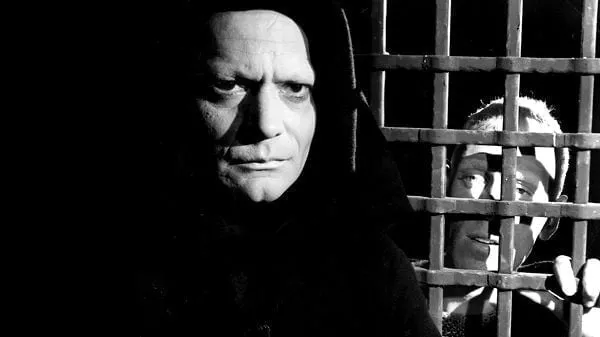
29. The Seventh Seal (1957) – Ingmar Bergman
Footsteps echoing across parched earth, in the shadow of the plague. Knight Antonius Block, returning from the Crusades, finds himself on the brink of a dangerous game as he faces the inevitable end he encounters while trudging wearily through the plague-ravaged lands of the Middle Ages. In the harsh and eerie atmosphere created by the black-and-white imagery, he feels the cold breath of death on the back of his neck.
He sits down at a table with the figure standing before him. This metaphysical drama, which explores the meaning of life, navigates the dark labyrinths of the human mind, caught between faith and doubt. Time grows short in the villages ravaged by the plague, amid the flames of burning witches, and amidst the revelry of traveling troupes.
30. Onibaba (1964) – Kaneto Shindō
We find ourselves in the world of two women struggling to survive in the swamps of the Sengoku period, amid the mud and tall grass. Kaneto Shindō uses the sharp contrast of black-and-white imagery to depict the cycle of murder and plunder committed by this pair—who are far from the war but feel its violence breathing down their necks. News of death from the distant front and the prohibitions that intervene fuel the jealousy and the eerie will to survive that grow within the confines of a cramped hut. When night falls, the whispers rising from the swamp and that grotesque mask leave one face to face with one’s own instincts.
31. Eyes Wide Shut (1999) – Stanley Kubrick
On a freezing winter night in Manhattan, the life of a married couple returning home from a glittering New Year’s Eve party is shaken by an ordinary confession. This mysterious drama, bearing the signature of Stanley Kubrick, centers on the eerie nighttime journey undertaken by a doctor named Bill Harford after he is confronted with his wife’s desires. Beginning under the neon lights of New York’s streets, this journey opens up into a dark world ruled by masked balls and secret societies. As dangerous fantasies replace innocence in opulent mansions, the characters’ repressed urges come to the surface. This bizarre escapade, which lasts until dawn, lays bare the bottomless abyss lurking beneath an ordinary marriage.
32. Orgazmo (1998) – Trey Parker
Amid the artificial glitz of Los Angeles, a young Mormon who is deeply devoted to his faith finds his door knocked on by an unexpected industry. This absurdist comedy, directed by Trey Parker, follows an innocent young man—who has drawn attention for his martial arts skills in street fights—as he steps onto the set of an adult film. Caught between moral values and the realities of the industry, this independent film brings to the screen—in its own unique voice—our hero’s bizarre career in front of the camera and the absurd events unfolding around him.
Related Movements & Themes
221k reads
Kült Filmler Listesi
120k reads
Klasik Filmler Listesi
Home
Film
Curation
Criticism
Menu