List of Films Related to Women, Women's Rights, and Feminism
0
Films
0 min.
Read Time
0k
Views
Contents
The list focuses on strong female characters who are struggling with imprisonment, economic hardship, and religious, family, and social pressures, and who are seeking justice and, at times, revenge. It also features films that have played a significant role in the women’s movement.
BM
Bahadır Mahmut
Curator
Related Movements & Themes
221k reads
Kült Filmler Listesi
23k reads
Aşk Filmleri Listesi
The list of Films on the Concept of Woman and Feminism aims to summarize the relationship between women, the concept of woman, and feminism in cinema.
Because cinema emerged in the late 19th century, women became involved in it in a more tangible way than in other artistic disciplines.
In 1895, Alice Guy-Blaché watched the Lumière Brothers’ film *Employees Leaving the Lumière Factory* (1895). Deeply moved by the first film in history, just like everyone else, Alice Guy began making films under Gaumont, one of the largest film companies of the time.
During her filmmaking career, Alice Guy produced innovative works. According to some sources, she directed *The Cabbage-Patch Fairy* (1896)—considered the first narrative film—before Méliès’s *A Trip to the Moon* (1902), which is also recognized in the same category. She incorporated feminist elements into her films. In particular, films such as *The Consequences of Feminism* (1906) contributed to the questioning of gender roles and social expectations. By assigning significant and powerful roles to female characters in the films she directed, she ensured that women played an effective role in storytelling. This was an important step in demonstrating that female characters were not merely supporting roles to male characters.
.embed-container { position: relative; padding-bottom: 56.25%; height: 0; overflow: hidden; max-width: 100%; } .embed-container iframe, .embed-container object, .embed-container embed { position: absolute; top: 0; left: 0; width: 100%; height: 100%; }
Despite—or perhaps because of—all she had accomplished, Alice Guy was unable to re-enter the industry after being sidelined for several years. She was ostracized. Her name was removed from the films she directed, and these films were presented as if they had been made by her (male) assistants. Some of her films disappeared amid this lack of recognition.
The fact that Alice Guy’s courage and technical skills were downplayed—precisely because she could not find a place within a collective women’s movement during a male-dominated era and industry—would become the norm in cinema in the years to come, much like in other sectors.
It can be quite difficult for a viewer or someone unfamiliar with the subject to see that women were excluded from cinema, faced difficulties, and were hindered. This is because, from the very beginning, women have been highly visible in cinema. The only problem is that women are stereotyped in nearly every context where they appear.
.embed-container { position: relative; padding-bottom: 56.25%; height: 0; overflow: hidden; max-width: 100%; } .embed-container iframe, .embed-container object, .embed-container embed { position: absolute; top: 0; left: 0; width: 100%; height: 100%; }
The stereotyping of women in cinema helps make the patriarchal order more understandable and easier to implement by women, men, and especially children. Stereotyping does not merely attempt to fit a particular group into specific molds; it also shapes the perspectives of all viewers according to the stereotypes being presented.
Female Stereotypes in Cinema
•
Damsel in Distress: This stereotype involves portraying a woman as constantly in need of help from others, as weak, or as defenseless. For example, in older action films, female characters are often portrayed as figures who are kidnapped by villains or are in danger.
•
Manic Pixie Dream Girl (MPDG): This stereotype involves portraying female characters as whimsical and romantic figures who add color to the male protagonist’s life. These characters are presented as figures without their own goals or depth, serving solely to facilitate the male character’s development. For example, the character Summer in the movie “500 Days of Summer” is an example of this stereotype.
•
Femme Fatale: This stereotype defines female characters by their sexual allure and manipulative abilities. They are typically portrayed as characters who deceive male characters or lead them into evil. For example, the film *Basic Instinct* depicts a femme fatale, with the character Catherine Tramell serving as an example.
•
Housewife: This stereotype portrays female characters as people who do nothing but housework and live solely for their families. Their lives generally revolve around their families, and they appear to have no careers or goals of their own. For example, some Hollywood films from the 1950s made widespread use of this stereotype.
•
The "Young and Beautiful" Stereotype: This stereotype suggests that female characters are valued solely for their youth and physical beauty. Older women or those with different body types are often excluded by this stereotype. For example, many romantic comedy films reflect this stereotype while telling the love story of a young and beautiful woman.
While women are often cast in stereotypical roles on screen, they have long been denied access to critical decision-making positions in the industry. Nevertheless, it is possible to find films in which women transcend these stereotypes. This is particularly common in the innovative Soviet montage film movement of the early period. For example, in Sergei Eisenstein’s *Strike* (1925) and *Mother* (1926), as well as Fridrikh Ermler’s *Fragment of an Empire* (1929), women are portrayed as deep, complex, and active characters—far beyond mere stereotypes. What Eisenstein did in these films was not to grant women preferential treatment, but simply to objectively depict their role within the revolution.
Soviet montage films from the early days of cinema or the individual contributions of some influential female directors (Alice Guy (1873–1968), Lois Weber (1879–1939), Dorothy Davenport Reid (1895–1977), Germaine Dulac (1882–1942), Anita Loos (1889–1981), Nell Shipman (1892–1970), Dorothy Arzner (1897–1979) …) laid the groundwork for women to gain greater prominence in cinema as women began to be repositioned in society following World War II.
Women’s integration into the economic system following World War II
The deepening of women’s role in society and the economic system in the years following World War II paved the way for the second wave of feminism. During the same period, the spread of liberal ideas, increasing economic prosperity, technological advancements, and the rise of independent cinema enabled women to take on greater roles within this expanding sector.
Three Main Waves in the History of Feminism
•
First-Wave Feminism: The primary focus of this wave was women’s attainment of the basic right to vote in the 19th and early 20th centuries. First-wave feminists advocated for women’s equal right to vote, and their main goal during this period was securing the right to vote.
•
Second-Wave Feminism: Second-wave feminism was a movement that was influential from the late 1960s through the mid-1980s. Feminists during this period focused on the gender inequality women faced in society. Issues such as equality in the workplace, reproductive rights, and the division of labor within the home were the main focal points of this period. Additionally, sexual freedom and sexual identity were also on the agenda of second-wave feminists.
•
Third-Wave Feminism: Third-wave feminism began to gain momentum in the late 1990s. This wave adopted a critical perspective on second-wave feminism and focused on greater diversity and multiple identities. It adopted a perspective that recognized gender inequality was not limited to cisgender women and encompassed ethnic, cultural, and sexual diversity. Third-wave feminists focused on women’s freedom of self-expression and the acceptance of gender identities that fall outside societal norms.
During the period corresponding to the second and third waves of feminism, the film industry was introduced to important female directors: Agnès Varda, Jane Campion, Kathryn Bigelow, Lina Wertmüller, Sofia Coppola, Catherine Breillat, Lucrecia Martel…
As women began to take on more critical decision-making roles within the industry, tests emerged to determine how gender-equal or women-friendly films were. The first and most well-known of these was the Bechdel Test.
The Bechdel Test
To pass the Bechdel Test, the following criteria must be met:
•
There must be at least two female characters in the film.
•
These female characters must speak to each other.
•
This conversation must not be about men. In other words, the female characters must not discuss male characters or topics related to men.
Over time, the Bechdel Test has become the most widely accepted test for determining a film’s treatment of women. Nevertheless, it is clear that the test’s criteria are narrow in scope and open to manipulation. Even a film that is not egalitarian can pass the Bechdel Test if it is designed to do so.
Best Of
Selection List
Curator's Order
1. Daisies (1966) – Věra Chytilová
Guided by the logic that “if the world is already corrupt, then so are we,” two young women turn into a wave of destruction that sweeps through the streets of Prague and across banquet tables. In this rebellious and anarchic classic of the Czech New Wave, rules, tables, and bourgeois norms are shattered one by one.
Shaped by Věra Chytilová, the film evolves into a wild celebration of anarchy, adorned with color filters, bizarre sound effects, and a collage-like aesthetic. Marie and Marie roam the streets, mocking all of life’s false seriousness.
2. Cléo from 5 to 7 (1962) – Agnès Varda
As the streets of Paris flow with the gray yet lively rhythm of the 1960s, a young singer waits for the results of her medical tests. The city is too crowded and fast-paced to dispel the fear weighing on her chest.
In this dramatic midday snapshot, Agnès Varda intertwines a personal moment of waiting with the rhythm of the streets. As Cléo walks step by step, she reevaluates the face she sees in the mirrors and the flow of life. Time is running out.
3. Mustang (2015) – Deniz Gamze Ergüven
In a remote village on the Black Sea coast, the home of five sisters is slowly turning into a fortress with iron bars. Directed by Deniz Gamze Ergüven, this harrowing drama captures the sisters’ sense of entrapment as they struggle to transition from girlhood to womanhood under the shadow of conservative values.
An innocent afternoon spent on the beach with some boys is all it takes for every door in the house to be locked. In this confined space where marriage negotiations have begun, the sisters struggle to breathe, clinging to the network of solidarity they have woven with their own hands. As the walls of tradition rise higher, the possibility of escaping to the outside world becomes their only way out.
4. Thelma & Louise (1991) – Ridley Scott
Two women fleeing the stifling atmosphere of Arkansas take the sharpest turn of their lives as they navigate desolate highways. Directed by Ridley Scott, this modern road movie transforms an ordinary weekend getaway into a story of escape with no turning back.
Dusty, barren landscapes and endless highways present a whole new terrain where friendship and freedom intersect. This perilous journey, undertaken shoulder-to-shoulder by two women, captivates the audience as a defiant challenge to lives squeezed by the system.
5. Monster (2003) – Patty Jenkins
It all begins in the run-down motels along Florida’s highways, amid lives on the brink of extinction. In this dark atmosphere of the late ’80s, for Aileen Wuornos, drifting along the roads, life is already synonymous with defeat from the very start. The fragile desire to hold on that she felt when she met Selby soon transforms into a different reality.
In this crime-drama directed by Patty Jenkins, the inevitable fate of a woman caught in the grip of poverty and violence—as she is drawn step by step toward her end—is portrayed with a harshness close to documentary realism. Drawing on a true story, this narrative lays bare—in uncompromising terms—the fractures in the character’s mind and her struggle for survival, which spirals into a chain of murders.
6. Head-On (2004) – Fatih Akin
In the seedy streets of Hamburg, a young woman crushed under the weight of traditional pressures and a forty-year-old man lost in a quagmire of alcohol and drugs. The sham marriage they arranged to break down family barriers turns into a dangerous spark that ignites in the middle of a dark street. Directed by Fatih Akin, this drama plunges the audience into the heart of two wounded souls’ struggle to cling to one another. Steps taken out of a survival instinct gradually evolve into a sharp cycle of love and destruction. The rage spilling out of the cramped rooms pushes both characters toward an inescapable end.
7. 3-Iron (2004) – Kim Ki-duk
The world of a young man who breaks into empty homes while their owners are on vacation and lives there unseen by anyone changes in the midst of silence. This drama, bearing the signature of Kim Ki-duk, weaves a strange tale of house arrest and belonging that begins where words end. Everything changes when the thief, who wanders like a ghost among the belongings left behind by the home’s real owners, crosses paths with a young woman trapped in an abusive marriage. This intimate partnership, forged through golf clubs and silent footsteps, redefines the concepts of ownership and loneliness in its own rhythm.
8. Erin Brockovich (2000) – Steven Soderbergh
Being left alone with three children in a home where bailiffs were knocking at the door and the refrigerator contained nothing but stale bread... That was exactly what life was like for Erin. As she stepped into that law firm in hopes of finding a job, she was still unaware that she would be tracking down the truth while getting lost among the dusty files that no one bothered to look at. Instead of a suspense-filled revenge story, Steven Soderbergh centers the film on a massive legal battle that grows out of the tenacious steps of an ordinary woman. We bear witness to how crimes that are often swept under the rug—such as environmental pollution and corporate negligence—are brought to light by a mother’s determination. There’s no need for flowery language; this film is the very embodiment of the silent yet devastating rebellion mounted by those doomed to lose, right from their desks.
9. Million Dollar Baby (2004) – Clint Eastwood
It all begins in the dusty, stuffy gyms of Los Angeles, amid the clanging of soup pots echoing beneath gloomy shadows. Frankie Dunn is an aging trainer who has been unable to bridge the gap between himself and his daughter and has shut himself off from the world. Maggie, who walks through the gym’s door, is stubborn and determined enough to reclaim everything she’s lost in the ring.
In this drama, Clint Eastwood tells the story of two lonely souls whose destinies intersect in a boxing gym. Maggie’s unwavering determination and Frankie’s stern demeanor gradually evolve into an unlikely yet powerful bond. As the pair stand together against the ruthless rules life has imposed on them, that fragile friendship, hidden in the shadows, grows deeper with every step they take.
10. Don't Let Them Shoot the Kite (1989) – Tunç Başaran
Behind high walls and iron gates, the world seen through a child’s eyes is completely different from the one outside. This drama by Tunç Başaran begins with the footsteps of a young child who finds himself in a prison courtyard.
Barış, forced to grow up in prison because of his mother’s sentence, spends his days amid shades of concrete gray. In a world where weighty concepts like freedom of expression are trapped behind prison walls, he dreams only of a kite soaring through the sky.
The innocent bond that forms between him and İnci softens this bleak landscape just a little. Far from the noise of the outside world, this struggle for life, seen through the eyes of a small child, awaits the audience.
11. Jules and Jim (1962) – François Truffaut
In the carefree days of Paris just before World War I, Jules—a quiet, unassuming writer—and his lively French friend Jim both find themselves drawn to the same woman. Catherine’s unpredictable whirlwind upends the friendship between the two men and turns the course of their lives upside down.
Directed by François Truffaut, this drama brings a love triangle spanning decades to the big screen with the elegance of black-and-white cinematography. Woven around themes of jealousy, belonging, and open relationships, this story immerses the audience in the bohemian atmosphere of the era and the characters’ turbulent emotional states.
12. Amélie (2001) – Jean-Pierre Jeunet
We’re standing behind the fogged-up window of a small café with red curtains on the streets of Montmartre. Jean-Pierre Jeunet sprinkles a magical dust over mundane reality; yellow hues that cast a nostalgic tone over the scene and Paris’s unique, fairy-tale-like rhythm seep into the frame. A young waitress, lost in the labyrinth of her own inner world, decides to secretly intervene in the lives of those around her.
Far from the clamor of grand dramas, this quirky comedy opens up a space of hidden tenderness in the smallest details. As the footsteps of a shy girl trying to mend broken hearts echo through the cobblestone streets, the audience becomes a silent companion on this fairy-tale stroll.
13. Talk to Her (2002) – Pedro Almodóvar
The dim light and silence of Madrid’s hospital rooms bring two men together. Pedro Almodóvar places two women in comas and their devoted companions at the heart of this drama. A journalist and a dance instructor form an unusual friendship where words fail. This waiting, echoing through the hospital corridors of Spain, is a strange period of time when bodies lie motionless but minds are overflowing with pain. While life outside flows on, they cling to the two forgotten women inside. Whispering of how far human bonds can reach in life’s most fragile moments, this story has a rhythm that flows calmly yet shakes the soul from within.
14. Alien (1979) – Ridley Scott
The cold screech of metal and the plaintive hum of a computer echo through the Nostromo’s narrow corridors. An alien signal from the depths of space is forcing this ore-laden commercial spaceship to change course. Every step taken toward the unknown further heightens the crew’s unease.
Ridley Scott masterfully blends science fiction and horror into an atmosphere of perfect unease. Confined spaces, the passage of time that feels like it’s dragging, and the biological horror lurking in the shadows make the burden on the characters’ shoulders a little heavier with every passing minute.
15. Persepolis (2007) – Vincent Paronnaud, Marjane Satrapi
An Iron Maiden cassette echoing through the streets of Tehran in the shadow of bombs is both an escape and the voice of a new world for little Marjane. This adult-oriented animated film by Vincent Paronnaud and Marjane Satrapi brings to the screen, in black-and-white lines, a coming-of-age story set against the devastating shadow of the Iranian Revolution. As oppression on the streets intensifies, Marji weaves her own small act of resistance with punk rock records and banned posters.
As the exhilarating winds of change from the late ’70s give way to a rigid order, family relationships are also affected by this transformation. As Marjane chronicles these internal conflicts with keen observation, she struggles to find her identity in the shadow of an authoritarian regime. This turbulent journey becomes not just the story of a country, but the struggle of a young girl to find her own voice.
16. Orlando (1992) – Sally Potter
At Queen Elizabeth’s court, a young noble defies the passage of time, passionately devoted to poetry and the world. In this adventure that stretches from the streets of seventeenth-century London to the mysterious lands of the Ottoman Empire, the boundaries of gender and identity gradually blur. With that ironic distance she creates by looking directly at the audience from the silver screen, Sally Potter brings this centuries-long aesthetic and philosophical transformation to life on screen in her own unique language.
17. Dancer in the Dark (2000) – Lars von Trier
The metallic clang of a factory, the rhythmic sounds of machinery, and a world slowly sinking into darkness. Selma is an immigrant woman struggling to hold on to life in rural America. As the hereditary disease in her eyes darkens her world a little more each day, she builds a completely different refuge for herself through the musical fantasies she takes shelter in. Director Lars von Trier pushes the traditional boundaries of melodrama in this melancholic tale of crime and drama. Monotonous shifts at the factory, money saved for surgery, and impending blindness sharpen a mother’s sense of helplessness. This suffocating confinement, tightening step by step, turns into a harrowing dead end in the eerie corners of a small town. As the character’s naivety clashes with the cruelty of the world around her, the melodies give way to cold, hard realities. All that remains is an inevitable struggle for justice and silence.
18. The Juniper Tree (1990) – Nietzchka Keene
On Iceland’s frozen cliffs, we find ourselves in the dark waters of an ancient fairy tale. Two sisters who lost their mother after she was accused of witchcraft find their way through the windswept lands of the Middle Ages as they search for a place of refuge. Shaped by director Nietzchka Keene, this mystical world is built on a harsh reality that immediately draws the viewer in.
As the sisters take refuge in the quiet home of Johan and his angry son Jonas, they paint a fragile portrait of family life. However, ancient rituals that summon the unseen and burgeoning secret powers slowly begin to threaten this remote sanctuary. Set in the most desolate corners of nature and the human soul, this drama reminds us of the darkness lurking behind the innocent face of fairy tales.
19. In the Realm of the Senses (1976) – Nagisa Ōshima
In 1930s Tokyo, time flows on outside a cramped room in a geisha house. As Nagisa Ōshima traces the path of a forbidden desire at the heart of the Shōwa era, he weaves a suffocating atmosphere that reveals how passion can completely consume a person.
The relationship between Sada and her patron quickly transcends that of a mere forbidden love affair. The room, stripped of the noise of the outside world, transforms into a closed ecosystem where only breaths and physical contact echo. Jealousy and possessiveness poison every object in the room and every passing second.
This drama, unfolding through layers of eroticism, tells the story of two people’s struggle to lose themselves in one another. As desire evolves into a boundless madness, all that remains is an irreversible longing and exhaustion.
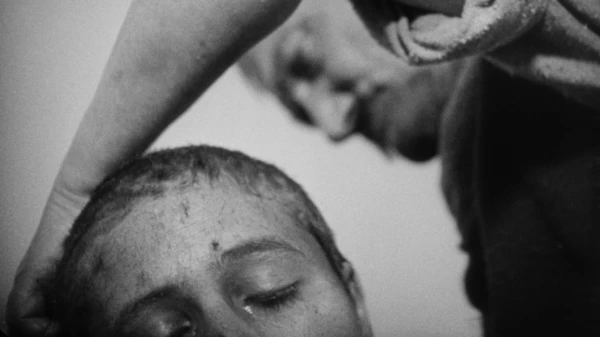
20. The Passion of Joan of Arc (1928) – Carl Theodor Dreyer
Amid the cold stone walls of the fifteenth century, the trial of a young woman who claims to have spoken with God unfolds on screen through the most incisive visual language of silent cinema. Carl Theodor Dreyer weaves a courtroom—trapped within close-ups and tears—into a breaking point of faith and justice.
In the oppressive atmosphere of the interrogation room, Jeanne resists the judges’ pressure and is left alone to face the accusations leveled against both her body and her soul. The suffocating atmosphere created by the black-and-white frames plunges the viewer into the midst of one of history’s most ruthless judicial processes.
21. Angel-A (2005) – Luc Besson
In the shadow of the Eiffel Tower, a man mired in debt is about to jump into the cold waters of the Seine when everything changes. In this film, set against the black-and-white backdrop of Parisian streets, Luc Besson blends elements of romance and comedy with a touch of fantasy.
The presence of a mysterious woman in the back alleys throws the con man’s plans off course, as the story oscillates between reality and fairy tale.
Related Movements & Themes
221k reads
Kült Filmler Listesi
23k reads
Aşk Filmleri Listesi
Home
Film
Curation
Criticism
Menu