List of Classic Movies
0
Films
0 min.
Read Time
0k
Views
Contents
The list of classic films consists of a selection of films that have been described as the best, masterpieces, legends, and cult classics in the history of cinema, and that have significantly shaped the narrative techniques of the art of film.
BM
Bahadır Mahmut
Curator
Related Movements & Themes
221k reads
Kült Filmler Listesi
1.9k reads
Fransız İzlenimcilik
1.7k reads
Alman Dışavurumculuğu
1.8k reads
Sovyet Montaj
1.7k reads
İtalyan Yeni Gerçekçilik
Classic Film
A classic film is one in which the technical capabilities of cinema, film structure, and narrative methods are employed in a way never seen before, and which, because of this quality, serves as a model for the films that follow. Films that have achieved classic status differ from their contemporaries in a revolutionary way. Due to their distinctiveness, these films may not have been given sufficient recognition during their own era. Once the innovative methods they pioneered are replicated or further developed by subsequent films and gain acceptance from both the industry and the audience, the films that first effectively introduced these methods are designated as classic films.
What Is a Classic? What Does "Classic" Mean?
Cambridge Dictionary
1.
A classic book, movie, etc., that has been popular for a long time and is very good
2.
Typical
Oxford Dictionary
1.
Considered—or deserving to be considered—one of the best or most important of its kind
2.
(also classic) To possess all the typical characteristics of something you’re hoping to find
Turkish Language Association (TDK) Dictionary
1.
A work that has not lost its value despite the passage of time and is regarded as a model of its kind
2.
Relating to 17th-century French language, art, and writers
3.
Conventional
4.
Conventional in art
5.
Traditional
6.
noun: An artist or work related to ancient Greek, Roman, and 17th-century French art
7.
noun: relating to the language and art of ancient Greece and Rome
A Brief Historical Overview of Classic Films
In the visual arts, the term "classicism" generally refers to the art of classical antiquity (10th century BCE – 4th–5th centuries CE), specifically to the imitation of "Greek art" and "Roman art." At the same time, “Aegean Art” (25th–11th centuries BCE) and “Etruscan Art” (7th–1st centuries BCE) are considered earlier points of reference for classicism. Therefore, for example, any architecture, painting, or sculpture created during the Middle Ages or later that draws inspiration from Ancient Greek and Ancient Roman art is an example of Classicism. These works are referred to as classical works within their respective artistic disciplines.
When considering classical music, much like the visual arts, its origins lie in Ancient Greek art. The technique of polyphony, which developed during the Middle Ages and the Gothic period, was integrated into music during the same era under the influence of the church and the royal court. With the advent of the Renaissance, music—presented in a manner similar to how instruments are used today—began to be characterized as classical (Western) music. While art disciplines spanning thousands of years established the concept of “classical” within their own contexts through historical references, the situation was very different for cinema, which emerged at the end of the 20th century. Cinema had emerged as a result of technological advancements; it had no past, and even its status as an art form was debatable. For the industry, producers, and audiences alike, it was essential to understand cinema’s points of reference and its boundaries. This situation triggered the formation of the concept of “classical” in cinema in an extraordinary way. At the beginning of the 20th century, borrowing content and approaches from other art disciplines to establish the concept of the “classic film” was seen as an option for creating cinema’s first classic reference works. The first films considered candidates for “classic” status—and regarded as art films—were distinctly influenced by theater and literature. The “film d’art” movement was the one in which this influence was most pronounced. Within the “film d’art” movement, it was believed that films possessing artistic value could only be made by adapting works of classical theater and literature for the screen. However, this approach soon failed to yield results consistent with the goal of establishing classical cinema. What was presented to audiences as “film” consisted more of images captured on camera that resembled theater or literary works than actual film. Cinema had emerged, by its very nature, as a result of a technological advancement—the recording of movement with a camera and camera movement itself. Due to this fundamental reason, the terms “classical film” or “classical cinema” lacked the distinct, backward-looking references found in other artistic disciplines. It was only when cinema began to utilize the distinctive capabilities inherent to its very existence that it developed narrative methods and formed its own language. The classic films shot using these methods and this language defined the boundaries of classical cinema. “Film d’art” and similar approaches quickly became completely obsolete. Cinema’s narrative methods underwent fundamental changes through the diversification of camera movements, the development of editing techniques, the advent of sound cinema, the emergence of the star system, and the industrialization of cinema. In the early days of cinema, innovative directors emerged who showed the courage to break away from established narrative methods (borrowed from other art forms, such as literature, painting, and theater). Despite all the criticism they faced, these directors developed the narrative techniques that are now considered classics of cinema.
The high costs of film production, duplication, and distribution meant that cinema’s early period was more productive in countries such as the United States, France, and the United Kingdom than in the rest of the world. With a high volume of production, the language of cinema developed rapidly in these countries. With the evolving language of cinema, these countries—led by the United States—began to produce the classics of cinema. The world wars, economic crises, famines, genocides, dictatorial regimes, technological advancements, and the associated social, economic, and cultural changes that occurred during the 20th century led to a proportional increase in modern works of art across various artistic disciplines. In cinema, which was still striving to discover its own means of expression, films classified as “classics” began to intertwine with examples of modern cinema over time.
Modern Classics
Films classified as “modern classics” emerged particularly after the late 1960s, amid growing economic expansion and increasingly liberal attitudes in the cultural sphere. Modern classic films embodied approaches that would fundamentally transform cinema—a medium where the concept of “classic” was still taking shape—under the influence of modern art.
•
Fight Club (1999) – David Fincher
•
Pulp Fiction (1994) – Quentin Tarantino
•
Raging Bull (1980) – Martin Scorsese
•
Taxi Driver (1976) – Martin Scorsese
•
The Godfather (1972) – Francis Ford Coppola
•
2001: A Space Odyssey (1968) – Stanley Kubrick
•
Persona (1966) – Ingmar Bergman
•
Au Hasard Balthazar (1966) – Robert Bresson
•
Blow-Up (1966) – Michelangelo Antonioni
The Characteristic Structure of Classic Films
Films that have become classics are generally not the first films in which their directors employed the innovative techniques that elevated them to classic status. Directors experiment with and refine these innovative techniques throughout their filmographies. Films that feature the version of an innovative technique that is most widely accepted by the film industry and audiences are the ones that become classics.
Classic films are generally, in terms of budget, better-funded than their contemporaries. They demonstrate superior performance in terms of production, acting, and similar aspects compared to their contemporaries. Due to their historical context, it is important to conduct research on the era and region before watching these classic films. Understanding the political, military, economic, and sociological conditions of the era and region in which the film was made can add many different layers of meaning to the film for the viewer. Such contextual analysis also reveals the stance the filmmakers intended to take in relation to the prevailing circumstances of their time. In addition, understanding the technological milestones that are of great importance to cinema is essential for recognizing the significance of these films and the innovations they introduced.
Notable Directors of Classic Films
•
Akira Kurosawa
•
Francis Ford Coppola
•
William Wyler
•
Orson Welles
•
Charles Chaplin
•
Fritz Lang
•
Carl Theodor Dreyer
•
Buster Keaton
•
F.W. Murnau
•
Sergei Eisenstein
The Best Classic Movies
Selection List
Curator's Order
1. Amistad (1997) – Steven Spielberg
It all begins on the deck of a wooden ship rocking in the middle of the ocean. In 1839, the slave ship Amistad, which set sail off the coast of Cuba, became the scene of a rebellion in which the slaves broke the chains of their captors. As Steven Spielberg brings this dark historical truth to the big screen, he leaves the audience face-to-face with the cold walls of courtrooms and the tough negotiations behind the lawyers’ desks. The struggle for justice waged by the captives in their quest for freedom ignites a major trial that will shake the political balance of the era.
2. Anatomy of a Murder (1959) – Otto Preminger
In a cold, quiet town in Michigan, a murder trial begins, enveloped by the sounds of jazz and the heavy atmosphere of the courtroom. Otto Preminger pits the sharp boundaries of justice against the complex nature of human desires. Paul Biegler, a lawyer on the verge of retirement, finds himself defending a soldier accused of killing his husband. As truth and lies intertwine in the courtroom, this trial leaves the audience in the midst of a legal puzzle.
3. To Kill a Mockingbird (1962) – Robert Mulligan
In the scorching Alabama heat of the 1930s, the sounds of children’s voices echoing from a treehouse pierce the sleepy atmosphere of the town of Maycomb. As Scout and Jem struggle with the growing pains of adolescence in the shadow of their mysterious neighbors, a sense of injustice in the town’s narrow streets has already reached their very doorstep. Directed by Robert Mulligan, this harrowing drama lays bare the prejudices echoing off the cold walls of a courtroom and the sharp shadow of racism, all seen through the eyes of a child. The impossible defense taken on by Atticus Finch is not merely one man’s fight for innocence, but also the story of innocence quietly slipping away on the wind.
4. Spirited Away (2001) – Hayao Miyazaki
In the back seat of the car, 10-year-old Chihiro—frowning with the unease of moving to a new city—steps through the gates of an abandoned amusement park and into the most eerie dream of her life. That twilight moment—when her parents are transformed into pigs due to their insatiable appetites—completely erases the boundaries of the world she knows. In this anime, Hayao Miyazaki transports us into the corridors of a massive bathhouse where ancient spirits rest, a place where the rules have been rewritten from the ground up. This parallel world, filled with the strange creatures of Japanese mythology and smoke seeping from every corner, becomes for Chihiro not just a struggle for survival, but a battle to reclaim her own name. In this dark atmosphere—ranging from coal-black soot to cranky witches—the fragility of childhood gives way to silent resilience. The fantastical universe, woven with intricate details, draws the viewer into a hazy, dreamlike state.
5. Heat (1995) – Michael Mann
It all begins with the metallic clang of a bullet echoing through the night air of Los Angeles. In this crime epic, Michael Mann fills the city’s concrete jungles with the silent duel between two men. A professional who plans flawless heists and a tenacious detective who won’t let him get away trail each other through the same dark streets.
By day, these men wear the mask of an ordinary life; by night, they find themselves at the sharpest edge of a cat-and-mouse game. On this path to which they have dedicated their lives, they see the loneliness and professional discipline in each other’s eyes. As the city closes in on them, the tension of the approaching, inevitable end is palpable in every frame.
6. Thelma & Louise (1991) – Ridley Scott
Two women fleeing the stifling atmosphere of Arkansas take the sharpest turn of their lives as they navigate desolate highways. Directed by Ridley Scott, this modern road movie transforms an ordinary weekend getaway into a story of escape with no turning back.
Dusty, barren landscapes and endless highways present a whole new terrain where friendship and freedom intersect. This perilous journey, undertaken shoulder-to-shoulder by two women, captivates the audience as a defiant challenge to lives squeezed by the system.
7. Jules and Jim (1962) – François Truffaut
In the carefree days of Paris just before World War I, Jules—a quiet, unassuming writer—and his lively French friend Jim both find themselves drawn to the same woman. Catherine’s unpredictable whirlwind upends the friendship between the two men and turns the course of their lives upside down.
Directed by François Truffaut, this drama brings a love triangle spanning decades to the big screen with the elegance of black-and-white cinematography. Woven around themes of jealousy, belonging, and open relationships, this story immerses the audience in the bohemian atmosphere of the era and the characters’ turbulent emotional states.
8. Platoon (1986) – Oliver Stone
In the untouched forests of Southeast Asia, a hike that begins as a routine patrol quickly turns into a hell fueled by the heat and paranoia. Amid the muddy trenches, young soldiers with rifles in hand struggle not only against an invisible enemy but also against the disintegration growing within themselves. In this semi-autobiographical war drama, Oliver Stone lays bare the dark recesses of the human soul and the innocence lost in the heart of the jungle.
9. Apocalypse Now (1979) – Francis Ford Coppola
The sound of the boat’s engine as it moves along the river mingles with the putrid stench of the swamp and the distant hum of helicopters. In the midst of the war, a captain who has set out on a secret mission—one not mentioned in official records—is drawn deeper into the mist-shrouded forest. Francis Ford Coppola isn’t telling an ordinary frontline story set against this backdrop of drama and war. On the contrary, this journey to find a colonel who has lost his sanity turns into a dangerous nightmare that delves into the darkest corners of the human mind. As everything around him loses all sense of reason, the silence along the riverbank continues to serve as a harbinger of the approaching storm.
10. Ghost in the Shell (1995) – Mamoru Oshii
In the neon-lit streets of 2029, interwoven with cybernetic networks, information and memory have become the most dangerous weapons. In this dystopian universe where the boundaries between human and machine have blurred, Mamoru Oshii follows a cyborg police officer struggling to remain human inside a metal body. Tracking a mysterious hacker who roams the network like an invisible shadow and manipulates memories is more than just a chase. This intense sci-fi journey, which questions consciousness and existence, leaves the viewer face-to-face with a cold and eerie future.
11. One Flew Over the Cuckoo's Nest (1975) – Miloš Forman
Amid the cold walls of Oregon, a prisoner who chose a psychiatric hospital over prison is determined to shatter the oppressive silence of authority. Directed by Miloš Forman, this harrowing drama delves into the world of patients living in the shadow of medication and rules.
The strict order enforced by the head nurse—who has become a symbol of systemic control—begins to crumble in the face of the rebellious spirit of the newcomer. As the tension between them deepens, a bond of friendship and hope emerges in the hospital corridors, struggling to endure despite everything.
12. The Birth of a Nation (1915) – D.W. Griffith
A dusty road stretching from the sun-scorched fields to the front lines tears the two sides of America apart. D.W. Griffith’s camera brings the fates of the Stoneman and Cameron families face to face in the midst of a land shaken by the winds of the American Civil War. The sharp dividing lines between North and South deepen even further in the days of devastation that follow the war. Set against the backdrop of a historic epic, in this turbulent era where old friendships turn to enmity, the guns fall silent, yet the shadows continue to lengthen. In the dark streets of the Reconstruction years, the reckonings of the past pave the way for the birth of a new order.
13. Raging Bull (1980) – Martin Scorsese
In the dim light of the Bronx streets and rooms that grow dark in a matter of seconds, a man struggles with his own rage. Directed by Martin Scorsese, this drama brings to the silver screen—through a black-and-white aesthetic—the trapped state of a boxer clinging to the ropes of the ring, caught between victory and ruin. The violence Jake LaMotta keeps bottled up inside gradually transforms into a suffocating paranoia that eventually engulfs even those closest to him. In the icy void brought on by fame, a life filled with broken noses and extinguished ambitions slowly unravels.
14. Grand Illusion (1937) – Jean Renoir
During the muddy and exhausting days of World War I, French soldiers trapped behind the German lines find themselves in the shadow of wooden bunks and barbed wire rather than in the trenches. Directed by Jean Renoir, this drama brings together people from two different worlds on the same bunk.
The sharp lines between the aristocracy and the working class begin to blur within the gray walls of the prisoner-of-war camp. As escape plans are whispered, the delicate bonds formed between aristocratic officers and prisoners place humanity and solidarity at the center, setting aside the destructive reality of war.
15. Obsession (1943) – Luchino Visconti
Under the scorching Italian sun, the oppressive atmosphere of an inn by a dusty roadside is enough to turn an ordinary existence upside down. Luchino Visconti, placing the stories of marginalized people at the center, shows how bodies trapped in the heat and humidity are consumed by passion.
The path of a young traveler crosses that of a woman living in the shadow of her elderly husband. This forbidden, sinful closeness is brought to the silver screen through the raw and realistic cinematic language of the early film era. This tangled web of passion, as the atmosphere closes in with heavy steps, silently marches toward its inevitable end.
16. Man with a Movie Camera (1929) – Dziga Vertov
A man roaming the streets with a camera slung over his shoulder captures the flow of life on the streets of the Soviet Union in the early 1920s. The dynamism of major cities like Moscow and Odessa is brought to life on screen through the possibilities of silent cinema.
Dziga Vertov uses rapid editing techniques to transform ordinary moments into a mechanical symphony. Factories, streets, and working people take their place in the frame as elements that shape the city’s rhythm.
This documentary simply shows, without questioning what it means to view the world through the lens of a camera.
17. The Cabinet of Dr. Caligari (1920) – Robert Wiene
It all begins in the garden of a mental hospital where the streets wind haphazardly and the shadows stretch taller than a person. This black-and-white nightmare, directed by Robert Wiene, wanders through the darkest corners of German Expressionism, pulling the rug of reality out from under your feet. As Francis gets lost among his memories, he draws the viewer into a gloomy labyrinth.
The mysterious doctor in the carnival tent and Cesare, who lies in a death-like slumber, become ghostly pursuers of the murders that shatter the silence of the night. This suspense-filled drama and crime story, taking shape within the mind of an unreliable narrator, traps the viewer in a breathless atmosphere accompanied by geometric nightmares.
18. Nosferatu (1922) – F. W. Murnau
In a desolate castle nestled in the rugged mountains of Transylvania, time flows like a pale shadow. F. W. Murnau’s gothic horror classic centers on the dark world a young man steps into while traveling for real estate business, and the eerie atmosphere that emanates from the very nature of silent cinema.
In this Gothic tale, enveloped by leaping shadows and shape-shifting nightmares, a wave of death and destruction rolls toward the shores, while the cold breath of a supernatural entity is felt on the viewer’s neck.
19. J'Accuse (1919) – Abel Gance
The smoke rising from the trenches and the exhausted faces lay bare the devastating reality of World War I. Abel Gance’s camera focuses on that narrow, muddy stretch of the front where the paths of two men, both in love with the same woman, cross. As the din of war swallows up their personal conflicts and jealousies, all that remains is the struggle for survival.
This silent film, which radically transformed the cinematic language of its time, directly conveys the era’s brutal atmosphere to the audience. Even the gaps created by fragmented and lost scenes do not disrupt the film’s harsh texture. This drama, which bears witness to one of history’s darkest periods, shows just how easily the human spirit can be broken.
20. Godzilla (1954) – Ishirō Honda
The silence that settles in after the fishing boats vanish over the horizon off the coast of Odo heralds a new nightmare descending upon postwar Japan. As the colossal creature awakened by atomic bomb tests in the deep seas transforms the streets of Tokyo into a black-and-white scene of horror, Ishirō Honda’s classic science fiction and horror masterpiece brings to the screen not just a monster invasion, but the destruction humanity has wrought with its own hands. Rising from waters poisoned by radiation, this ancient dinosaur brings to the surface the modern world’s darkest fears and moral dilemmas. Every giant step echoing along the shore bears the painful traces of being left behind and of exhaustion.
21. Harakiri (1962) – Masaki Kobayashi
During the harsh Edo period of the seventeenth century, a ronin left to face starvation and destitution asks for permission to perform an honorable seppuku in the courtyard of a wealthy clan. Directed by Masaki Kobayashi, this drama steeped in history lays bare the harsh realities behind samurai laws with jarring detachment. As the clan leaders question the sincerity behind this request, the dark shadows of the past slowly begin to lift. The sharp contrast created by the black-and-white imagery deepens the chasm between the rigid rules of the feudal order and the individual’s helplessness. Woven with flashbacks, this complex narrative leaves the viewer face-to-face with the brutal power struggle behind the clan’s walls, while laying bare the hypocrisy hidden behind the concept of honor and the true value of human life.
22. The Passion of Joan of Arc (1928) – Carl Theodor Dreyer
Amid the cold stone walls of the fifteenth century, the trial of a young woman who claims to have spoken with God unfolds on screen through the most incisive visual language of silent cinema. Carl Theodor Dreyer weaves a courtroom—trapped within close-ups and tears—into a breaking point of faith and justice.
In the oppressive atmosphere of the interrogation room, Jeanne resists the judges’ pressure and is left alone to face the accusations leveled against both her body and her soul. The suffocating atmosphere created by the black-and-white frames plunges the viewer into the midst of one of history’s most ruthless judicial processes.
23. Faust (1926) – F. W. Murnau
In a town where darkness envelops the streets and the plague is ravaging the people, he finds himself trapped in the shadow of Gretchen, an elderly alchemist nearing the end of a life woven with knowledge. F. W. Murnau’s camera brings the weaknesses of the human spirit and the stench of decaying flesh to the screen through the grotesque lines of German Expressionism.
That dangerous bargain with the devil begins with the promise of eternal youth, but the price is to set everything left behind ablaze. Drawing on mythology, this Gothic fantasy leaves the viewer in the midst of a breathless darkness at that ancient threshold where faith and greed collide.
24. Wild Strawberries (1957) – Ingmar Bergman
An elderly professor embarks on a journey that takes him back along the dusty roads of the past. This road trip from Stockholm to Lund offers a quiet opportunity to confront the profound loneliness that comes with old age. This drama, directed by Ingmar Bergman, delves into the deepest recesses of the human soul.
The strangers he encounters along the way trigger dreams in the old man’s mind where nightmares and sweet memories intertwine. Regrets and lost faith ride along like a silent passenger in the back seat of the car. Each stop attempts to warm the freezing cold of life just a little more.
25. Persona (1966) – Ingmar Bergman
A theater actress who suddenly stops speaking on stage, and Alma, a young nurse left alone with her on a silent island. This drama by Ingmar Bergman captures that tense moment when, where words end, the mind begins to build its own walls. As the silence drags on, the two women’s identities become intertwined, boundaries dissolve, and repressed confessions come to the surface. The unsettling atmosphere created by the black-and-white imagery draws the viewer into this claustrophobic mirror as it follows the characters’ mental unraveling step by step.
26. Metropolis (1927) – Fritz Lang
There is a sharp divide between the comfortable life at the tops of massive skyscrapers and the world of those who keep the dark machinery turning beneath the ground. This German Expressionist classic by Fritz Lang brings to the silver screen people struggling to breathe in the shadow of massive machines and a class-based social structure. The tension between the exploited workers in the underground tunnels and the city’s rulers heralds an impending social explosion. Embracing the darkest tones of science fiction aesthetics, this dystopia lays bare—in a cold and detached tone—the wounds inflicted on the human spirit by an increasingly mechanized world.
27. Double Indemnity (1944) – Billy Wilder
That stifling suburban silence under the Los Angeles sun is a harbinger not of warm innocence but of a dangerous lethargy. When insurance agent Walter Neff falls under the cold spell of a housewife, he finds himself caught up in a cunningly orchestrated murder plot. This dark crime film by Billy Wilder delves into the shadows lurking behind the glittering streets of California and the dark recesses of the human soul. Unfolding amid a spiral of passion and greed, this thriller evokes the unease of an impending disaster. As the company’s senior claims investigator tracks every move, the noose slowly tightens.
28. The Third Man (1949) – Carol Reed
In the gloomy streets of Vienna, amid the rubble, the footsteps of Holly Martins, a writer of cheap adventure novels, echo. Against the pale backdrop of postwar Austria, fueled by the black market, he tries to uncover the truth behind the suspicious death of his old friend, Harry Lime.
Directed by Carol Reed, this black-and-white thriller weaves a sinister web of conspiracy that stretches from the shadow of a giant Ferris wheel to the dark labyrinth of the sewers. Conducted in the shadow of British military patrols and forged passports, this investigation into a missing person draws the viewer into a tense chase at every turn.
29. Touch of Evil (1958) – Orson Welles
In that dusty town on the Mexican border, the explosion that suddenly tears through the sky does more than just cut short a newlywed couple’s honeymoon. In this crime-thriller spiral, woven into black-and-white frames, Orson Welles masterfully lays bare the dark divide between two countries and the border lines erased by justice. The investigation that begins in the wake of a car explosion pits a corrupt police captain against an official determined to uncover the truth. Amid the town’s hotels, seedy streets, and gang showdowns, the power struggle between the two sides grows increasingly suffocating. In this dark world beneath the sun and dust, the concept of justice is melting away a little more with every passing moment.
30. Blow-Up (1966) – Michelangelo Antonioni
On the bustling streets of 1960s London, a photographer trapped in a routine surrounded by fashion shoots and pop music... In this atmosphere of drama and mystery directed by Michelangelo Antonioni, there is a fashion-obsessed mind wandering through London’s gray parks. One day, the ordinary shots he took in the park begin to slowly emerge in the darkness of the darkroom. The silhouettes appearing on the paper raise the suspicion that a murder may have taken place. These suspense-filled moments, where the sense of reality fades, blur everything around the character.
31. Au Hasard Balthazar (1966) – Robert Bresson
On those rocky, dusty country roads where a donkey named Balthazar is passed from hand to hand by people, everything flows by in black and white. As Robert Bresson observes the sins and innocence borne on an animal’s back, he does not allow the camera to succumb to either sentimental exploitation or detached observation.
Dragged between the arrogance and cruelty of his owners, this silent creature bears his own fate amidst the youth gangs and impoverished villagers around him. The story of Balthazar, crushed under the weight of life and human nature, paints a portrait of pure resistance and acceptance.
32. Modern Times (1936) – Charlie Chaplin
That ruthless system, where factory gears grind people down, runs on iron and noise. Charlie Chaplin brings to life a drifter trapped among massive machines, caught in the spiral of unemployment and poverty brought on by the Great Depression. While the automation brought by the Industrial Revolution reduces humans to mere cogs in the machine, the black-and-white images flowing across the screen masterfully blend humor with drama.
That silent yet powerful resistance echoing in the midst of a mechanized life is softened by a timeless romanticism. When his path crosses that of a young, homeless woman struggling to survive on the streets, a tragicomic harmony emerges. Slapstick comedy elements bring the harsh realities of the era to the screen while drawing the audience into an ironic world.
33. Psycho (1960) – Alfred Hitchcock
The tension slowly builds as a woman, lost on the highways with stolen money, pulls into a desolate motel in the middle of the desert. Alfred Hitchcock, in the shadows of black-and-white imagery, leaves the viewer face-to-face with Norman Bates and his bizarre world. This cornerstone of the psychological thriller genre reveals the dark secrets hidden behind ordinary rooms and the fragile layers of the human mind. That sense of unease seeping from the motel room lingers in the mind long after the film has ended.
34. 12 Angry Men (1957) – Sidney Lumet
On a sweltering summer day, the stifling atmosphere of the courtroom is trapped within the rusty walls of the jury room. Directed by Sidney Lumet, this classic is centered on the tense balance that twelve men strike between innocence and guilt, far from the clamor of life outside.
As the shadow of a knife and the smell of hot concrete fill the room, the deliberations seem set to begin with a silent consensus. But a single objection raised from the ranks brings the mechanical workings of justice to a halt. Every person in the room is forced to confront their own prejudices.
35. Sunset Boulevard (1950) – Billy Wilder
On the sun-drenched boulevards of Los Angeles, silence has settled over a faded grandeur. This dark drama, directed by Billy Wilder, whispers the story of a struggling screenwriter whose path crosses that of a diva on the verge of being forgotten behind the bright lights, in an abandoned mansion.
In this world woven with the ghosts of a glorious past, the boundaries of reality blur. The dangerous obsession of a star forgotten by time transforms into an eerie shadow echoing through the ruthless streets of Los Angeles.
36. Tokyo Story (1953) – Yasujirō Ozu
In the crowded streets of Shōwa-era Tokyo, an elderly couple knocks on their children’s door after a long journey. However, the metropolis’s hectic pace is not particularly conducive to welcoming these quiet guests. Directed by Yasujirō Ozu, this drama gently explores the invisible distance between parents and children and the alienation brought about by modern life.
Amid the hustle and bustle of city life, where children cannot find time for their parents, Noriko—who remains devoted to the memory of her husband, lost in the war—becomes a refuge for them. Accompanied by the steam rising from tea in the tatami rooms and the sounds of trains in the background, a silent rift between generations unfolds. This visit, devoid of grand expectations, lays bare the purest essence of family and solitude.
37. Citizen Kane (1941) – Orson Welles
In a gloomy room of a vast mansion, a mother-of-pearl snow globe falls to the floor with the last breath between one’s fingers. Orson Welles’s camera descends like a dark shadow over the vast emptiness lurking behind the splendor. The mysterious last words left behind by media mogul Charles Foster Kane lead journalists to search for the truth in dusty archives and faded memories. Bringing to the screen the cracks beneath the American Dream and the lust for power through the sharp contrasts of black-and-white tones, the film lays bare the wreckage of a tragic life. Spanning from the massive mansion in Florida to snowy childhood days, this mystery and drama lays bare, with a dispassionate eye, how a person can be consumed by what they possess.
38. Ran (1985) – Akira Kurosawa
In feudal Japan, echoing with the clang of swords in the sixteenth century, an aging lord prepares to abdicate the throne. This epic period drama by Akira Kurosawa lays bare, with cold realism, how the lust for power shatters family bonds. Betrayal, disputes over property, and a sense of helplessness, echoing behind the castle walls, slowly drag the country toward inevitable ruin. The swords drawn by sons poisoned by the lust for power will determine not only the fate of a single dynasty, but that of an entire empire. This tragedy, echoing along dusty roads and amid the ruins of burning castles, leaves the viewer alone in the midst of a dark labyrinth.
39. Ben-Hur (1959) – William Wyler
Lives strained under the iron fist of the Roman Empire in the dusty streets of first-century Jerusalem. Directed by William Wyler, this magnificent historical adventure epic depicts a dramatic journey stretching from opulent palaces to the dark dungeons of galleys.
The struggle for survival of a Jewish nobleman condemned to slavery by the betrayal of his childhood friend. Caught between the splendor of ancient Rome and the suffering of the oppressed, this journey transforms into a breathtaking showdown at the crossroads of vengeance and faith.
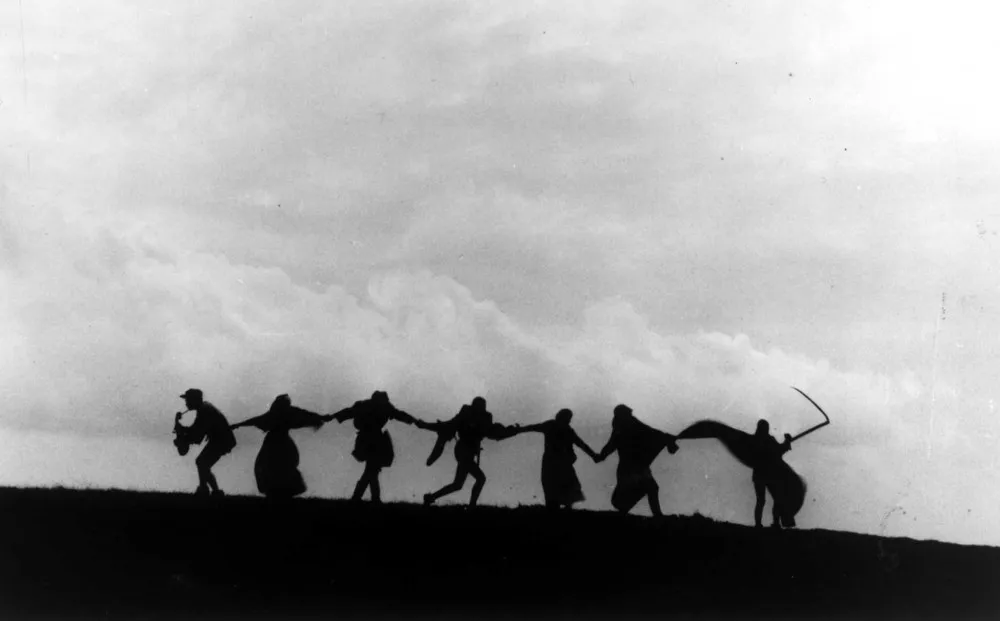
40. The Seventh Seal (1957) – Ingmar Bergman
Footsteps echoing across parched earth, in the shadow of the plague. Knight Antonius Block, returning from the Crusades, finds himself on the brink of a dangerous game as he faces the inevitable end he encounters while trudging wearily through the plague-ravaged lands of the Middle Ages. In the harsh and eerie atmosphere created by the black-and-white imagery, he feels the cold breath of death on the back of his neck.
He sits down at a table with the figure standing before him. This metaphysical drama, which explores the meaning of life, navigates the dark labyrinths of the human mind, caught between faith and doubt. Time grows short in the villages ravaged by the plague, amid the flames of burning witches, and amidst the revelry of traveling troupes.
41. The 400 Blows (1959) – François Truffaut
The footsteps echoing through the gray streets of Paris reveal the silent yet rebellious world of children forgotten in the back rows. In this semi-autobiographical drama, François Truffaut brings to the screen—in black-and-white frames—the struggle for breath of a young body trapped between authoritarian teachers and indifferent adults. School runaways, smoked cigarettes, and the cold wind of Montmartre weave the painful and complex fabric of this challenging coming-of-age story, while the first encounter with law enforcement draws near.
42. Taxi Driver (1976) – Martin Scorsese
The muggy heat of New York’s asphalt, neon lights shimmering during the night shift, and the hum of engines echoing in the mind of a man gripping the steering wheel. Martin Scorsese observes the urban decay of the 1970s and that vast, all-consuming void through the rearview mirror of a Vietnam veteran plagued by insomnia.
The silhouettes flowing through the streets of Manhattan are toxic details that fuel Travis’s loneliness and alienation. Lost among the crowds, this assassin’s soul, watching the moral decay in the city’s streets, is dragged with heavy steps toward his own darkness.
43. The General (1926) – Clyde Bruckman, Buster Keaton
In the midst of the American Civil War, it all begins with the sound of a locomotive emerging from a black-and-white cloud of dust. Co-directed by Buster Keaton and Clyde Bruckman, this silent film brings to the screen the quiet resistance of a train engineer who was unable to enlist in the army. When his girlfriend and his locomotive, General, are kidnapped by Union spies, a breathless chase begins for Johnny Gray, taking him deep behind enemy lines. This harmony of war and comedy, echoing along the rails, gains momentum with the steps of a man driven by a mechanical passion. The chase, which ends on the bridges, strikes an absurd yet perfectly balanced note amid the chaos of the era.
44. The Godfather (1972) – Francis Ford Coppola
Dark suits, muffled voices echoing in dimly lit rooms, and a Sicilian morning scented with tangerines. From the late 1940s through the 1950s, Francis Ford Coppola weighs the concept of the crime family on the scales of tradition and loyalty. In this dark empire that grew in the shadow of Vito Corleone, the transfer of power is never a quiet affair. The fine line between father and son gradually evolves into an irreversible necessity.
As the sound of gunfire echoes through the streets and the cold breath of organized crime reigns, being part of a family becomes the most dangerous armor of all. Rooted in Italian heritage, this crime drama shows how faith and violence sit at the same table. Michael Corleone leaves behind an ordinary life within the web he has woven with his own hands and marches toward the throne of the empire.
45. M (1931) – Fritz Lang
The fear gripping the streets echoes through the dark silhouette of Weimar-era Berlin. In this classic thriller directed by Fritz Lang, the city’s underworld and police force join forces in a single hunt for a serial killer who targets children. The echoing whistles and shifting shadows in the city’s streets fuel the heavy atmosphere of German Expressionism.
On one side are detectives closing in on their target; on the other, organized crime networks seeking their own brand of justice. In this relentless chase where the hunted and the hunter become indistinguishable, the killer finds himself cornered at every street corner.
46. The Exterminating Angel (1962) – Luis Buñuel
Leaving that magnificent hall, where the clinking of silver cutlery echoed, shouldn’t really have been that difficult. After a grand dinner hosted in a luxurious mansion, time seems to stand still within that room. In this absurd comedy-drama by Luis Buñuel, the bourgeoisie’s elegant masks slowly slip away.
A mysterious, invisible wall behind the doors prevents the guests from stepping outside. As the days pass, rotten secrets come to light, the veil of politeness is torn away, and those elegant people are left to their own survival instincts. This dark room, dominated by surreal tones, becomes the clearest mirror of social decay.
47. Onibaba (1964) – Kaneto Shindō
We find ourselves in the world of two women struggling to survive in the swamps of the Sengoku period, amid the mud and tall grass. Kaneto Shindō uses the sharp contrast of black-and-white imagery to depict the cycle of murder and plunder committed by this pair—who are far from the war but feel its violence breathing down their necks. News of death from the distant front and the prohibitions that intervene fuel the jealousy and the eerie will to survive that grow within the confines of a cramped hut. When night falls, the whispers rising from the swamp and that grotesque mask leave one face to face with one’s own instincts.
48. The Great Dictator (1940) – Charlie Chaplin
The sound of scissors echoing through the narrow streets of the Tomanian ghetto is lost amid the gears of a vast world on the brink of collapse. In this life cast under the shadow of war and fascism, the fates of an ordinary barber and a dictator sworn to conquer the world intersect through an incredible coincidence. In this comedy-war film, where Charlie Chaplin brings humor and war together on the same set, he brings to the screen how the machinery of propaganda and social paranoia grinds humanity down. Every gesture that emerges from the black-and-white imagery is part of both an absurd sensibility and a sharp satire that raises its voice against authority. The barber’s reflection in the mirror, caught in the midst of the chaos, whispers just how close power and wretchedness really are.
49. Frankenstein (1931) – James Whale
Cold body parts stolen from graves are brought together in the dim light of the laboratory for a single purpose. James Whale invites the audience into the black-and-white world of this classic film, to the point where science and hubris intersect. Bones gathered from beneath the earth and pieces of flesh sewn together begin to breathe as a result of a sickening ambition. Yet the being behind this artificial skin is far from the perfect triumph its creator envisioned. When this dark fairy tale spills out from a hellish laboratory into the outside world, fear and alienation spread through the streets. Frankenstein whispers the deep tragedy at the heart of the horror genre—man’s trial by the monster of his own making.
50. Battleship Potemkin (1925) – Sergei Eisenstein
The maggots on the rotten meat are the first spark of the uprising that erupted in the port of Odessa. Directed by Sergei Eisenstein, this silent film portrays the grassroots anger against the injustices of Tsarist Russia through the eyes of the crew aboard the battleship Potemkin. It is not merely a historical drama, but a revolutionary manifesto woven with the rhythm of its editing.
The sound of boots echoing on the stairs and the crowd spiraling out of control lay bare the mechanical coldness of violence. That moment, which altered the course of history, merges with the narrative power of cinema to leave an indelible mark on the silver screen.
51. The Ox-Bow Incident (1943) – William A. Wellman
On the dusty roads of Nevada, the clatter of horseshoes echoing in the harsh winds of the nineteenth century captures the crowd’s fury. William A. Wellman explores the fine line where justice and lynch mob culture intersect in this bleak Western atmosphere. Three strangers, arrested on suspicion of cattle rustling, find themselves caught between the town’s rowdy mob and common sense. Anxious whispers seeping from the saloon doors suggest that the verdict has already been decided.
52. 2001: A Space Odyssey (1968) – Stanley Kubrick
A jet-black rock emerging from the moon’s surface takes humanity’s silent journey through the void of space to an entirely new dimension. Directed by Stanley Kubrick, this classic adventure centers on a long-haul journey toward Jupiter. As the tension between the ship’s intelligent supercomputer and the astronauts slowly escalates, technology evolves into a dangerous threat to humanity. This sense of the unknown in the midst of the void succeeds in captivating the mind with a deep sense of wonder.
53. A Man Escaped (1956) – Robert Bresson
Within the stone walls of Montluc Prison, time is measured by dripping water and the sound of wood being scraped. Robert Bresson paints a portrait of silent resistance—woven from a spoon and a bedsheet—amid the drama and tension of this dark period cast in the shadow of World War II. While the noise of the outside world does not seep through the cell window, every detail inside becomes a part of the will to survive.
54. Rope (1948) – Alfred Hitchcock
As the clamor of the day fades behind the heavy curtains of a Manhattan apartment, the clinking of silverware conceals a cold complicity. Directed by Alfred Hitchcock, this thriller confines the fantasy of a perfect murder—perpetrated under the pretense of intellectual superiority—to a single room.
That trunk standing right beneath the dining table grows a little heavier with every cheerful toast raised by the guests. As the corpse, hidden in the shadow of philosophical debates, tenses with the host’s arrogant smile, time creeps in, insidiously constricting the space around the coffin.
Related Movements & Themes
221k reads
Kült Filmler Listesi
1.9k reads
Fransız İzlenimcilik
1.7k reads
Alman Dışavurumculuğu
1.8k reads
Sovyet Montaj
1.7k reads
İtalyan Yeni Gerçekçilik
Home
Film
Curation
Criticism
Menu