List of Horror and Thriller Movies
0
Films
0 min.
Read Time
0k
Views
Contents
This list of films features cult, classic, and modern examples of the horror genre—which has captivated audiences since the early days of cinema through its blend of horror and suspense elements.
BM
Bahadır Mahmut
Curator
Related Movements & Themes
4k reads
Pre-Code Korku Filmleri Listesi
361k reads
Yasaklı Filmler Listesi
221k reads
Kült Filmler Listesi
Fear can be evoked in films by creating a sense of shock, incorporating elements related to cults and the inconsistencies or extremes of natural phenomena, as well as by featuring darkness, uncertainty, and violence. This low-cost yet highly effective interaction with the audience through the emotion of fear has made horror films one of cinema’s major genres. For similar reasons, fear is also the most prominent theme in many genres and subgenres of exploitation cinema.
With a history spanning from myths to religions and literature, fear has been a critical motivational tool for people both before (and after) the advent of cinema. Fear, which was originally evoked through storytelling before the advent of cinema, was first transformed into a visual experience with the advent of professional cinema and then into an auditory experience with the development of sound cinema.
The film that marked cinema’s first encounter with its audience, *The Arrival of a Train* (1896), became famous for the fear it instilled in the theater. It could be said that audiences, who feared the train appearing on screen would burst through the screen and crush them, transformed this short film—which was not intended to scare—into the first horror film in history. If we set aside similar situations related to audience behavior, Georges Méliès—one of the key directors of the “Cinema of Attractions” movement during the silent era—can be considered one of the pioneers of the horror genre with his 1896 film *Le Manoir du Diable* (The Devil’s Castle), directed by Georges Méliès—one of the key figures of the “Cinema of Attractions” movement during the silent era—can be considered one of the earliest examples of the horror film. Georges Méliès was quite successful in evoking feelings of fear and shock during film screenings through optical illusions. In the years that followed, filmmakers added religious and Gothic elements, vampires, monsters, and science fiction themes to these optical illusions. In Germany in particular, significant works such as Robert Wiene’s *The Cabinet of Dr. Caligari* (1920) are among the most important horror films of this era. In a short time, the German Expressionist movement became the arena where horror cinema was most prominently practiced.
*
* *Frankenstein* (1931)
From the mid-1930s to the late 1940s, Universal Pictures experienced a period in which it introduced classic monster characters such as Dracula, Frankenstein, The Mummy, The Wolf Man, and The She-Wolf. These monster movies became unforgettable thanks to the performances of actors like Boris Karloff and Bela Lugosi. A major factor behind the success of these films was the contribution of visual effects, which were becoming increasingly professional.
The introduction of sound and color, along with advancing cinematic technologies, enhanced the realism of the films and, consequently, their impact on audiences.
In the 1950s, horror films reflected the fears of the post-war era. Monsters mutated by the atomic bomb and radiation were among the popular themes of this period. Films like *Godzilla* (1954) are products of this era.
Toward the end of the 1960s and into the 1970s, psychological horror and slasher films gained popularity. Films like *Psycho* (1960) and *Rosemary’s Baby* (1968) are prominent examples of this era. In addition, slasher films like John Carpenter’s *Halloween* (1978) became icons of the genre.
By the 1980s, horror cinema began to experience one of its most significant periods, driven by falling production costs, more accessible visual effects, and an expansion of distribution channels. The Shining (1980), The Thing (1982), Aliens (1986), Possession (1981), A Nightmare on Elm Street (1984), The Evil Dead (1981), Videodrome (1983), Cannibal Holocaust (1980), and Day of the Dead (1985) were among the many cult classics produced during this period.
Audition (1999)
Starting in the 2000s, modern horror films evolved to incorporate new elements such as found footage and paranormal activity themes. Films like *The Blair Witch Project* (1999), *The Ring* (2002), *Saw* (2004), and *The Conjuring* (2013) are standout examples of this era.
VR and AR technologies have added a new dimension, allowing viewers to engage with horror films in a more immersive and interactive way. Through VR headsets or mobile apps, viewers can step into the horror film and begin to experience a greater sense of reality.
Horror cinema encompasses films that can be classified under subgenres such as violence, erotic, psychological, supernatural, cult, and natural disasters, and it also frequently incorporates folkloric elements. For example, a horror element that has become a cult phenomenon among the film’s target audience can be tailored for that audience and clearly integrated into the film’s narrative. These films are low-budget productions that specifically target local audiences.
Best Of
Selection List
Curator's Order
1. Day of the Dead (1985) – George A. Romero
A handful of people fleeing Florida’s sweltering heat find themselves trapped in a concrete shelter as the living dead take over the world. In this drama and horror thriller directed by George A. Romero, the apocalypse and zombie invasion outside drive the tension inside the shelter higher with each passing day. Caught between military discipline and scientific reason, the group begins to lose their sanity in the dark corridors.
2. The Evil Dead (1982) – Sam Raimi
That dilapidated wooden cabin in the middle of the forest quickly turns five teenagers’ weekend getaway into an eerie nightmare. Directed by Sam Raimi, this horror classic begins with an old audio tape emerging from the basement and a cursed Sumerian book. The gloom seeping into the walls is a harbinger of a dark force that slowly takes hold of the young people’s minds. In this dilapidated place, cut off from the outside world, even nature turns its back on them. Every corner is filled with an ancient threat waiting to awaken in the darkness of the night.
3. The Texas Chain Saw Massacre (1974) – Tobe Hooper
As the stifling Texas heat gives way to an increasingly oppressive odor and tension inside the minivan, the paths of five young people cross at a secluded gas station. What began as a summer vacation turns into a nightmare when the short trip loses its way in the abandoned and rusted-out countryside.
Directed by Tobe Hooper, this horror film unfolds amid a mind-bending family bond and a perversion fueled by grave robbing. As the violence behind the leather masks shatters the silence with the sharp sound of a chainsaw, the threat lurking around every corner draws the viewer into a trap from which there is no escape.
4. Re-Animator (1985) – Stuart Gordon
The dim lights flickering in Miskatonic University’s morgue are a harbinger of an eerie presence lurking in the medical school’s hallways. This film, brought to life by Stuart Gordon, masterfully blends science fiction with dark humor in a laboratory setting.
As a young medical student tests his dangerous serum—which pushes the boundaries of death—on fresh corpses, he drags everyone in the room into an inescapable descent into madness. A chain of absurd events, accompanied by the cold clang of surgical instruments, is on the verge of spiraling out of control.
As secrets hidden in dark rooms come to light, these mad experiments—which defy the laws of nature—are poised to break free from the hospital’s walls.
5. Dr. Jekyll and Mr. Hyde (1931) – Rouben Mamoulian
In the foggy streets of London, the repressed moral code of the Victorian era echoes across laboratory benches. This classic horror and science fiction tale, directed by Rouben Mamoulian, captures the horror of humanity’s struggle to separate its two opposing poles.
When Dr. Jekyll unleashes the dark side of his being with the chemical potion he has concocted, an unstoppable wave of destruction sweeps through the streets. The eerie atmosphere created by the black-and-white imagery sharply lays bare the character’s inner division and inner turmoil.
6. Dracula (1931) – Tod Browning
As the wheels of the horse-drawn carriage creak along the muddy roads of the Carpathians, a young real estate agent makes his way toward a Transylvanian castle in the darkness of the night. Directed by Tod Browning, this classic horror film draws the audience into a gothic atmosphere shrouded in superstition.
Footsteps echoing through the castle’s dimly lit corridors and the rustle of velvet cloaks hint at the presence of Count Dracula, who carries the weariness of centuries. This immortal being, who lies silent in his coffin by day but hunts for prey in the streets of London by night, possesses a dark allure that turns the reality of ordinary people upside down.
7. Frankenstein (1931) – James Whale
Cold body parts stolen from graves are brought together in the dim light of the laboratory for a single purpose. James Whale invites the audience into the black-and-white world of this classic film, to the point where science and hubris intersect. Bones gathered from beneath the earth and pieces of flesh sewn together begin to breathe as a result of a sickening ambition. Yet the being behind this artificial skin is far from the perfect triumph its creator envisioned. When this dark fairy tale spills out from a hellish laboratory into the outside world, fear and alienation spread through the streets. Frankenstein whispers the deep tragedy at the heart of the horror genre—man’s trial by the monster of his own making.
8. Faces of Death (1978) – John Alan Schwartz
We oscillate between the fading television images on the screen and the dark moments captured by amateur Super 8 cameras. This work by John Alan Schwartz presents an unsettling archive that documents the idea of death and the end of human life.
In this jarring “video nasty,” where reality and fiction blur, the viewer is left face-to-face with the cold reality of violence and autopsy tables. For those who wish to confront the taboo in the darkness of the movie theater.
9. Faces of Gore (1999) – Todd Tjersland
Navigating through police reports and emergency dispatch archives, this documentary brings to the screen the darkest realities that reveal the fragility of the human body. Directed by Todd Tjersland, the film presents a disturbing compilation centered on themes of violence and death.
Guided by Dr. Vincent Van Gore, this secret archive is entirely free of fiction. This dark world, which pushes the boundaries, creates a harsh and uncompromising atmosphere that catches the viewer off guard.
10. Häxan (1922) – Benjamin Christensen
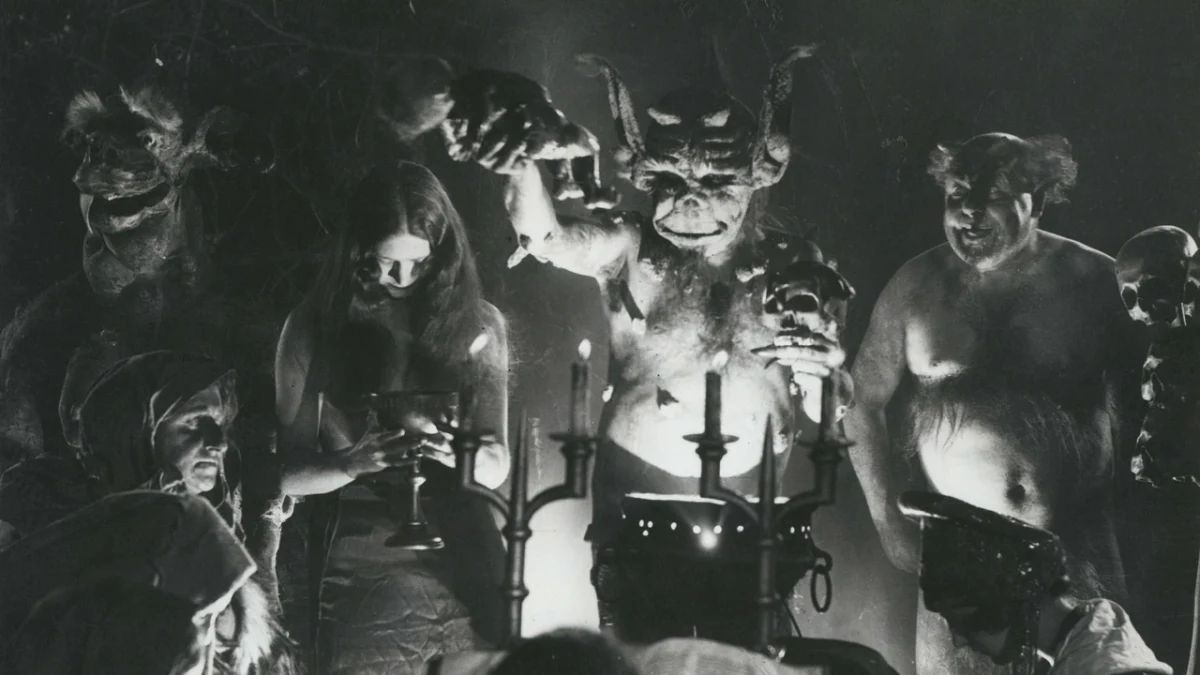
That strange scent of incense rising from the dark recesses of the Middle Ages comes to life through Benjamin Christensen’s camera at the eerie intersection of history and fear. Under the guise of witchcraft and sorcery, we witness how mental anguish, repressed urges, and social paranoia are intertwined.
Woven with the possibilities of silent cinema, these black-and-white scenes lay bare an obsessive witch hunt stretching from the Inquisition’s interrogation tables to the monasteries. This folkloric nightmare, which illustrates how superstitions enslave the human mind, invites us on an unsettling journey through history’s strangest pages.
11. Possession (1981) – Andrzej Żuławski
In the shadow of a city torn in two, a woman trapped between the cold walls of marriage and a husband crumbling in his pursuit of the truth. Andrzej Żuławski’s camera, set against the destructive atmosphere of the Berlin Wall, observes how an ordinary separation evolves into a grotesque nightmare.
One of the most jarring examples of the horror genre, this film transforms a pursuit that begins with suspicion of infidelity into a fit of hysteria that teeters on the edge of sanity, step by step. The psychological breakdown unfolding behind closed doors is sealed by a dark obsession that spreads to the streets and into the human body.
12. The Blair Witch Project (1999) – Daniel Myrick, Eduardo Sánchez
The final footage captured on the handheld camera of three students who went missing in the misty depths of the Maryland woods bears the hallmarks of a dark nightmare where reality and fiction blur. Directed by Daniel Myrick and Eduardo Sánchez, the film meticulously traces the growing paranoia and helplessness of the young people who lost their way while out filming a documentary. The invisible threat lurking among the trees, the echoing sounds of stones in the forest, and the compass needle going haywire make visible the pressure that nature and local legends exert on the human mind. This dark journey, in which the raw aesthetic of found footage is brought to the big screen, draws the audience into the same sense of entrapment as the characters.
13. The Sentinel (1977) – Michael Winner
That magnificent apartment building in the old, Gothic streets of Brooklyn Heights was waiting for its new resident. A young model who steps into this dilapidated building, leaving behind the glitzy pace of the fashion world, soon realizes she is not surrounded by ordinary neighbors. Strange sounds echoing through the hallways and eerie faces slowly draw her into a nightmare beyond reality.
Directed by Michael Winner, this dark journey of horror and mystery brings to light the ancient secrets hidden within New York’s stone walls. Traces of secret cults and eerie events that open the gates of hell transform the apartment building into a suffocating trap. Each new floor pushes the young woman deeper into despair and fear.
14. Saw (2004) – James Wan
On the cold floor of a dark, foul-smelling bathroom, two men chained together open their eyes. The lifeless body lying in the middle and the cassette player right next to it set the tone from the very beginning. This survival horror film from James Wan traps the viewer in a labyrinth-like nightmare with no way out. The rules set by the mysterious voice playing in the background are clear: the path to freedom lies through mind games and sacrifices that test human dignity. At every turn lies a new trap; in every memory that surfaces, there is a trace of another crime.
15. Audition (2000) – Takashi Miike
Shigeharu, who has been mourning his wife—whom he lost years ago—in a quiet home, finally comes to terms with the idea of bringing someone new into his life. He organizes a film audition and becomes captivated by the young, elegant woman he selects from among the candidates. Directed by Takashi Miike, this film begins at first glance as a calmly unfolding drama, but slowly drags the viewer into the darkest and most terrifying recesses of the human psyche. This unsettling horror classic of Japanese cinema traps the viewer in a suspense-filled wait with its details that strip away the mask of innocence.
16. The Ring (2002) – Gore Verbinski
The crackling of the tape fills the silent room. The urban legend that the viewer will die in seven days becomes reality amid the static-filled images. Gore Verbinski masterfully infuses the frame with the scent of wet wood and the chill of decay.
A journalist investigates the suspicious deaths of several young people. Secrets hidden in the well and beneath the water draw the woman deeper and deeper into the darkness. The countdown has begun; the phone rings.
17. Funny Games (1997) – Michael Haneke
That peaceful lakeside summer home suddenly turns into a trap when two young guests arrive to shatter the tranquility of a wealthy family dreaming of a vacation. This film by Michael Haneke shatters the silence of nature and the serenity of the vacation with a heavy yet sharp tension.
The host family’s sense of ease quickly melts away in the face of the psychological violence brought by two polite yet dangerous minds who appear at the door. In this space where all ties to the outside world are severed, games woven with sadistic rules begin, and the audience becomes a direct witness to this dark experience.
18. The Thing (1982) – John Carpenter
In the freezing darkness of Antarctica, we find ourselves at an isolated research station cut off from the outside world. As the howl of a blizzard rages outside, an ancient threat—one that can hide behind human flesh—is slowly spreading inside. Directed by John Carpenter, this sci-fi and horror classic centers on that spine-chilling moment of uncertainty when you realize even your closest friend isn’t who they seem to be.
In those narrow corridors that have become a refuge, suspicion is now a contagious disease. As everyone avoids making eye contact with one another, the struggle for survival takes shape on the razor’s edge of paranoia. Every drop of blood spilled in the quest to distinguish who is human and who is a monster reveals the true color of loneliness and helplessness.
Related Movements & Themes
4k reads
Pre-Code Korku Filmleri Listesi
361k reads
Yasaklı Filmler Listesi
221k reads
Kült Filmler Listesi
Home
Film
Curation
Criticism
Menu