List of Cult Films
0
Films
0 min.
Read Time
0k
Views
Contents
This list of cult films consists of foreign and Turkish films—regardless of categories such as “best,” “classic,” “new,” “noir,” “B-movie,” “absurd,” “banned,” “exploitative,” or “auteur cinema”—that are considered cult films solely based on the behavior of their audience.
BM
Bahadır Mahmut
Curator
Related Movements & Themes
69k reads
Kült Türk Filmleri Listesi
185k reads
Sexploitation - Seks İstismar Filmleri Listesi
361k reads
Yasaklı Filmler Listesi
120k reads
Klasik Filmler Listesi
Cult Film
There is no definitive definition of the term “cult film” in film literature. Cult films can be defined as those that, generally due to the impact they create, are able to attract a devoted audience—one that is almost fanatical in its admiration—and can grow their following over time, while differing from the mainstream of their era in terms of content and/or approach. A film is classified as a cult film not because of specific qualities, but because its audience engages in an act of worship (cultus) toward it. Whatever film the audience chooses to worship, that film eventually attains the status of a cult film over time.
What Is a Cult? What Does "Cult" Mean?
The Turkish word “kült” is derived from the French word “culte.” “Kült,” “culte,” or “cult” all come from the Latin word “cultus” into modern spoken languages. “Cultus” means worship and belief. “Kült” (cult), on the other hand, refers to the object of that act of worship (cultus). The act of worship can be directed not only toward values related to faith but also toward a person, an idea, a work of art, or something else. The object of worship is thereby elevated to the status of a “cult.” Over time, the concept of “cult” has been detached from its religious context and has come to be used more frequently to describe works of art.
Cambridge Dictionary
1.
A person or something else that has been made very popular by a specific group of people
2.
A religious group whose ideas are considered strange by many people
Oxford Dictionary
1.
A lifestyle, attitude, or idea that has become popular
2.
A small group of people with extreme religious beliefs who are not part of an established religion
Turkish Language Association (TDK) Dictionary
1.
Religion
2.
Religious ceremonies with local characteristics
3.
A movie or similar work that garnered extreme interest during a certain period
A Brief Historical Overview of Cult Films
The concept of “cult” was in use even before the advent of cinema. In literature, in particular, many works were described as “cult.” Many cult films made from the earliest days of cinema were based on cult literary works.
Films such as *Nosferatu* (1922) and *Häxan* (1922), which were released in the same year and shocked audiences with their horror elements, were considered early cult films. Over time, the concept of “cult” began to be associated more closely with films that diverged from the mainstream—those that were disturbing, exploitative, banned, or controversial. As interest in the concept of “cult” grew, the production of such films also increased significantly. Achieving “cult” status became a solution for films struggling to gain acceptance in the mainstream to attain revenue, recognition, prestige, and similar values. Because the concept of “cult” transcends specific eras, regions, movements, and genres, the historical development of cult films spans the entire history of cinema. To briefly summarize this historical development, it suffices to identify the key shifts that have shaped the concept of “cult.” B-movies, which began to find their place in theaters as an alternative to the A-movies produced during Hollywood’s Golden Age, and Z-movies—which were produced at a much lower cost than B-movies—created favorable conditions for an increase in the production of cult films. Because they were outside the mainstream, methods designed to shock and fascinate audiences were tested in B and Z movies. Among the vast number of films produced, those classified as cult classics have maintained their recognition to this day: *The Giant Claw* (1957), *Plan 9 from Outer Space* (1959) … Many films categorized under exploitation cinema were also designated as cult classics. Especially in the early days of exploitation cinema, the concepts of “exploitation film” and “cult film” were nearly synonymous: *Marihuana* (1936), *Reefer Madness* (1936), *Sex Madness* (1938)…
Films known as “Midnight Movies”—which were screened at midnight in theaters (and later on local television channels), primarily in the United States and the United Kingdom—paved the way for the development and financing of cult films: *Freaks* (1932), *The Rocky Horror Picture Show* (1975), *Eraserhead* (1977)… Films produced for the new subculture film market created by “Grindhouse” theaters in the United States—and theaters known by various names in other countries—became distribution channels that generated significant box office revenue for cult films. These theaters, which operated outside the mainstream, played a key role in financing many cult films: *Coffy* (1973), *Dawn of the Dead* (1978), *The Texas Chain Saw Massacre* (1974) … With the widespread adoption of VHS, films made by small companies or directors at the beginning of their careers—which gained access to local distribution networks—helped fuel the concept of “cult” through independent film: *Bad Taste* (1987), *Reservoir Dogs* (1992) … The influence of the censorship board began to wane in the 1970s. A significant portion of the films and sexploitation movies that emerged as a result of films being categorized and granted limited screening permissions came to be classified as “cult films”: *Barbarella* (1968), *Emmanuelle* (1974), *Caligula* (1979) … The failure to enact laws to prevent copyright infringements led to the production of films (mockbusters, rip-offs, knockoffs, or remakesploitations) that expanded the concept of “cult” into this illegal realm: Batman Fights Dracula (1967), The Man Who Saved the World (1982)... Among the films produced under the categories listed above, there were numerous films that were already cult classics or had the potential to become cult classics. Over time, the concept of “cult” evolved from a simple label to become part of marketing strategies. Under the “cult” umbrella, a wide variety of films—including those that could be categorized as controversial, censored, banned, erotic, independent, illegal, exploitative, and B- and Z-movies—began to be grouped together.
The Characteristic Structure of Cult Films
Common Characteristics of Cult Films
By the 20th century, the term “cult” was used much more frequently than in the past in works across all art disciplines, particularly in cinema. Over time, enthusiasts of cult works in a specific art discipline began to take an interest in cult works in other art disciplines as well. As the audience of art lovers began to converge, this trend was further fueled by the cross-disciplinary nature of cult works. Over time, cult literary works began to be adapted into screenplays and made into films, while cult music tracks started to be featured in movies.
The only truly universal characteristic of cult films is their ability to retain—or even grow over time—the dedicated audience they have cultivated. Beyond this, the characteristics listed below may be found in various combinations within cult films.
•
Generally, they push the boundaries of the audience; they are disturbing, taboo, or censored.
•
They are controversial. Their artistic value—and even whether some of them belong to the realm of cinema at all—is open to interpretation precisely because they push boundaries and are unsettling.
•
They feature characters, attitudes, scenes, or objects that stand out as much as the film itself and have achieved cult status.
•
Commercial success, number of screenings, box office receipts, and sales figures are not the primary factors in a film achieving cult status.
Contradictions Regarding Cult Films
Cult film audiences are conservative. They display a subjective loyalty to cult films regardless of time or place. Nevertheless, when examining cult films, it becomes evident that the films themselves are not conservative. Cult films generally achieve their status by challenging conventions, methods, and established norms. What makes a film a cult film can be interpreted in part as its affiliation with subcultures, yet many cult films are classics, modern classics, or products of the popular cinema of their era. A different contradiction applies to cults that have not achieved global recognition. The fact that a film reaches only a local audience and is popular within that audience, yet remains little known in world cinema, leads to many films being misclassified as cult films. As films age, this misconception tends to increase.
Cult Films and Their Audience
The concept of an audience differs for cult films compared to other films. Cult film audiences typically evolve over time into more than just viewers or followers. Viewers generally set aside an objective perspective and begin to develop a passion for the films, elevating them to cult status for themselves. It can be observed that cult films cause a form of intellectual disruption in the right audience. These films challenge the narrative methods and techniques accepted by the audience in cinema. This intellectual disruption often presents the audience with opportunities for new ways of thinking. This intellectual development plays a crucial role in elevating the film to cult status.
Notable Directors of Cult Films
•
Stanley Kubrick
•
Michael Haneke
•
David Cronenberg
•
David Lynch
•
Quentin Tarantino
•
Yılmaz Güney
•
Ken Russell
•
George A. Romero
•
John Waters
•
Russ Meyer
•
Michelangelo Antonioni
•
Pier Paolo Pasolini
Some directors have achieved cult status within subcultures of cinema. When examining the filmographies of directors labeled as “cult film directors” or “cult directors,” it is generally observed that very few of their films have attained cult status—though there are exceptions. Just as with the definition of a “cult film,” the definition of a “cult director” is not tied to the director themselves but rather to the behavior exhibited by their followers.
The Best Cult Films
Selection List
Curator's Order
1. Metropolis (2001) – Rintaro
This is a depiction of a vast future, crushed beneath massive gears and neon lights. Directed by Rintaro, this adult-oriented animated film plunges the viewer right into the heart of towering skyscrapers and a cybernetic conspiracy.
Kenichi and his uncle Shunsaku Ban are on the trail of Tima, a synthetic humanoid who pushes the boundaries of the human race. As a wave of rebellion sweeps through the city’s streets, this steampunk dream reaching toward the sky slowly turns into a nightmare.
2. Spirited Away (2001) – Hayao Miyazaki
In the back seat of the car, 10-year-old Chihiro—frowning with the unease of moving to a new city—steps through the gates of an abandoned amusement park and into the most eerie dream of her life. That twilight moment—when her parents are transformed into pigs due to their insatiable appetites—completely erases the boundaries of the world she knows. In this anime, Hayao Miyazaki transports us into the corridors of a massive bathhouse where ancient spirits rest, a place where the rules have been rewritten from the ground up. This parallel world, filled with the strange creatures of Japanese mythology and smoke seeping from every corner, becomes for Chihiro not just a struggle for survival, but a battle to reclaim her own name. In this dark atmosphere—ranging from coal-black soot to cranky witches—the fragility of childhood gives way to silent resilience. The fantastical universe, woven with intricate details, draws the viewer into a hazy, dreamlike state.
3. Sin City (2005) – Robert Rodriguez, Frank Miller
This is a place where black-and-white streets are tainted by loneliness, and where the rain washes away not only sins but also people. Adapted by the duo of Robert Rodriguez and Frank Miller, this neo-noir universe creates an eerie labyrinth of streets where corrupt cops and dark heroes seeking revenge breathe. The danger lurking behind every corner, hidden behind silhouettes, practically forces the residents of Basin City to write their own laws. As the city’s harsh wind lashes your face, everyone chases their own brand of justice in this spiral of crime and suspense where no one remains innocent.
4. Heat (1995) – Michael Mann
It all begins with the metallic clang of a bullet echoing through the night air of Los Angeles. In this crime epic, Michael Mann fills the city’s concrete jungles with the silent duel between two men. A professional who plans flawless heists and a tenacious detective who won’t let him get away trail each other through the same dark streets.
By day, these men wear the mask of an ordinary life; by night, they find themselves at the sharpest edge of a cat-and-mouse game. On this path to which they have dedicated their lives, they see the loneliness and professional discipline in each other’s eyes. As the city closes in on them, the tension of the approaching, inevitable end is palpable in every frame.
5. Thelma & Louise (1991) – Ridley Scott
Two women fleeing the stifling atmosphere of Arkansas take the sharpest turn of their lives as they navigate desolate highways. Directed by Ridley Scott, this modern road movie transforms an ordinary weekend getaway into a story of escape with no turning back.
Dusty, barren landscapes and endless highways present a whole new terrain where friendship and freedom intersect. This perilous journey, undertaken shoulder-to-shoulder by two women, captivates the audience as a defiant challenge to lives squeezed by the system.
6. Head-On (2004) – Fatih Akin
In the seedy streets of Hamburg, a young woman crushed under the weight of traditional pressures and a forty-year-old man lost in a quagmire of alcohol and drugs. The sham marriage they arranged to break down family barriers turns into a dangerous spark that ignites in the middle of a dark street. Directed by Fatih Akin, this drama plunges the audience into the heart of two wounded souls’ struggle to cling to one another. Steps taken out of a survival instinct gradually evolve into a sharp cycle of love and destruction. The rage spilling out of the cramped rooms pushes both characters toward an inescapable end.
7. 3-Iron (2004) – Kim Ki-duk
The world of a young man who breaks into empty homes while their owners are on vacation and lives there unseen by anyone changes in the midst of silence. This drama, bearing the signature of Kim Ki-duk, weaves a strange tale of house arrest and belonging that begins where words end. Everything changes when the thief, who wanders like a ghost among the belongings left behind by the home’s real owners, crosses paths with a young woman trapped in an abusive marriage. This intimate partnership, forged through golf clubs and silent footsteps, redefines the concepts of ownership and loneliness in its own rhythm.
8. Million Dollar Baby (2004) – Clint Eastwood
It all begins in the dusty, stuffy gyms of Los Angeles, amid the clanging of soup pots echoing beneath gloomy shadows. Frankie Dunn is an aging trainer who has been unable to bridge the gap between himself and his daughter and has shut himself off from the world. Maggie, who walks through the gym’s door, is stubborn and determined enough to reclaim everything she’s lost in the ring.
In this drama, Clint Eastwood tells the story of two lonely souls whose destinies intersect in a boxing gym. Maggie’s unwavering determination and Frankie’s stern demeanor gradually evolve into an unlikely yet powerful bond. As the pair stand together against the ruthless rules life has imposed on them, that fragile friendship, hidden in the shadows, grows deeper with every step they take.
9. Jules and Jim (1962) – François Truffaut
In the carefree days of Paris just before World War I, Jules—a quiet, unassuming writer—and his lively French friend Jim both find themselves drawn to the same woman. Catherine’s unpredictable whirlwind upends the friendship between the two men and turns the course of their lives upside down.
Directed by François Truffaut, this drama brings a love triangle spanning decades to the big screen with the elegance of black-and-white cinematography. Woven around themes of jealousy, belonging, and open relationships, this story immerses the audience in the bohemian atmosphere of the era and the characters’ turbulent emotional states.
10. Amélie (2001) – Jean-Pierre Jeunet
We’re standing behind the fogged-up window of a small café with red curtains on the streets of Montmartre. Jean-Pierre Jeunet sprinkles a magical dust over mundane reality; yellow hues that cast a nostalgic tone over the scene and Paris’s unique, fairy-tale-like rhythm seep into the frame. A young waitress, lost in the labyrinth of her own inner world, decides to secretly intervene in the lives of those around her.
Far from the clamor of grand dramas, this quirky comedy opens up a space of hidden tenderness in the smallest details. As the footsteps of a shy girl trying to mend broken hearts echo through the cobblestone streets, the audience becomes a silent companion on this fairy-tale stroll.
11. The Thing (1982) – John Carpenter
In the freezing darkness of Antarctica, we find ourselves at an isolated research station cut off from the outside world. As the howl of a blizzard rages outside, an ancient threat—one that can hide behind human flesh—is slowly spreading inside. Directed by John Carpenter, this sci-fi and horror classic centers on that spine-chilling moment of uncertainty when you realize even your closest friend isn’t who they seem to be.
In those narrow corridors that have become a refuge, suspicion is now a contagious disease. As everyone avoids making eye contact with one another, the struggle for survival takes shape on the razor’s edge of paranoia. Every drop of blood spilled in the quest to distinguish who is human and who is a monster reveals the true color of loneliness and helplessness.
12. Funny Games (1997) – Michael Haneke
That peaceful lakeside summer home suddenly turns into a trap when two young guests arrive to shatter the tranquility of a wealthy family dreaming of a vacation. This film by Michael Haneke shatters the silence of nature and the serenity of the vacation with a heavy yet sharp tension.
The host family’s sense of ease quickly melts away in the face of the psychological violence brought by two polite yet dangerous minds who appear at the door. In this space where all ties to the outside world are severed, games woven with sadistic rules begin, and the audience becomes a direct witness to this dark experience.
13. The Ring (2002) – Gore Verbinski
The crackling of the tape fills the silent room. The urban legend that the viewer will die in seven days becomes reality amid the static-filled images. Gore Verbinski masterfully infuses the frame with the scent of wet wood and the chill of decay.
A journalist investigates the suspicious deaths of several young people. Secrets hidden in the well and beneath the water draw the woman deeper and deeper into the darkness. The countdown has begun; the phone rings.
14. Audition (2000) – Takashi Miike
Shigeharu, who has been mourning his wife—whom he lost years ago—in a quiet home, finally comes to terms with the idea of bringing someone new into his life. He organizes a film audition and becomes captivated by the young, elegant woman he selects from among the candidates. Directed by Takashi Miike, this film begins at first glance as a calmly unfolding drama, but slowly drags the viewer into the darkest and most terrifying recesses of the human psyche. This unsettling horror classic of Japanese cinema traps the viewer in a suspense-filled wait with its details that strip away the mask of innocence.
15. Platoon (1986) – Oliver Stone
In the untouched forests of Southeast Asia, a hike that begins as a routine patrol quickly turns into a hell fueled by the heat and paranoia. Amid the muddy trenches, young soldiers with rifles in hand struggle not only against an invisible enemy but also against the disintegration growing within themselves. In this semi-autobiographical war drama, Oliver Stone lays bare the dark recesses of the human soul and the innocence lost in the heart of the jungle.
16. Apocalypse Now (1979) – Francis Ford Coppola
The sound of the boat’s engine as it moves along the river mingles with the putrid stench of the swamp and the distant hum of helicopters. In the midst of the war, a captain who has set out on a secret mission—one not mentioned in official records—is drawn deeper into the mist-shrouded forest. Francis Ford Coppola isn’t telling an ordinary frontline story set against this backdrop of drama and war. On the contrary, this journey to find a colonel who has lost his sanity turns into a dangerous nightmare that delves into the darkest corners of the human mind. As everything around him loses all sense of reason, the silence along the riverbank continues to serve as a harbinger of the approaching storm.
17. Ghost in the Shell (1995) – Mamoru Oshii
In the neon-lit streets of 2029, interwoven with cybernetic networks, information and memory have become the most dangerous weapons. In this dystopian universe where the boundaries between human and machine have blurred, Mamoru Oshii follows a cyborg police officer struggling to remain human inside a metal body. Tracking a mysterious hacker who roams the network like an invisible shadow and manipulates memories is more than just a chase. This intense sci-fi journey, which questions consciousness and existence, leaves the viewer face-to-face with a cold and eerie future.
18. RoboCop (1987) – Paul Verhoeven
On the steel- and blood-stained streets of Detroit, a massive megacorporation called Omni Consumer Products is taking control of the streets. In this dystopian tableau—a symbol of violence and a corrupt system—Paul Verhoeven brings to the screen the story of a police officer murdered in the middle of the street who is transformed into a metallic robot.
All that remains of his bullet-riddled past are faint memories in his mind. As human will awakens behind the metal armor in this dark sci-fi universe, the lawlessness and corrupt order of the streets serve as a painful reminder of who the true enemy is.
19. Child's Play (1988) – Tom Holland
On the gloomy streets of Chicago, the final breath of a serial killer struck down by a police bullet finds refuge inside a plastic toy through a dark voodoo ritual. In this classic horror film directed by Tom Holland, that cute baby doll—brought home as an ordinary birthday gift—soon transforms into an ominous shadow that shatters the boundaries of innocence.
Hidden behind the most popular toy a young mother could find for her six-year-old son, this murderous spirit silently reveals its true nature. Amid the danger echoing through the streets and the mounting tension within the home, confronting the true savagery behind that plastic smile leads to an inevitable conclusion.
20. Dancer in the Dark (2000) – Lars von Trier
The metallic clang of a factory, the rhythmic sounds of machinery, and a world slowly sinking into darkness. Selma is an immigrant woman struggling to hold on to life in rural America. As the hereditary disease in her eyes darkens her world a little more each day, she builds a completely different refuge for herself through the musical fantasies she takes shelter in. Director Lars von Trier pushes the traditional boundaries of melodrama in this melancholic tale of crime and drama. Monotonous shifts at the factory, money saved for surgery, and impending blindness sharpen a mother’s sense of helplessness. This suffocating confinement, tightening step by step, turns into a harrowing dead end in the eerie corners of a small town. As the character’s naivety clashes with the cruelty of the world around her, the melodies give way to cold, hard realities. All that remains is an inevitable struggle for justice and silence.
21. Holy Motors (2012) – Leos Carax
As a white limousine cuts through the morning fog in Paris, the man in the back seat prepares for his appointments of the day. Lost among wigs, masks, and costumes, this man takes on a completely different identity at every stop. Directed by Leos Carax, this dramatic and fantastical journey follows the rhythm of a strange workday that stretches from the streets to the cemeteries.
What this man—who transforms from a beggar to a murderer, from a family man to a freak of nature—is searching for remains a mystery. This unsettling existence, which wanders solely within the boundaries of the camera and the actors’ performances, invites the viewer into an absurd day in Paris where reality and fiction blur.
22. PlayTime (1967) – Jacques Tati
In the cold streets of Paris, dominated by steel and glass, Monsieur Hulot walks on, unsure where his steps will lead him. These massive offices and futuristic structures, woven like a labyrinth by modern society, are ready to swallow him whole. Jacques Tati brings this petrified setting—which leaves people alone in the midst of a mechanized world—to the silver screen with biting satire. In this landscape where American tourists get lost in large groups, a new chaos rears its head at every corner. The city’s chaotic rhythm echoes in spaces waiting to be completed and in the stubborn incompatibility of lives that barely cross paths.
23. Destroy All Monsters (1968) – Ishirō Honda
As the new millennium approaches, the world keeps giant creatures under control on a secure island called Monsterland. However, this peaceful isolation is suddenly shattered by the threat of an alien invasion.
In this science fiction film directed by Ishirō Honda, colossal creatures under mind control target metropolises from Tokyo to New York. In this chaotic world, where the purest form of tokusatsu aesthetics is brought to the big screen, humanity must confront both the threat from the sky and the monsters it has created.
24. Them! (1954) – Gordon Douglas
It all begins with strange footprints stretching across the scorching sands of the New Mexico desert. The hidden toll of nuclear testing has warped the laws of nature and turned the ants beneath the ground into colossal nightmares. In this classic blend of science fiction and horror by Gordon Douglas, it is not the wind that shatters the silence of the desert night, but the buzzing of approaching giant insects.
State police and scientists begin tracking the trail at an abandoned store in the middle of the desert. This horrific mutation caused by radiation draws military units and FBI agents into a tense chase. Trapped in the dark tunnels of the ant nests, humanity must close this Pandora’s box opened by the atomic age.
25. Eating Raoul (1982) – Paul Bartel
The stifling atmosphere of Los Angeles apartment buildings has long since overwhelmed a conservative couple. This black comedy by Paul Bartel centers on a bizarre coincidence that turns the ordinary lives of Paul and Mary—who are burning with desire to open their dream restaurant—upside down. As the inevitable corruption knocks on their door, transforming them from an innocent married couple into distant killers, everything slowly spirals out of control on this dark and absurd journey in which they become accomplices.
26. Enter the Dragon (1973) – Robert Clouse
The sound of footsteps echoing behind the incense-scented temple walls and the stifling heat of the crowded tournament halls draw the viewer into the harshest corners of East Asia. In this classic film directed by Robert Clouse, a web of espionage taking shape in the shadows is interwoven with martial arts competitions that leave masters holding their breath. On this perilous journey from the neon-lit streets of Hong Kong to an isolated island, secret confrontations and shattered loyalties hang in the air.
27. The Giant Claw (1957) – Fred F. Sears
On Canadian radar screens, beneath the polar cold and desolate skies, an inexplicable activity begins. This mysterious object, coming from the depths of space, defies every known law of physics. This horror and science fiction short story by Fred F. Sears chronicles, in shades of black and white, how a colossal celestial threat takes civilian life hostage. As the sound of wings tears through the sky, cities succumb to a silent panic.
28. One Flew Over the Cuckoo's Nest (1975) – Miloš Forman
Amid the cold walls of Oregon, a prisoner who chose a psychiatric hospital over prison is determined to shatter the oppressive silence of authority. Directed by Miloš Forman, this harrowing drama delves into the world of patients living in the shadow of medication and rules.
The strict order enforced by the head nurse—who has become a symbol of systemic control—begins to crumble in the face of the rebellious spirit of the newcomer. As the tension between them deepens, a bond of friendship and hope emerges in the hospital corridors, struggling to endure despite everything.
29. Back to the Future (1985) – Robert Zemeckis
A DeLorean powered by plutonium and the sound of guitars echoing down the street. As the neon lights of the ’80s blend with the pastel dreams of the ’50s, Marty McFly finds himself in the high school hallways of a decade earlier. Directed by Robert Zemeckis, this film blends the concept of time travel with a mischievous sense of humor.
This adventure, which bursts out of the garage of the mad genius Doc Brown, turns into a race against time woven with out-of-tune guitars and lightning striking the clock tower. It’s the story of a young man who witnesses his parents’ high school years and risks his own existence.
30. City of God (2002) – Fernando Meirelles
On the streets of Rio de Janeiro, the smell of gunpowder mingles with the laughter of children. The anger brewing on the walls of the favelas soon takes shape in the muscular arms of street gangs. Directed by Fernando Meirelles, this gritty drama focuses on two very different lives struggling to break free from the concrete and clouds of dust. On one side is an eye—a camera—trying to capture the truth; on the other, the gangster’s ambition clawing its way to the top of the neighborhood. In the midst of a bloody gang war, in this landscape squeezed by time and poverty, every street corner becomes the stage for a new struggle for survival.
31. The Terminator (1984) – James Cameron
As the smell of gasoline mingles with decay on the neon-lit streets of Los Angeles, the nightclubs of 1984 brace themselves for the coldness of metal. A killer robot emerging from the ruins of the future is tracking an ordinary woman with unstoppable determination. James Cameron explores the eternal conflict between man and machine against the backdrop of a dark dystopia, gradually ramping up the tension created by a time paradox.
Under the yellowish glow of streetlights, a cat-and-mouse chase begins between a ruthless cybernetic assassin and a waitress fighting for her life. The sound of bullets exploding in the background and a sense of being trapped foreshadow the approaching apocalyptic war.
32. Raging Bull (1980) – Martin Scorsese
In the dim light of the Bronx streets and rooms that grow dark in a matter of seconds, a man struggles with his own rage. Directed by Martin Scorsese, this drama brings to the silver screen—through a black-and-white aesthetic—the trapped state of a boxer clinging to the ropes of the ring, caught between victory and ruin. The violence Jake LaMotta keeps bottled up inside gradually transforms into a suffocating paranoia that eventually engulfs even those closest to him. In the icy void brought on by fame, a life filled with broken noses and extinguished ambitions slowly unravels.
33. Man with a Movie Camera (1929) – Dziga Vertov
A man roaming the streets with a camera slung over his shoulder captures the flow of life on the streets of the Soviet Union in the early 1920s. The dynamism of major cities like Moscow and Odessa is brought to life on screen through the possibilities of silent cinema.
Dziga Vertov uses rapid editing techniques to transform ordinary moments into a mechanical symphony. Factories, streets, and working people take their place in the frame as elements that shape the city’s rhythm.
This documentary simply shows, without questioning what it means to view the world through the lens of a camera.
34. The Cabinet of Dr. Caligari (1920) – Robert Wiene
It all begins in the garden of a mental hospital where the streets wind haphazardly and the shadows stretch taller than a person. This black-and-white nightmare, directed by Robert Wiene, wanders through the darkest corners of German Expressionism, pulling the rug of reality out from under your feet. As Francis gets lost among his memories, he draws the viewer into a gloomy labyrinth.
The mysterious doctor in the carnival tent and Cesare, who lies in a death-like slumber, become ghostly pursuers of the murders that shatter the silence of the night. This suspense-filled drama and crime story, taking shape within the mind of an unreliable narrator, traps the viewer in a breathless atmosphere accompanied by geometric nightmares.
35. Nosferatu (1922) – F. W. Murnau
In a desolate castle nestled in the rugged mountains of Transylvania, time flows like a pale shadow. F. W. Murnau’s gothic horror classic centers on the dark world a young man steps into while traveling for real estate business, and the eerie atmosphere that emanates from the very nature of silent cinema.
In this Gothic tale, enveloped by leaping shadows and shape-shifting nightmares, a wave of death and destruction rolls toward the shores, while the cold breath of a supernatural entity is felt on the viewer’s neck.
36. Borat: Cultural Learnings of America for Make Benefit Glorious Nation of Kazakhstan (2006) – Larry Charles
This journey, which stretches from the steppes of Kazakhstan to the sunny highways of its western coast, features a journalist who is trying to showcase his country through his camera. Directed by Larry Charles, the film uses a mockumentary format that pushes the boundaries of conventional comedy, plunging the audience right into the heart of the absurdities they encounter. This route, winding its way toward California, turns into a social satire that cleverly exposes the everyday hypocrisies and rote assumptions of American society.
37. Amadeus (1984) – Miloš Forman
The divine notes echoing through the eighteenth-century corridors of the Vienna court gradually transform into a poisonous jealousy in the mind of the court composer, Antonio Salieri. Mozart’s unbridled talent and childlike arrogance stir an indescribable rage in the soul of Salieri, who prides himself on his orderly life.
Directed by Miloš Forman, this historical drama brings to the screen the intrigue-filled conflict between two musicians who question God’s grace. Set against the backdrop of Vienna’s magnificent opera houses, this thriller lays bare how talent and ambition can consume a person.
38. Rosemary's Baby (1968) – Roman Polanski
Behind the gloomy, Gothic facades of Central Park West, that apartment—where a couple had settled with the dream of building a new life away from the hustle and bustle of Manhattan—slowly turns into a nightmare. In this classic thriller and horror film by Roman Polanski, a young couple’s desire to have a baby is overshadowed by the strange interest of their nosy neighbors.
Whispers seeping through the walls and strange nightmares gnaw at the pregnant woman’s mind, while her self-centered husband quietly circles this dark vortex, driven by his own ambitions. In this claustrophobic atmosphere where paranoia escalates step by step, every new neighbor’s door is the gateway to a hidden trap.
39. Twelve Monkeys (1995) – Terry Gilliam
Footsteps echoing underground and the labored breathing behind gas masks. The only thing left of that bleak future, where the earth has been stripped of its people, is the journey through the labyrinths of the past. In this sci-fi thriller directed by Terry Gilliam, we witness the mental breakdown of a prisoner lost amid the twisted lines of time.
On this nonlinear journey stretching from the cold corridors of a mental hospital to the streets of Philadelphia, the will to track down a deadly virus is tested by paranoia. The 1990s, where memories and nightmares blur into one another, become silent witnesses to the approaching apocalypse.
40. Crumb (1995) – Terry Zwigoff
The drawings born in the underworld of San Francisco’s streets reach into the darkest and most unsettling corners of the human mind. Directed by Terry Zwigoff, this documentary focuses on the mind of an artist whose work ventures far beyond the ordinary.
Obsessions spilling from his sketchbooks, the complexity of family ties, and the portrait of an artist taking shape on the fringes of subculture slowly come into focus. The strange reality behind the pencil strokes plunges the viewer directly into the heart of this absurd and striking world.
41. Godzilla (1954) – Ishirō Honda
The silence that settles in after the fishing boats vanish over the horizon off the coast of Odo heralds a new nightmare descending upon postwar Japan. As the colossal creature awakened by atomic bomb tests in the deep seas transforms the streets of Tokyo into a black-and-white scene of horror, Ishirō Honda’s classic science fiction and horror masterpiece brings to the screen not just a monster invasion, but the destruction humanity has wrought with its own hands. Rising from waters poisoned by radiation, this ancient dinosaur brings to the surface the modern world’s darkest fears and moral dilemmas. Every giant step echoing along the shore bears the painful traces of being left behind and of exhaustion.
42. Harakiri (1962) – Masaki Kobayashi
During the harsh Edo period of the seventeenth century, a ronin left to face starvation and destitution asks for permission to perform an honorable seppuku in the courtyard of a wealthy clan. Directed by Masaki Kobayashi, this drama steeped in history lays bare the harsh realities behind samurai laws with jarring detachment. As the clan leaders question the sincerity behind this request, the dark shadows of the past slowly begin to lift. The sharp contrast created by the black-and-white imagery deepens the chasm between the rigid rules of the feudal order and the individual’s helplessness. Woven with flashbacks, this complex narrative leaves the viewer face-to-face with the brutal power struggle behind the clan’s walls, while laying bare the hypocrisy hidden behind the concept of honor and the true value of human life.
43. Performance. (1970) – Nicolas Roeg, Donald Cammell
A hitman who practices violence like an art form in the dark streets of London takes refuge in a secluded basement when he becomes the target of his former bosses. This crime-drama film, directed by Nicolas Roeg and Donald Cammell, transports the audience from the harsh reality of the underworld into the mind of a bohemian rock star. In this house filled with drugs, secrets, and identity crises, two polar opposites come face to face. Amid guitars echoing through cramped rooms and menacing shadows, the boundaries between the characters begin to slowly blur.
44. if.... (1968) – Lindsay Anderson
In England’s time-honored boarding schools, hierarchy is woven from cold rules that echo off ancient walls. While aloof teachers and ruthless upperclassmen exploit the system for their own gain, three young students from the lower classes ignite the flame of rebellion against this suffocating order.
Lindsay Anderson crafts a bold satire that shatters the conventions of classical drama. As winds of radical politics sweep through the hallways, Mick Travis and his friends approach a point of no return in their quest to tear down the walls of privilege. The anger of British youth is sharpening, poised to clash with institutional violence.
45. Plan 9 from Outer Space (1957) – Edward D. Wood Jr.
In California’s cardboard graveyards, the fog never lifts. Edward D. Wood Jr. builds his peculiar universe—etched into cinematic history with cheap plastic headstones and flying saucers strung on wire—this time with the help of those who have risen from the grave. As the dead—brought back to life by aliens determined to take over the world—stroll slowly through the back alleys of Hollywood, science fiction and horror blend together. UFOs gliding down from the skies and panicked pilots take center stage in this amateurish yet relentless nightmare. Wood’s boundless imagination—which defies any budget—tears through the screen, transforming into an absurd zombie ritual that extends all the way to the present day.
46. Hard Boiled (1992) – John Woo
That first clash, which fills the streets of Hong Kong with the smell of gunpowder and the shrill sound of shattering glass, completely changes the rhythm of the night. A tough detective seeking justice on his own terms after the loss of his partner finds himself in the midst of a hellscape littered with bullet holes. In this crime-thriller masterpiece bearing John Woo’s signature, the paths of a tough detective and a secret agent—who doesn’t hesitate to pull the trigger against the dark underworld—cross. Every bullet that explodes in the arms dealers’ hideouts pushes the trust between the two to its absolute limit. This breathless chase, where violence and chaos never let up, unfolds at a pace that rivals the busiest hours in movie theaters.
47. Fritz the Cat (1972) – Ralph Bakshi
Beneath the New York streets of the Altman era lies an eerie corridor stretching from smoke-filled rooms to street brawls in the late 1960s. Our protagonist, having left college behind to blend into the streets, spends his quest for freedom amid drug smoke and rebellious crowds. This adult-oriented animated film by Ralph Bakshi brings the decaying social fabric of the era to the screen through absurd humor and the dark language of the streets.
As the smells of smoke and gunpowder mingle in the streets, the raw essence of underground culture erupts with the fury of animal-like creatures in human form. A series of police raids on parties, calls for revolution, and endless quests reveals to this small-town cat just how dirty the modern world really is. This gritty slice of life, where anti-establishment rage and the turbulence of the times collide with the aesthetics of animation, awaits those seeking an alternative cinematic language.
48. The Lost Boys (1987) – Joel Schumacher
A neon-lit California beach town in the ’80s takes on a different look after the sun goes down. The older of two siblings—who, along with their divorced mother, have surrendered to this salty air and the amusement park—finds himself at the center of a mysterious street gang roaming the streets at night. Joel Schumacher highlights these blood-sucking nights in this atmosphere of tension and fear, blending youthful rebellion and family ties with neon colors and synth rhythms. The beach, which echoes with the sounds of waves and skateboards during the day, transforms into a hunting ground for peer pressure and dark desires at midnight.
49. The Brood (1979) – David Cronenberg
On a snowy morning in Canada, the life of a man going through a divorce turns into a nightmare as dark secrets and brutal murders seep out from the isolated clinic where his wife is confined. David Cronenberg centers his sci-fi horror narrative on physical mutilation and psychological breakdowns. The disintegration that begins on the treatment tables quickly evolves into uncontrollable mutations. Echoing through the cold streets of Toronto, this clinical experiment brings to the stage deformed beings that reveal the darkest corners of the mind.
50. Aguirre, the Wrath of God (1972) – Werner Herzog
On the trails of the sixteenth century, Spanish conquistadors descending from the Andes beneath the clouds step into a green hell in search of lost treasures. Directed by Werner Herzog, this historical adventure brings the somber atmosphere aboard a raft navigating the dark waters of the Amazon River directly to the audience.
Amid the ruins left behind by the fall of the Inca Empire, greed and madness slowly gnaw away at human will. Led by Don Lope de Aguirre, this relentless quest is swept along by the river’s current toward a point of no return.
51. The Exorcist (1973) – William Friedkin
Set against the cold streets of Washington, D.C., this William Friedkin classic begins inside an ordinary apartment, caught in a spiral of crisis and disbelief. That first moment when the silence is broken evokes not so much the shifting of objects in the room as the unease of a person’s alienation from their own sense of the sacred.
As a mother’s helplessness echoes within the stark walls of the Roman Catholic Church, the cold breath of the supernatural traps the viewer in those dimly lit corridors as well. The darkness deep within grows with whispers and begins to shake even the sturdiest pillars of faith.
52. Trainspotting (1996) – Danny Boyle
Amid the gray concrete of Edinburgh’s streets, a handful of will-less souls struggle to stay awake on the edge of a fix. Danny Boyle brings the raw reality of drug addiction and friendship to the screen through the eyes of antiheroes wandering the fringes of modern society. Spanning from the confines of gray suburbs to the neon lights of London, this dark comedy centers on that toxic cycle from which escape is impossible. Renton and his crew, while trying to escape the clamor of life, find themselves trapped in their own chaos.
53. Fantastic Planet (1973) – René Laloux
On the planet Ygam, ruled by gigantic blue-skinned aliens, humanity is trapped at the lowest rung of the evolutionary ladder. This 2D animated film by René Laloux weaves the theme of space travel with dystopian and surreal imagery to captivate the audience.
The world of the Om humans—who have become toys for the Draag children or are hunted like vermin in the wild—is built upon a mechanical and cold system of domination. This unique universe, where Czech and French animation traditions converge, leaves the viewer face-to-face with the stark atmosphere of an alien planet.
54. Metropolis (1927) – Fritz Lang
There is a sharp divide between the comfortable life at the tops of massive skyscrapers and the world of those who keep the dark machinery turning beneath the ground. This German Expressionist classic by Fritz Lang brings to the silver screen people struggling to breathe in the shadow of massive machines and a class-based social structure. The tension between the exploited workers in the underground tunnels and the city’s rulers heralds an impending social explosion. Embracing the darkest tones of science fiction aesthetics, this dystopia lays bare—in a cold and detached tone—the wounds inflicted on the human spirit by an increasingly mechanized world.
55. Pink Floyd: The Wall (1982) – Alan Parker
A loneliness that never extends beyond the walls of the room merges with guitars echoing through the darkest recesses of the mind. Directed by Alan Parker, the film follows a rock star as he loses himself within the walls he has built in his isolated hotel room. On this path toward collapse, musical form intertwines with the unsettling language of adult animation.
The hotel room, stripped of the noise of the outside world, gradually transforms into an inescapable prison. This rock music journey, navigating the boundaries of paranoia, invites the viewer to witness the character’s mental breakdown.
56. 24 Hour Party People (2002) – Michael Winterbottom
It all begins with Tony Wilson—tired of his job as a TV reporter—walking the gray streets of Manchester in the ’70s. With the sudden electric shock created by a Sex Pistols concert, a local passion quickly transforms into a musical revolution that sweeps through the streets. Directed by Michael Winterbottom, this blend of comedy and drama traces the birth of Factory Records and The Hacienda club.
The post-punk sounds echoing through the darkness of the club’s halls dispel the city’s industrial gloom with ironic joy. With every movement they capture on record, Tony and his friends aren’t just founding a record label—they’re reshaping the mindset of a generation. That raucous celebration, which began in the late-night clubs, clings to a rebellious rhythm that carries the spirit of that era into the present.
57. American Psycho (2000) – Mary Harron
In the world of 1980s Wall Street, the color of business cards, the cut of suits, and reservations at the most luxurious restaurants are everything. For Patrick Bateman, these glitzy and exhausting Manhattan offices are a dark hunting ground hidden behind the mask of a workaholic. Directed by Mary Harron, this dark comedy lays bare the unsettling void beneath the white-collar routine with sharp irony. This flawless lie, bathed in the city’s lights, is ready to unravel at any moment.
58. Pulp Fiction (1994) – Quentin Tarantino
Time, flowing through the streets of Los Angeles amid milkshakes and cheap coffee, shatters and reassembles itself in Tarantino’s hands. As the idle faces of the criminal underworld—grinning gangsters and boxers—melt together in the same crucible, a familiar tension hangs in the air at every street corner. With the threads of chronology tangled together, this black comedy sets the rhythm of the dark streets.
59. Do the Right Thing (1989) – Spike Lee
On that sweltering summer day when the asphalt was melting, the streets of Brooklyn were breathing in the hip-hop beats streaming from the radio and the tension seeping into the concrete. In the heart of the Bedford-Stuyvesant neighborhood, the sounds rising from every street corner and the mounting anger ignite the fuse of an inevitable clash. This drama, directed by Spike Lee, conveys the raw reality of a street battle where cultures collide—starting with the photographs on the wall of the corner pizzeria—through the very voice of the street. In this crowded atmosphere, where everyone on the street carries their own truth and anger, the heat rising from the asphalt gradually turns into a suffocating chaos.
60. Dark City (1998) – Alex Proyas
You wake up in a city where the sun never rises and time stands still. Your memory is a blank slate, and your hands are covered in the blood of a dark murder. In this sci-fi nightmare, where Alex Proyas masterfully blends retrofuturism with film noir aesthetics, he plunges the viewer into the heart of endless paranoia. Every footstep echoing through the city’s streets is part of your struggle to discover your identity and what reality truly is. In this artificial world controlled by alien entities, you are the real prey while everyone else sleeps. Escaping this dark labyrinth—where memories shift and time bends—won’t be all that easy.
61. Memories (1995) – Katsuhiro Otomo, Koji Morimoto, Tensai Okamura
Created by Katsuhiro Otomo, Koji Morimoto, and Tensai Okamura, this trilogy traces the trail of memories emerging from abandoned structures in the darkness of space. Blending science fiction and fantasy elements at the boundaries of animation, the film unfolds in narrow corridors woven with the ghosts of the past. As the spaceship’s crew struggles to survive on a dangerous station that has become a puppet of artificial intelligence, they are confronted by voices echoing from the darkest recesses of the mind.
62. Natural Born Killers (1994) – Oliver Stone
As bloody breaking news seeps into our homes through television screens, glorifying violence and turning it into an entertainment industry, two young lovers become the system’s most sought-after figures. In this crime-thriller directed by Oliver Stone, Mickey and Mallory—shaped by their traumatic pasts—set off on a highway escape, leaving a trail of bodies in their wake. The media’s insatiable appetite and the intoxication created by popular culture turn this duo’s killing spree into a massive spectacle. Every explosion that flashes across the screen flows by like a silent testament to how the system cheers on its own monsters.
63. Kagemusha (1980) – Akira Kurosawa
In the late sixth century, on the blood-soaked battlefields of the Sengoku period, the balance of power hangs by a thread. In this historical epic, Akira Kurosawa plunges the audience into the midst of the clang of swords and strategic maneuvers. An ordinary thief, thrust into the role of a powerful leader on the brink of death, gradually transcends his mere status as a figurehead and begins to feel the weight of the throne on his shoulders. The harrowing reality of the battlefields and the rigid rules of the feudal order make it increasingly difficult to sustain this dangerous game with each passing day. As the army marches toward its inevitable end, the line between identity and power slowly blurs.
64. Reservoir Dogs (1992) – Quentin Tarantino
Footsteps echoing without a sound and blood spilling at the exit of a dark parking lot. In this debut film, where Quentin Tarantino delves into the heart of the crime genre, he focuses on the tense wait of the criminals trapped in a warehouse after a seemingly flawless jewelry heist goes awry.
In this enclosed space where the timeline fractures, the parties accuse one another, and distrust spreads like a poisonous vine, everyone searches for the mole among them. As sweat and suspicion intermingle, the tension reaches a fever pitch.
65. The Devils (1971) – Ken Russell
The sound of bells ringing through the streets of Loudun in the late sixteenth century opens the gates to a hell where bigotry and passion intertwine. This harrowing period drama by Ken Russell exposes the sordid alliance between faith and politics while plunging the audience into an eerie atmosphere. Desires locked away within the monastery walls poison the fate of a town under the guise of a witch hunt. The screams echoing through the streets and the chaos created by obsessed minds leave the audience in the midst of a dark chapter of history.
66. Possession (1981) – Andrzej Żuławski
In the shadow of a city torn in two, a woman trapped between the cold walls of marriage and a husband crumbling in his pursuit of the truth. Andrzej Żuławski’s camera, set against the destructive atmosphere of the Berlin Wall, observes how an ordinary separation evolves into a grotesque nightmare.
One of the most jarring examples of the horror genre, this film transforms a pursuit that begins with suspicion of infidelity into a fit of hysteria that teeters on the edge of sanity, step by step. The psychological breakdown unfolding behind closed doors is sealed by a dark obsession that spreads to the streets and into the human body.
67. Salò, or the 120 Days of Sodom (1976) – Pier Paolo Pasolini
In the final days of World War II, fascism’s thirst for absolute power remains locked away in a quiet corner of Italy. As Pier Paolo Pasolini brings the Marquis de Sade’s perverse text to the screen, he traps the audience in a dark mental siege. The domination that power intoxication and sadism exert over human flesh creates a suffocating heaviness that seeps from the screen. On the fringes of political decay and depravity, humanity’s most primal instincts are disregarded.
One of the harshest examples of the horror and drama genres, this film stands in one of the most unsettling corners of cinematic history due to its banned past. This enclosed space, controlled by four depraved libertines, lays bare the absolute destruction that authority inflicts upon the individual. Pasolini’s uncompromising philosophy leaves the viewer face to face with a sense of unease that cannot be easily digested.
68. Häxan (1922) – Benjamin Christensen
That strange scent of incense rising from the dark recesses of the Middle Ages comes to life through Benjamin Christensen’s camera at the eerie intersection of history and fear. Under the guise of witchcraft and sorcery, we witness how mental anguish, repressed urges, and social paranoia are intertwined.
Woven with the possibilities of silent cinema, these black-and-white scenes lay bare an obsessive witch hunt stretching from the Inquisition’s interrogation tables to the monasteries. This folkloric nightmare, which illustrates how superstitions enslave the human mind, invites us on an unsettling journey through history’s strangest pages.
69. Emmanuelle (1974) – Just Jaeckin
Bangkok’s stifling humidity and the insular routine of French diplomatic circles mark a whole new threshold for Emmanuelle. Set against the tropical backdrop of the Far East, this drama sets aside the familiar routines of marriage to create a space of discovery that redraws the boundaries of desire. Just Jaeckin’s camera meticulously tracks the character’s inner transformation, beginning with the plane ride. The freedom brought by an open marriage takes on a new dimension in the streets of Bangkok and in hotel rooms. As the character redefines her own body and sexuality, the exotic landscape around her becomes a silent witness to this transformation. Going beyond romantic expectations, this journey traces the path of repressed emotions and physical awakening, inviting the viewer into the same warm and suffocating atmosphere.
70. Frivolous Lola (1998) – Tinto Brass
In the scorching heat of a small provincial town with a population of fifty thousand, a woman in a wedding dress pedals her bicycle furiously. Tinto Brass sets out in pursuit of a bride who has vowed to tear down the wall of premarital chastity. Step by step, we follow the trail of desire and jealousy along the dusty roads of the Italian countryside in the 1930s.
The sensual attraction captured by the camera’s lens turns into a silent battle between the young couple. With every step Lola takes, the camera further shatters the town’s conservative conventions. This restless dance between comedy and romance weaves a summer story that pushes the boundaries.
71. Faces of Death (1978) – John Alan Schwartz
We oscillate between the fading television images on the screen and the dark moments captured by amateur Super 8 cameras. This work by John Alan Schwartz presents an unsettling archive that documents the idea of death and the end of human life.
In this jarring “video nasty,” where reality and fiction blur, the viewer is left face-to-face with the cold reality of violence and autopsy tables. For those who wish to confront the taboo in the darkness of the movie theater.
72. The Matrix (1999) – Lana Wachowski, Lilly Wachowski
In that room, where pale green code flowed across the dark screen, the boundaries of reality had long since dissolved. This cyberpunk universe, created by Lana and Lilly Wachowski, depicts a bleak dystopia in which humanity is trapped in a dream simulated by machines. Neo, an ordinary programmer by day, is a restless shadow by night, chasing the truth. His path, which intersects with that of the underground resistance, creates a pivotal moment that carries him beyond the familiar world. In this system ruled by artificial intelligence, the quest to trace the path of human will and philosophical inquiry resonates like an ancient call to awakening echoing through the digital cages.
73. The Third Man (1949) – Carol Reed
In the gloomy streets of Vienna, amid the rubble, the footsteps of Holly Martins, a writer of cheap adventure novels, echo. Against the pale backdrop of postwar Austria, fueled by the black market, he tries to uncover the truth behind the suspicious death of his old friend, Harry Lime.
Directed by Carol Reed, this black-and-white thriller weaves a sinister web of conspiracy that stretches from the shadow of a giant Ferris wheel to the dark labyrinth of the sewers. Conducted in the shadow of British military patrols and forged passports, this investigation into a missing person draws the viewer into a tense chase at every turn.
74. Memento (2000) – Christopher Nolan
Set against the backdrop of Los Angeles, this neo-noir atmosphere seeps into the mind of a man wandering the streets with Polaroid photos in his hands and clues tattooed on his body. Christopher Nolan reverses the flow of time as he follows Leonard, who suffers from amnesia; this backward-unfolding puzzle draws the viewer into the character’s disoriented state of mind. In this dark hunt that stretches from motel rooms to police stations, as each new tattoo attempts to part the fog of the past, the truth itself grows even more blurred.
75. Se7en (1995) – David Fincher
Under that gloomy, relentless rain, the city envelops you in a suffocating atmosphere that makes it impossible even to breathe. In this neo-noir crime thriller directed by David Fincher, the streets are littered with the traces of a mind that has made the darkest corners of humanity its home. A weary detective and his impatient partner strive to unravel the logic behind murders committed with the dogmatic brutality of the seven deadly sins. Each new crime scene serves as a disturbing mirror held up to the city’s rotten conscience.
76. The Usual Suspects (1995) – Bryan Singer
In the dim, cigarette-smoke-filled interrogation room of the Los Angeles police headquarters, the story begins amid the rubble left behind after a harbor explosion reduced everything to ashes. Directed by Bryan Singer, this neo-noir film unfolds as an eerie puzzle, told through the eyes of the sole survivor, with clues intertwining to form a complex mystery. Spanning from the streets of New York to the California coast, this dark criminal conspiracy traces the trail of a notorious criminal mastermind hiding in the shadows, while exposing the corruption within the police force itself. As each statement bends the truth a little further, it drags those at the table—and us—into a dead end filled with mind games.
77. The Road (1982) – Yılmaz Güney, Şerif Gören
A seven-day respite behind iron bars begins with a long-awaited furlough from prison. Five inmates set out for their villages and families after many years. However, the world outside is just as suffocating and ruthless as the one inside.
This harrowing drama, directed by Yılmaz Güney and Şerif Gören, lays bare the harsh realities of Kurdish culture and geography. The characters come up against the walls of tradition and social pressure.
78. The Man Who Saved the World (1982) – Çetin İnanç
A desolate desert planet covered in plaster-and-wire rocks stands before us as the rawest embodiment of a low-budget space opera. Directed by Çetin İnanç, this film offers an absurd adventure shaped by boundless imagination and the limitations of its era. Primitive fights echoing across the desert sands and rough-and-ready special effects point to one of the most distinctive corners of cinema history. Rather than transporting the viewer to another universe, this peculiar experience draws them into its own strange reality, showcasing Yeşilçam’s cheap yet bold aesthetic.
79. The Exterminating Angel (1962) – Luis Buñuel
Leaving that magnificent hall, where the clinking of silver cutlery echoed, shouldn’t really have been that difficult. After a grand dinner hosted in a luxurious mansion, time seems to stand still within that room. In this absurd comedy-drama by Luis Buñuel, the bourgeoisie’s elegant masks slowly slip away.
A mysterious, invisible wall behind the doors prevents the guests from stepping outside. As the days pass, rotten secrets come to light, the veil of politeness is torn away, and those elegant people are left to their own survival instincts. This dark room, dominated by surreal tones, becomes the clearest mirror of social decay.
80. Pi (1998) – Darren Aronofsky
Amid the concrete jungles of New York, a man struggling to endure the buzzing inside his throbbing skull. In the eerie atmosphere created by black-and-white frames, Darren Aronofsky paints a portrait of a genius trapped between the absolute order of mathematics and the fragile limits of the human mind.
Pages upon pages of number sequences, complex codes flickering on screens, and that constant headache gnawing at his mind. This mysterious and tense journey conveys, in a resonating state of mental disintegration, how a mathematician striving to decipher the universe’s code slowly severs his connection to reality.
81. Carrie (1976) – Brian De Palma
Trapped in loneliness in the ruthless world of the hallways, Carrie struggles to breathe at home in the shadow of her overbearing mother. The bullying in the high school hallways and the events at the prom unleash the young girl’s pent-up rage. In this horror and suspense classic directed by Brian De Palma, the sense of isolation that grows amid telekinetic powers and the destructive cruelty of adolescence draw the audience into an eerie atmosphere.
82. Onibaba (1964) – Kaneto Shindō
We find ourselves in the world of two women struggling to survive in the swamps of the Sengoku period, amid the mud and tall grass. Kaneto Shindō uses the sharp contrast of black-and-white imagery to depict the cycle of murder and plunder committed by this pair—who are far from the war but feel its violence breathing down their necks. News of death from the distant front and the prohibitions that intervene fuel the jealousy and the eerie will to survive that grow within the confines of a cramped hut. When night falls, the whispers rising from the swamp and that grotesque mask leave one face to face with one’s own instincts.
83. Basket Case (1982) – Frank Henenlotter
Under the yellow glow of the streetlights, a young man clutching a large wicker basket strides along the sidewalks of New York. This horror comedy, directed by Frank Henenlotter, unfolds in the city’s dark and eerie back alleys. The secret carried within the basket holds not only the pain of the past but also a strange thirst for revenge, split in two by a surgical knife. Tracking the trail of an extraordinary bond in the frosty night, this grotesque partnership drags the viewer from seedy hotel rooms into a grotesque hunt for revenge.
84. Eraserhead (1977) – David Lynch
The gray streets, with that sound of steam coming from behind the radiator and a strange sense of emptiness, set the stage for Henry Spencer’s world. This nightmare, crafted by David Lynch, traps the viewer inside an industrial dream. That unbearable scream echoing through the house at midnight is not just the cry of a newborn baby; it turns into a mechanical torture that triggers a sense of claustrophobia. Amid the black-and-white palette and eerie silence, the horror of parenthood wanders the boundaries of surrealism. Henry finds himself trapped within this mutated universe, alongside his strange mother-in-law and his angry girlfriend. There’s a different kind of unease lurking around every corner.
85. Donnie Darko (2001) – Richard Kelly
The quiet of the 1980s suburbs is shattered by an airplane engine falling from the sky and the strange void it leaves behind. In this film by Richard Kelly, the tension of high school hallways and family dinners is warped within the mind of a teenager who sleepwalks. Navigating between mental breakdowns and fantastical elements, this mysterious atmosphere draws the viewer into a puzzle that pushes the boundaries of reality. The whispers of an invisible rabbit costume gradually transform the ordinariness of the suburbs into a surreal nightmare. An eerie journey that, as it gets lost in the labyrinths of a young mind, makes one feel just how fragile time and parallel universes truly are.
86. Pink Flamingos (1972) – John Waters
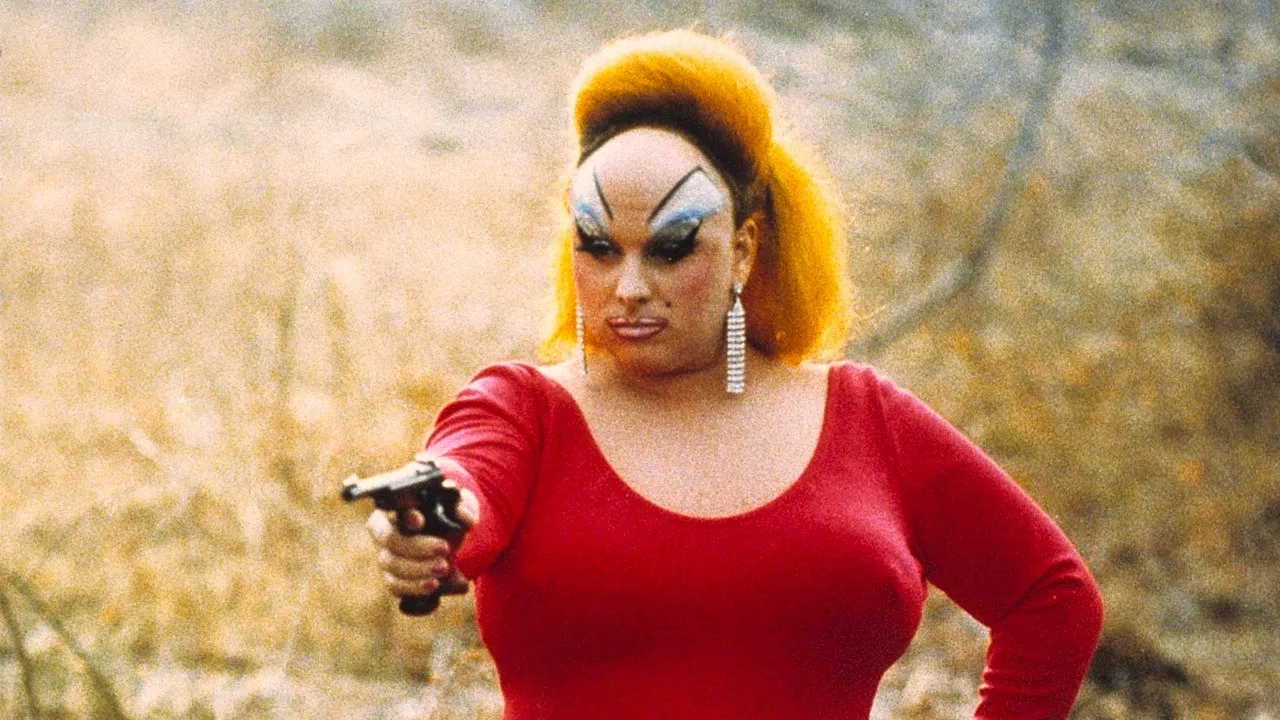
In a dilapidated trailer park on the outskirts of Baltimore, a provocation knows no bounds. This comedy-crime hybrid from John Waters defies all the conventions of popular culture to write its own rules. Divine, the queen of the underworld, faces off against a corrupt couple determined to dethrone her. This absurd clash—which transforms the concept of filth into an aesthetic act of resistance—shatters traditional family values and social norms piece by piece. With every frame functioning like a non-conformist installation, the film completely uproots the viewer from their comfort zone. When the squalor of trailer parks collides with obsessive competition, the result is a scene of utter chaos.
87. The Room (2003) – Tommy Wiseau
Set on the hilly streets of San Francisco, this is a bizarre universe where plastic American footballs fly through the air. This absurd drama, directed by Tommy Wiseau, shows just how strange ordinary relationships and friendships can become. The perfect life Johnny has carefully crafted begins to unravel quietly in small rooms filled with his closest friends. Those lost in the ordinary flow of life collide with one another in the shadow of betrayal and passion.
Hidden in every facial expression and every strange smile of the characters lies one of the most unconventional tones in cinematic history. Set under the California sun, this romantic dead end establishes its own unique rhythm, far beyond clichéd narratives.
88. Akira (1988) – Katsuhiro Otomo
On the neon-stained asphalt of Neo-Tokyo, the concrete awakens with a crackle amid the roar of motorcycle gangs. Katsuhiro Otomo brings the violence and decay echoing through the streets of this vast metropolis to the screen with a tension that pushes the boundaries of animation. As the devastation wrought by secret military experiments on human flesh drives the city to the brink of utter catastrophe, the dystopia subtly takes hold of minds.
Every screech of brakes echoing among the piles of metal is a harbinger of the approaching apocalypse. In this dark universe woven from the rawest form of science fiction aesthetics, the underground struggle of young street gangs spirals out of control. As unchecked power rages, Neo-Tokyo finds itself trapped between rising from its own ashes or being completely wiped out.
89. Fight Club (1999) – David Fincher
A sleepless man, melting away amid the crushing monotony of white-collar life, finds himself trapped between the sterile walls of the office and piles of rubble. Directed by David Fincher, the film brings the psychological breakdown of the modern urbanite to the big screen with a dark blend of drama and suspense. Together with a charismatic soap salesman who enters his life, the character leaves his mundane troubles behind.
Fistfights that begin in the basements quickly escalate into a mass rage spreading underground and a destructive nihilist movement. This secret society, which pushes the limits of the human body, is shaped around repressed inner explosions and dual identities. Growing under the guise of a reckoning with the system, this dark order rapidly hurtles toward an uncontrollable end.
90. Frankenstein (1931) – James Whale
Cold body parts stolen from graves are brought together in the dim light of the laboratory for a single purpose. James Whale invites the audience into the black-and-white world of this classic film, to the point where science and hubris intersect. Bones gathered from beneath the earth and pieces of flesh sewn together begin to breathe as a result of a sickening ambition. Yet the being behind this artificial skin is far from the perfect triumph its creator envisioned. When this dark fairy tale spills out from a hellish laboratory into the outside world, fear and alienation spread through the streets. Frankenstein whispers the deep tragedy at the heart of the horror genre—man’s trial by the monster of his own making.
91. Braindead (1992) – Peter Jackson
Set in the quiet neighborhoods of Wellington, this story begins with the life of Lionel, who is trapped in the shadow of an overprotective mother. A strange illness that silently spreads throughout the house after a bite from a peculiar monkey brought from Sumatra quickly spirals out of control. In this horror-comedy directed by Peter Jackson, everything from the soups in the kitchen to the lawnmowers in the yard sets the stage for a bloody chaos. As Lionel tries to hide the zombie nightmare unfolding around him, the house turns into a grotesque slaughterhouse.
92. Riki-Oh: The Story of Ricky (1991) – Lam Nai-Choi
In the privatized prisons of 2001, justice has long since been left behind behind bars. While a slave-like system operates within the walls, every new prisoner who ends up here is doomed to be crushed between the cogs of the system. Riki, a young fighter with superhuman strength, is determined to break this ruthless cycle created by corrupt prison administrators. Directed by Lam Nai-Choi, this action-horror hybrid completely shatters the modern perception of prisons. With its scenes of extreme violence and uncompromising visual style, the film presents the audience with a dark struggle for survival. The harshest and most uncompromising form of martial arts echoes relentlessly within these concrete walls.
93. Aftermath (1994) - Nacho Cerdà (1994) – Unknown Director
The silent and eerie bond formed with the lifeless bodies arriving at the morgue deepens step by step in the cold corridors of the night shift. In this short film, which explores the boundaries of experimental cinema, director Nacho Cerdà focuses on the eerie rituals taking place among piles of decaying flesh. In a room dominated by the sharp sounds of scalpels and the sterile smell of lime, a routine anatomical examination quickly turns into a hair-raising obsession. Time, flowing in the background, grows even heavier in contrast to the stillness on the morgue table, leaving the viewer alone in a dark labyrinth.
94. Cannibal Holocaust (1980) – Ruggero Deodato
The tin cans left behind by a documentary crew that vanished in the humid and eerie depths of the Amazon rainforest bring to light the dark side of humanity, which claims to be civilized. Directed by Ruggero Deodato, this horror film goes beyond a mere rescue mission, plunging the viewer into the heart of the swamp and savage rituals. This found-footage film, which shows how boundaries dissolve while the camera is rolling, leaves the viewer alone in an eerie landscape where civilization clashes with the primitive.
95. Zardoz (1974) – John Boorman
Amid the ruins of the 24th century, a savage—trained solely to sow death—steps toward the secrets hidden behind a colossal stone head. In this dystopian universe created by John Boorman, a community of immortals—who have forgotten death and preserve all of humanity’s accumulated knowledge in sterile isolation—is shaken by the arrival of this outsider. A mysterious murder unfolding in the background reveals just how rotten this seemingly flawless order truly is. Blending science fiction and action elements with intense suspense, the film draws the audience into a savage struggle for survival within the breathless and eerie atmosphere of the future. In that sterile sanctuary where time has stood still, nothing will ever be the same again.
96. The Big Lebowski (1998) – Joel Coen, Ethan Coen
The Dude, whose biggest concerns in the Los Angeles heat are an ice-cold White Russian and Thursday tournaments at the bowling alley, one day finds himself in the middle of an absurd case of mistaken identity. His quest to recover his ruined rug—the result of a senseless raid on his home—drags him into the complex world of nihilists and local billionaires.
In this crime-comedy whirlwind directed by the Coen brothers, our unemployed hero and his loyal friends embark on a rusty adventure to avenge the rug. Echoing through the dusty streets of California, this tale of aimlessness shows how ordinary moments can spiral into chaos.
97. Vanishing Point (1971) – Richard C. Sarafian
A white Dodge Challenger vanishes into the endless expanse stretching from Colorado’s scorching asphalt toward San Francisco. For Kowalski, a Vietnam veteran behind the wheel, this journey is not just a race against time, but a relentless chase with highway patrol officers. In this crime-drama thriller directed by Richard C. Sarafian, the dusty desert roads and hippie culture of the 1970s flow silently in the background. As the speedometer climbs, ghosts of the past and voices mingling with the radio waves seem to close in on this lone driver.
98. Attack of the Killer Tomatoes! (1978) – John De Bello
In an ordinary American suburb, it all begins when a tomato that slips down the sink suddenly swallows the homeowner. With this film, which he launched into the world of cinema in the late ’70s, John De Bello pushes the boundaries of absurd humor. This cult B-movie, which pokes fun at the sci-fi and horror genres, creates a crazy world where mutated vegetables have declared war on humanity. As a bizarre government research team tries to stop the red menace—which is rolling through the streets, spreading terror—events spiral out of control.\n\nThis musical-infused parody immediately captivates the audience with its deliberately low-budget special effects and absurd details. Amid the strange grunts emitted by giant tomatoes, all sense of seriousness vanishes as we watch the crazy scientists’ nonsensical plans unfold. What we have here is a fun, chaotic mess that flouts the rules of cinema.
99. Re-Animator (1985) – Stuart Gordon
The dim lights flickering in Miskatonic University’s morgue are a harbinger of an eerie presence lurking in the medical school’s hallways. This film, brought to life by Stuart Gordon, masterfully blends science fiction with dark humor in a laboratory setting.
As a young medical student tests his dangerous serum—which pushes the boundaries of death—on fresh corpses, he drags everyone in the room into an inescapable descent into madness. A chain of absurd events, accompanied by the cold clang of surgical instruments, is on the verge of spiraling out of control.
As secrets hidden in dark rooms come to light, these mad experiments—which defy the laws of nature—are poised to break free from the hospital’s walls.
100. The Warriors (1979) – Walter Hill
That radio announcement, echoing through the concrete hell of the Bronx, suddenly changed the course of the night. Directed by Walter Hill, this action-packed thriller brings to the screen the struggle for survival of a Coney Island gang caught in the middle of a turf war. Accused of a murder they didn’t commit and left completely alone on the streets, the Warriors must make their way through the subway tunnels to make it to morning. In the city’s darkest corners, as they flee from thousands of enemies hot on their heels, the streets of New York offer them no safe passage.
101. Videodrome (1983) – David Cronenberg
A cassette circulating in Toronto’s underground scene begins to blur the boundaries of reality. Directed by David Cronenberg, this horror-science fiction nightmare shows how signals emanating from screens can take over the mind. As the cycle of violence that appears on the screen slowly consumes the viewer’s body and perception, the viewer is drawn deeper into this dark addiction.
102. Repo Man (1984) – Alex Cox
Amid the scorching asphalt and a crumbling system, Los Angeles breathes to the beat of punk rock. Otto, fleeing the crumbs of an ordinary life, finds himself among a seasoned crew that salvages repossessed cars. Amid night shifts, neon signs, and eerie streets, things suddenly go off the rails.
This absurd sci-fi film by Alex Cox takes a darkly humorous look at capitalism and consumerism. As agents, scientists, and UFO enthusiasts swarm the city in pursuit of the secret in his trunk, this lawless order succumbs to chaos.
103. Bad Taste (1987) – Peter Jackson
In a quiet coastal town in New Zealand, the peace is shattered by an alien fast-food chain’s plan to add human flesh to its menu. As the townspeople vanish, only horror and absurd chaos remain. Directed by Peter Jackson, this sci-fi-comedy-infused horror film blends gore aesthetics and chainsaw sounds with pitch-black humor. With the arrival of the Astro-Investigation and Defense Service in town, a blood-soaked and mind-bending operation begins. Pushing the boundaries, this film brings the strangest alien invasion in cinema history to the screen.
104. The Rocky Horror Picture Show (1975) – Jim Sharman
A flat tire at midnight leaves two young people all alone in the middle of a gloomy town. In that Gothic castle—their only refuge—time flows very differently from the outside world. Directed by Jim Sharman, this wild musical takes the audience far beyond all familiar conventions.
The castle’s eccentric host and his extraordinary crew draw everyone who steps inside into a dark and seductive ritual. The rocket-fast rhythm and elements of absurd comedy are powerful enough to sweep the guests off their feet.
Lasting until the first light of dawn, this nightmarish fairy tale completely erases the boundaries between genres. The audience is drawn into a bizarre time loop alongside the heroes of this colorful and boundless world on stage.
105. Phantom of the Paradise (1974) – Brian De Palma
In the neon-laced darkness of New York City, we find ourselves in a music studio where ambition and power collide. Brian De Palma hides all the glitz and decay of the rock 'n' roll world behind a grotesque mask.
A young pianist is devastated when a producer steals the melodies he’s written. A diabolical deal and a never-ending string of betrayals drag him into the heart of a glorious nightmare. This musical reimagines a familiar Faustian tale for the audience with dark humor and gothic grandeur.
106. Easy Rider (1969) – Dennis Hopper
Leaving the dusty outskirts of Los Angeles behind, two travelers cross the desert on the predecessors of Harley-Davidsons, setting out on a long ride toward the heart of the country. This adventure, directed by Dennis Hopper, traces a quest for spiritual truth amid the order that has become trapped along the edges of the highways. Vast landscapes, endless roads, and echoes of a counterculture, combined with the rumble of the engines, reveal the fragile face of the American Dream.
107. A Clockwork Orange (1971) – Stanley Kubrick
In the gothic and decaying streets of London, the world of Alex DeLarge—who spreads terror alongside his gang—is enveloped by Beethoven’s symphonies and the sounds of Beethoven’s music. In this science-fiction nightmare by Stanley Kubrick, woven with dystopian and dark humor, extreme violence becomes the sole law of the street.
The state’s brutal methods, which eliminate individual will in the name of maintaining public order, drive the concepts of crime and punishment into a dark impasse. Unfolding with mischievous mockery against the backdrop of Britain’s gloomy atmosphere, this system paints the harshest portrait of a decaying society and authority.
108. Freaks (1932) – Tod Browning
In that dim world behind the tent, the oppressive stares of those wandering through the circus tent with a spiritual arrogance reign supreme. In this dark drama and horror narrative, Tod Browning leaves the audience face to face with the truest face of freak shows. The trapeze artist’s dazzling allure fuels the illusion of a dangerous romance unfolding in the midst of the crowd. Love and betrayal grow side by side under the same roof, in the whispers behind the scenes. While the circus regulars take refuge in their bonds with one another, the hypocrisy of the outside world slowly comes to the surface. Under the circus tent’s fading lights, the true identity of the monsters begins to emerge.
109. The Piano Teacher (2001) – Michael Haneke
Set in the cold, sterile rooms of the Vienna Conservatory, this drama unfolds in the shadow of repressed desires and dark impulses. Michael Haneke juxtaposes the discipline of music with the disintegration of the soul. Erika Kohut is a woman trapped between the piano keys, living in the shadow of her authoritarian mother. A young man’s persistent pursuit begins to push the boundaries of this controlled world. As the dynamics of the relationship shift, everything that has been repressed comes to the surface.
110. The Texas Chain Saw Massacre (1974) – Tobe Hooper
As the stifling Texas heat gives way to an increasingly oppressive odor and tension inside the minivan, the paths of five young people cross at a secluded gas station. What began as a summer vacation turns into a nightmare when the short trip loses its way in the abandoned and rusted-out countryside.
Directed by Tobe Hooper, this horror film unfolds amid a mind-bending family bond and a perversion fueled by grave robbing. As the violence behind the leather masks shatters the silence with the sharp sound of a chainsaw, the threat lurking around every corner draws the viewer into a trap from which there is no escape.
111. The Toxic Avenger (1984) – Lloyd Kaufman, Michael Herz
In the dark streets of Tromaville, a scrawny janitor whom no one ever looks at falls into barrels overflowing with the town’s toxic waste. This absurd film by Lloyd Kaufman and Michael Herz centers on the story of an extraordinary antihero born in the midst of a system rife with filth and decay. The cycle of contempt and bullying that begins in the town’s squalid gym evolves into a pitch-black thirst for revenge. In these grindhouse-inspired streets, where horror and comedy intertwine, the concept of justice takes on a completely mutated form. Emerging from the darkness of the night with a mop in hand, this freak of nature embarks on a ruthless purge against corrupt officials and con artists.
112. Faster, Pussycat! Kill! Kill! (1965) – Russ Meyer
Sports cars speeding across the scorching desert sands and a rage that sweeps through the landscape. In this film directed by Russ Meyer, we step into the wild world of three go-go dancers. A ranch isolated in the middle of the desert and unexpected robbery plans bring with them moments of high tension.
The characters’ dangerous allure and the film’s crime-fueled rhythm draw the audience into a breathless chase. This blend of crime and comedy, unfolding under the desert sun, bursts from the dusty shelves of movie theaters and crashes straight onto the screen.
113. Office Space (1999) – Mike Judge
In gray cubicles lit by flickering fluorescent lights, hours spent with the same coffee cup slowly drain one’s spirit. This series by Mike Judge captures the sense of burnout felt by software engineers trapped in the concrete loneliness of Texas suburbs with sharp humor. Ordinary workdays spent in the shadow of an oppressive boss lay bare the absurdities of the corporate world. The stifling routine of office life—along with the temperamental photocopiers and unbearable coworkers—is portrayed on screen in its purest form. As the system keeps the massive wheel turning, every moment spent at the desk turns into a rehearsal for rebellion.
114. The Evil Dead (1982) – Sam Raimi
That dilapidated wooden cabin in the middle of the forest quickly turns five teenagers’ weekend getaway into an eerie nightmare. Directed by Sam Raimi, this horror classic begins with an old audio tape emerging from the basement and a cursed Sumerian book. The gloom seeping into the walls is a harbinger of a dark force that slowly takes hold of the young people’s minds. In this dilapidated place, cut off from the outside world, even nature turns its back on them. Every corner is filled with an ancient threat waiting to awaken in the darkness of the night.
115. Blade Runner (1982) – Ridley Scott
A Los Angeles night, battered by acid rain and made up entirely of neon. This dystopia, directed by Ridley Scott, creates a universe struggling to breathe amid man-made bodies and fading lives. The streets, trapped beneath the hum of flying vehicles, are filled with shadows that whisper about who is truly human.
For a bounty hunter, every breath taken beneath the streetlights is suspect. In this sci-fi thriller, which embodies the darkest shades of the tech-noir aesthetic, fugitives and their pursuers alike are lost within the same rusted dream. In this world where boundaries have dissolved, simply existing is, in itself, a quest for proof.
116. The Deadly Spawn (1983) – Douglas McKeown
A meteorite that crashes into the forests of New Jersey turns a quiet night at camp into a terrifying nightmare. Directed by Douglas McKeown, this horror-science fiction thriller follows alien parasites that emerge in the heart of nature and begin to overrun homes and the town. These creatures, multiplying underground and in basements, turn the teenagers’ struggle for survival into a relentless chase. The dark atmosphere that envelops the screen leaves classic creature invasion clichés behind, trapping the viewer in a claustrophobic tension.
117. Barbarella (1968) – Roger Vadim
In the vastness of 41st-century space, we float amid metallic suits and boundless galactic dangers. Roger Vadim plunges the audience into a rule-breaking space adventure and one of pop culture’s most iconic aesthetics.
Barbarella, an interstellar mercenary, strays from the beaten path as she pursues a dark force that threatens to upset the balance of the planets. As she journeys through dreamscapes punctuated by bird attacks and alien landscapes, one of science fiction cinema’s most colorful and absurd carnivals unfolds.
118. Man Bites Dog (1992) – Rémy Belvaux, André Bonzel, Benoît Poelvoorde
This time, the camera’s lens focuses not on cold objectivity, but on the daily routine of a cold-blooded killer. The documentary crew doesn’t just record the traces of violence Ben leaves behind; as the seconds tick by, they become willing participants in this absurd and dark partnership.
This black comedy by Rémy Belvaux, André Bonzel, and Benoît Poelvoorde blurs the lines between crime and the ordinary. While Ben continues his violent acts, he also rambles recklessly about art, music, and life. As the crew continues filming, they find themselves sinking deeper into the inescapable quagmire of their criminal partnership.
119. Day of the Woman (1978) – Meir Zarchi
Far from the city, the silence of a desolate cabin serves as a refuge for a young woman trying to write. This isolated setting deep in the forest soon turns into a suffocating nightmare marked by the violence of local thugs.
Directed by Meir Zarchi, this independent horror film centers on a struggle for survival and a meticulously planned act of revenge. Jennifer has been left for dead after the brutal attack she endured, but she is determined to counter the devastation she has suffered with the resolve of a cold-blooded hunter.
The narrative, in which a systematic hunt is set in motion step by step, draws the viewer into the character’s mental transformation. This dark, irreversible reckoning is a silent yet brutal settling of scores in the heart of nature.
120. Straw Dogs (1971) – Sam Peckinpah
The peaceful, green landscape of rural Cornwall is slowly poisoned by the gaze of the locals, who put up a wall against outsiders. David, an American academic, and his British wife, Amy, shut themselves away in their home, hoping to build a quiet life in this isolated town. However, in this spiral of suspense and drama directed by Sam Peckinpah, the townspeople’s humiliating harassment escalates exponentially.
Over time, in this rural landscape where boundaries are pushed to the limit, the darkest and most primitive corners of human nature begin to surface. As David’s passive demeanor nears a breaking point under the pressures he faces, the villagers’ brute force transforms into a suffocating atmosphere that descends upon the town.
121. Begotten (1991) – E. Elias Merhige
We witness nature’s painful rebirth, beginning in a barren landscape following the death of God. In this avant-garde experiment that pushes the boundaries of cinema, E. Elias Merhige invites the viewer into a dark universe where words fail. The images whisper of a nearly entirely abstract nightmare. The savagery echoing through the barren forests completely rips the viewer from their comfort zone. As the camera tracks the traces of the most primal instincts and decay, it offers no consolation. A thoroughly unsettling audiovisual experience.
122. Day of the Dead (1985) – George A. Romero
A handful of people fleeing Florida’s sweltering heat find themselves trapped in a concrete shelter as the living dead take over the world. In this drama and horror thriller directed by George A. Romero, the apocalypse and zombie invasion outside drive the tension inside the shelter higher with each passing day. Caught between military discipline and scientific reason, the group begins to lose their sanity in the dark corridors.
123. Ichi the Killer (2001) – Takashi Miike
Tracking down a yakuza leader who has vanished into the streets of Kabukicho propels Kakihara into a quest that pushes the boundaries of pain. In this crime-horror thriller directed by Takashi Miike, the darkness of the underworld clashes with neon lights. Kakihara is about to encounter Ichi, a psychotic killer who might offer him the unique sensation he seeks. Knives, piercings, and ruthless violence set the stage for this encounter. These streets, where anarchic humor and violence intertwine, leave the viewer in the midst of an eerie darkness. In this world where no rules apply, the lines between prey and predator are completely blurred.
124. Orgazmo (1998) – Trey Parker
Amid the artificial glitz of Los Angeles, a young Mormon who is deeply devoted to his faith finds his door knocked on by an unexpected industry. This absurdist comedy, directed by Trey Parker, follows an innocent young man—who has drawn attention for his martial arts skills in street fights—as he steps onto the set of an adult film. Caught between moral values and the realities of the industry, this independent film brings to the screen—in its own unique voice—our hero’s bizarre career in front of the camera and the absurd events unfolding around him.
125. 25th Hour (2002) – Spike Lee
The final twenty-four hours before the start of a seven-year prison sentence hang over the streets of New York like a heavy shadow. In this crime-drama directed by Spike Lee, a drug dealer finds himself trapped between his glittering past and the inevitable fate that awaits him. Amid the city’s dusty and weary atmosphere, friendships, suspicions, and shattered dreams surface one by one. The silent reckoning of a closing era and those left behind flows quietly in the darkness of the night, in time with the rhythm of the street.
126. Punishment Park (1971) – Peter Watkins
Under the scorching sun of the California desert, America’s dark conscience is once again on trial. This unsettling mockumentary by Peter Watkins documents how political repression and McCarthyist paranoia have turned the state into a hunter. Young dissidents and the hippie generation are fighting for survival in the deadly game the system has forced upon them.
This relentless manhunt, carried out under the shadow of soldiers and federal authorities, lays bare the dystopian reality rising from the country’s barren lands. As the camera blurs the lines between fiction and reality, it records, in a cold and sharp tone, the system’s methods of silencing dissenting voices.
127. Altered States (1980) – Ken Russell
Inside a dark isolation tank, a perilous journey into the most primitive layers of the mind begins. In this sci-fi and horror experiment that pushes the boundaries of consciousness, the past is not merely a collection of memories. Ken Russell explores the physical limits of human nature by focusing on psychedelic hallucinations from his Harvard days and his genetic roots.
On the threshold of physical and spiritual transformation, the perception of reality slowly dissolves. The coldness of the laboratory setting gives way to the darkness of primal rituals and the subconscious. The line between sanity and madness grows a little fainter with each new experiment.
128. Tetsuo: The Iron Man (1989) – Shinya Tsukamoto
The smell of rust and that inevitable moment when metal meets flesh transform into a dark cyberpunk nightmare through Shinya Tsukamoto’s lens. The shrill sounds echoing through the streets and the black-and-white imagery bring the modern human’s trial by steel to the screen in its rawest form.
A man going about his routine after an ordinary workday realizes his body is transforming from the inside out into a mass of iron. This bizarre transformation is a sickening cycle triggered by a grotesque obsession that gnaws at both his mind and flesh simultaneously.
This industrial storm, straddling the boundaries of horror and science fiction, plunges the viewer into the very heart of a harsh and merciless dystopia. In this world where metal pierces flesh, escape means only sinking deeper.
129. House (1977) – Nobuhiko Obayashi
Seven young women, determined to spend their summer vacation at their aunt’s dilapidated country mansion, find themselves confronted with events that defy logic upon arriving at this strange place. Shaped by Nobuhiko Obayashi, this film blends horror and comedy in an absurd fusion.
Amid cat figurines, piano keys, and colorful set designs, the house transforms into a living organism that writes its own rules. Pushing the boundaries of experimental cinema, this adventure draws the audience into a nightmare that is as claustrophobic as it is joyful.
130. Ghost Dog: The Way of the Samurai (1999) – Jim Jarmusch
A man living among the pigeons on a rooftop in the concrete-gray streets of New Jersey. In this crime-drama entanglement directed by Jim Jarmusch, Ghost Dog is a lone hitman who remains faithful to the samurai code in today’s world. Blending classic gangster stories and hip-hop vibes with a minimalist street aesthetic, the film possesses a calm rhythm that captures the spirit of the times. As tensions with the mafia escalate, the character’s silent world—shaped by concepts of loyalty and honor—envelops the viewer.
131. Clerks (1994) – Kevin Smith
An ordinary day spent behind the shutters in the biting cold of New Jersey. Kevin Smith uses humor to explore the monotony of two clerks trapped within a black-and-white frame and the hockey games taking place on the roof.
Set amid constantly whining customers, snacks, and endless dialogue, this comedy explores the sense of being stuck experienced by the underdogs right in the thick of life, as well as the bond of male friendship.
132. Network (1976) – Sidney Lumet
The cold fluorescent light emanating from television screens blends with the gray tones of a decaying system. This sharp drama, directed by Sidney Lumet, whispers to the audience the rage of a man on the brink of losing his job on the streets of New York City. The outburst unfolding on screen is quickly manipulated for the sake of ratings.
As the system creates its own monster, the gears turn with the greed for profit. Journalism has become a dirty business, and this dark satire ratchets up the tension without exposing the secret alliances behind the scenes.
133. This Is Spinal Tap (1984) – Rob Reiner
Spinal Tap, England’s loudest metal band—which cranks its amplifiers’ volume knobs all the way up to eleven—is trying to make a splash on its U.S. tour. Directed by Rob Reiner, this mockumentary paints an absurd portrait of the music industry, filled with faded leather outfits, half-empty venues, and ego clashes. The aging rockers, trying to shine on stage while getting lost in the backstage hallways, have you laughing at every turn.
134. They Live (1988) – John Carpenter
Wandering aimlessly through the streets of Los Angeles seems, at the end of the day, like nothing more than a mundane struggle for existence. The massive billboards hanging over the city’s gray streets and the consumerist messages repeated like parrots are like an invisible web designed to numb the human mind. Directed by John Carpenter, this dark sci-fi and action nightmare explores social decay and the barrage of capitalism along an unconventional narrative arc.
A pair of sunglasses found by chance by an ordinary worker transforms everything around him with razor-sharp clarity. The true faces behind the advertisements and the mind-control messages are revealed one by one. As the system seeks ways to silence those who have awakened to this reality, a sense of alienation and conspiracy theories slowly but overwhelmingly take over the entire city.
135. Crash (1996) – David Cronenberg
As the heat of the asphalt mingles with the cold of the metal, that pile of scrap by the side of the highway opens the door not just to a moment of an accident, but to an entirely different desire. Directed by David Cronenberg, this journey of suspense and drama forges a new language at the intersection of body and machine. The eerie pull of traffic accidents drags the characters toward the city’s underground dead ends. Scrap metal and fresh wounds become expressions of repressed urges. Every screech of brakes etches itself into the mind like an eerie whisper echoing through hospital corridors. In these dark streets, where eroticism and destruction are so deeply intertwined—and which pull the viewer out of their comfort zone—the mechanized passions of the modern world are not explicitly revealed, but merely felt.
136. Monty Python and the Holy Grail (1975) – Terry Jones, Terry Gilliam
As King Arthur and his loyal squire traverse the English countryside without their horses, they find themselves struggling to gather the Knights of the Round Table amid the mud and absurdity. Directed by Terry Jones and Terry Gilliam, this anarchic comedy strips the quest for the Holy Grail of all its solemnity.
As sword fights devolve into absurd arguments with crippled black knights, even stepping through the gates of Camelot becomes a ridiculous adventure in and of itself. Historical sets and low-budget gags come together to completely shatter medieval mythology.
Related Movements & Themes
69k reads
Kült Türk Filmleri Listesi
185k reads
Sexploitation - Seks İstismar Filmleri Listesi
361k reads
Yasaklı Filmler Listesi
120k reads
Klasik Filmler Listesi
Home
Film
Curation
Criticism
Menu