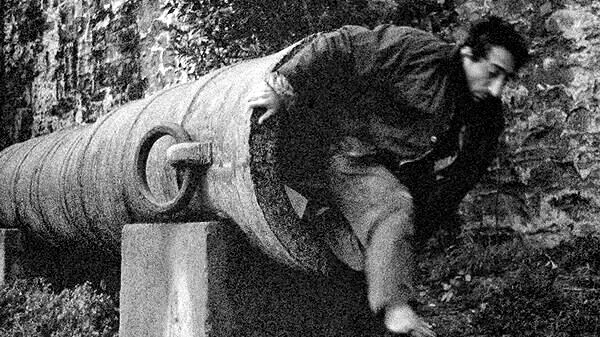
List of Cult Turkish Films
0
Films
0 min.
Read Time
0k
Views
Contents
A list of cult Turkish films—those that are considered, or should be considered, cult classics—alongside some of the best films in Turkish cinema.
BM
Bahadır Mahmut
Curator
Related Movements & Themes
221k reads
Kült Filmler Listesi
8k reads
Turksploitation - Türk İstismar Filmleri Listesi
16k reads
B Filmler Listesi
A challenging list for the compiler. There are several valid reasons for this;
•
The ambiguity and open-ended nature of the concept of “cult film,”
•
Our distance from Turkish cinema with a distinct identity and from the domestic audience that only such a cinema could cultivate,
•
Turkish rip-offs, and
•
the confusion created by popular Turkish films from past eras that are becoming increasingly obscure
The Concept of a Cult Film
The ambiguity of the concept of
“cult film”
was addressed in the List of Cult Films
; therefore, we will not repeat it here and will proceed to point 2.
Turkish Cinema and the Turkish Film Audience
To speak of a country’s “cult films
,” that country’s cinema must consistently and repeatedly explore the extremes of filmmaking in various ways—not just through isolated forays—and such experiments must have become ingrained habits. For example, the production of guerrilla films, the creation of a significant number of films in genres beyond comedy, horror, and drama, the subversion of classical acting and narrative structure, and the acceptance of experimental cinema and absurdist films—all these factors enable a country’s cinema to produce cult films
, and enable the country’s film audience to develop the discernment needed to identify such films.
If we had a cinema with a distinct identity that spanned a broad spectrum within a framework of continuity, the audiences raised within that cinema could also elevate films to cult status.
Rip-Offs
The points mentioned above force Turkish audiences to look abroad in order to identify Turkish cult films.
If we look at the cult films of Turkish cinema that are generally recognized worldwide, we see many of our rip-offs, such as *The Man Who Saved the World*, the *Kilink* series, and those falling under the “turksploitation” category.
Most of our rip-offs are undoubtedly cult classics. The real issue here, however, concerns the extent to which these films are actually Turkish. By the very nature of being rip-offs, these films are merely versions of the originals they’ve copied. When watching *The Man Who Saved the World*, the story being told is not that of Turkish cinema but rather that of American cinema—in short, the story of America. Similarly, when watching *Kilink*, the audience is exposed to an adapted version of a story by an Italian comic book writer. Most of our rip-offs have achieved cult status, but just how “Turkish” they are in terms of originality is debatable.
Popular Turkish Cinema of the Past
Setting our rip-offs aside, another perplexing topic is Yeşilçam’s old popular films: *Züğürt Ağa*, *Çöpçüler Kralı*, *Zübük*, *Davaro*, and others. These are genuinely good old Turkish films. They contain nearly limitless social criticism, which is why it’s quite easy for them to be considered cult classics.
However, what raises doubts when evaluating them as cult films is their desire to reach the entire society and the compromises they made in the name of pluralism. They confined themselves to quite narrow, technical, and formulaic approaches. They have been successful. However, for the most part, these films are merely important building blocks of Turkish popular cinema.
What Factors Were Considered When Compiling the List of Cult Turkish Films?
Within the concept of
“cult films
,” the list includes films that have achieved cult status—or are considered worthy of it—due to their bold narratives, unique styles, and the risks they took for Turkish cinema and its audience.
The last two points mentioned above—rip-offs and films from the era of popular Turkish cinema—were taken into account. Films that stood out within these two categories were included to a very limited extent, but the list was not limited to these two categories alone.
Best Of
Selection List
Curator's Order
1. Law of the Border (1966) – Lütfi Akad
In the dusty villages along Urfa’s border with Syria, the wind always blows with the same intensity. *The Law of the Border*, directed by Lütfi Akad, slowly explores how the landscape corners its people. Hıdır, who lives in the shadow of the landowner, wants to break free from this cycle of crime. But poverty and the feudal system push him down a different path.
Smuggling along the border is not just a matter of making a living—it is a matter of survival. Herds smuggled across the border in the darkness of night and the sound of gunfire are like the unchanging fate of this landscape. The burden on Hıdır’s shoulders is not merely about herding the flock; it is a silent act of resistance against the harsh rules of these lands.
2. On Fertile Lands (1980) – Erden Kıral
Leaving the village’s dusty roads behind and stepping into the scorching heat of Çukurova, the three friends are not yet aware of the grueling labor that awaits them in the valley of white gold. This striking drama, captured through Erden Kıral’s lens, lays bare the exploitative system in which the land swallows up its people.
Their saddlebags, once brimming with hope, slowly dwindle amid the endless hours and grueling labor in the cotton fields. Amid class inequality and destitution, the workers’ struggle for survival draws the viewer into a relentless tragedy.
3. Motherland Hotel (1987) – Ömer Kavur
At the Anayurt Hotel, buried in the silence of the countryside, time flows slowly, like a rusty clock. In this world, where Ömer Kavur masterfully blends suspense and drama, the monotonous days of Zebercet, the hotel clerk, are disrupted by an unexpected event. That mysterious woman, who comes and goes for just one night, stirs up a quiet upheaval in the midst of provincial solitude. Whispers seeping from the rooms and the creaking of the wooden stairs fuel the unease lurking beneath the surface of ordinariness. The void left behind by the departing guest pries open the door to the mind’s darkest recesses.
4. The Road (1982) – Yılmaz Güney, Şerif Gören
A seven-day respite behind iron bars begins with a long-awaited furlough from prison. Five inmates set out for their villages and families after many years. However, the world outside is just as suffocating and ruthless as the one inside.
This harrowing drama, directed by Yılmaz Güney and Şerif Gören, lays bare the harsh realities of Kurdish culture and geography. The characters come up against the walls of tradition and social pressure.
5. Zübük (1980) – Kartal Tibet
That familiar scent, wafting from the corridors of Ankara to small towns across the country, is the voice of those who’ll go to any lengths to keep their seats. Directed by Kartal Tibet, this sharp comedy doesn’t merely expose the brazen dance of hypocrisy on the political stage—it plunges the audience right into the thick of it. As journalist Yaşar sets out in pursuit of the truth, he gets lost in a web of devious schemes. This system, built on the backs of the people, serves up poison and laughter in the same bowl. The masks, polished by the lust for power, are ready to take the stage anew in every era.
6. Dry Summer (1963) – Metin Erksan
In the arid soil under the scorching heat, water is the very essence of both life and death. This dark drama by Metin Erksan is consumed by the greed of a selfish farmer who alters the flow of water in the Aegean countryside. The tension among landowners turns into a poisonous vine at the point where the bond of brotherhood intersects with the struggle over property.
The gloomy atmosphere that descends upon the village deepens as the most basic source of life is transformed into a tool of domination. The fierce clash between conscience and greed lays bare the human mind darkened by the summer sun. No one will emerge from this relentless struggle unscathed.
7. Mr. Muhsin (1987) – Yavuz Turgul
Caught in a spiral of doubts and changing times, Istanbul welcomes a brand-new voice to the street of an old-school music producer. This drama, directed by Yavuz Turgul, centers on the story of those struggling to survive in a world where traditional values are crumbling.
Ali Nazik, who has come from Anatolia in search of his fortune, finds himself at Muhsin Bey’s doorstep. Caught between the nostalgia of vinyl records and the commercial clamor of arabesque music, these two men struggle to keep pace with the city’s relentless rhythm.
8. Destiny (2006) – Zeki Demirkubuz
The humidity of the sweltering summer nights creeps insidiously through the quiet streets of Karaköy. In this dark, dramatic universe, Zeki Demirkubuz turns his lens on the purest forms of unrequited love and obsession. As Bekir’s passion—a tangled knot that has spanned years—takes shape through Uğur’s presence, the shadow of crime and punishment envelops the streets.
With Zagor’s release from prison, the balance is shattered, and the characters find themselves caught in a vortex from which there is no return. That stubborn and overwhelming devotion in Bekir’s eyes begins where reason ends. The camera wanders through the darkest recesses of the human soul, in the dim light of provincial hotels and dingy streets.
9. Innocence (1997) – Zeki Demirkubuz
When the gates of his ten-year prison sentence close, the outside world seems far more terrifying to Yusuf than he ever imagined. Having left the best years of his life behind, this man walks through the faded streets of the countryside, unsure of what to hold on to. His path intersects with wounded souls and lives that have burned out in a dilapidated hotel room.
In this gritty drama, Zeki Demirkubuz navigates the gray boundary where hope and exhaustion meet. Far from grand claims, this story, which peers into the most secluded and darkest corners of the human soul, makes one feel the bottomless void within ordinary lives in all its raw honesty.
10. Arabesque (1989) – Ertem Eğilmez
At that melodramatic threshold where reunion is impossible, a chain of misfortunes begins that won’t let Şener and Müjde go. Ertem Eğilmez’s camera works with a sharp sense of humor that lays bare Yeşilçam’s formulaic tears and melodramatic lamentations.
Step by step, the characters are drawn into the sorrowful, resonant world of arabesque music. This peculiar journey transforms into a biting parody that mocks the clichés of Yeşilçam melodramas. As the boundaries between reality and fiction blur, the music in the background never stops.
11. Ecumenopolis: City Without Limits (2011) – Imre Azem
A megacity lost amid concrete roads, rising skyscrapers, and the never-ending noise of construction. Directed by Imre Azem, this documentary captures in simple terms the transformation stretching from Istanbul’s outskirts to its center, as well as the ecological devastation the city is facing. Stories of displacement echoing through the ghostly streets of demolished neighborhoods lay bare the deep wounds that urban renewal has inflicted on people’s lives. While the camera focuses on the lives of those struggling to survive in the shadow of billion-dollar projects, it also turns its lens to the forests and watersheds that this rapidly expanding landscape is on the verge of swallowing up. The boundless metropolis of the future is rising on the shoulders of its residents.
12. Somersault in a Coffin (1996) – Derviş Zaim
Set in the chilly streets of Rumelihisarı, this drama focuses on the daily routine of a man struggling to survive in the freezing cold. Mahsun has neither a job nor a place to call home; he gets by on handouts around the harbor.
When the darkness of night falls, however, a completely different rhythm begins. Mahsun, who steals luxury cars to keep warm, polishes them before dawn and cruises through the city. Derviş Zaim’s gritty and melancholic film brings to the screen a strange quest for belonging amid poverty and helplessness, through a stark observation filtered from the city’s outlying neighborhoods.
13. On Board (1998) – Serdar Akar
The musty, cramped cabin where four men have taken refuge is their only sanctuary, a place where they’ve escaped the ominous world outside. In this claustrophobic crime drama, director Serdar Akar traps the audience in the ship’s filthy, kerosene-scented atmosphere. The false sense of peace hidden behind the haze of marijuana smoke in the cabin shatters with a dark incident that takes place on the docks. The twisted hierarchy they’ve established among themselves—and the absolute authority they believed to be unshakable—begins to crack under an unexpected wave of violence from the outside.
From the moment they set foot on land, the absolute order at sea gives way to irreversible chaos. We witness these sailors, drowning in their own lies, surrendering the isolated world they tried to protect into the hands of a savage reality. The ship is no longer just a vessel; it is a cramped metaphor for humanity’s darkest impulses.
14. Whistle If You Come Back (1993) – Orhan Oğuz
When the darkness of night envelops the streets, they struggle to survive in this dim world that the daytime ignores. Directed by Orhan Oğuz, this drama follows the fragile bonds formed among those pushed to the margins of society. Amid wigs, dim neon lights, and narrow streets, their intersecting paths slowly evolve into a close friendship. Two lonely souls, fleeing the noise of the day to take refuge in the shelter of the night, form a quiet partnership on the fringes of life. Each carrying their own burden, these characters learn to be each other’s light in the darkness.
15. Killing in Istanbul (1967) – Yılmaz Atadeniz
Istanbul’s dusty and eerie streets tremble under the shadow of Turkish cinema’s most distinctive villain. As Yılmaz Atadeniz moves his camera along the boundaries of the crime and fantasy genres, he ignites the fuse of a dark conspiracy centered on the city. Along the path he takes to seize the secret formula, dungeons reeking of medicine and masked faces await the viewer. Standing before him is that strange threshold where an ordinary man undergoes a transformation through supernatural power. This relentless architect of evil loses his trail with steps that navigate the city like a labyrinth.
16. The Exorcist (1974) – Metin Erksan
Nervous fingers gliding across the Ouija board bring a dark visitor into twelve-year-old Gül’s room. That invisible weight seeping into the walls of the house is neither a childhood nightmare nor a temporary fever. In this horror tableau, where Metin Erksan weaves tension thread by thread behind the camera, we bear witness to the silent loss of innocence.
The psychiatrist struggling to cope with the foreign entity within his daughter and the seasoned exorcist stand on the threshold of an unforgettable test of faith. As prayers and medical interventions intertwine, the room slowly transforms into a somber ritual space.
17. The Man Who Saved the World (1982) – Çetin İnanç
A desolate desert planet covered in plaster-and-wire rocks stands before us as the rawest embodiment of a low-budget space opera. Directed by Çetin İnanç, this film offers an absurd adventure shaped by boundless imagination and the limitations of its era. Primitive fights echoing across the desert sands and rough-and-ready special effects point to one of the most distinctive corners of cinema history. Rather than transporting the viewer to another universe, this peculiar experience draws them into its own strange reality, showcasing Yeşilçam’s cheap yet bold aesthetic.
18. The Well (1968) – Metin Erksan
A landscape trapped on the edge of barren earth and drought. Metin Erksan turns his camera to the tense, shared fate of a young woman who has been abducted and the obsessive man pursuing her. In this world where words have almost lost all meaning, as silence transforms into an ever-heavier threat, a dark well stands ready to swallow everything. The attempts to escape and the relentless pursuit bring to light the darkness lurking in the farthest corners of the human soul. Fueled by a sense of entrapment, this drama holds far more than just an ordinary kidnapping story.
19. The Bus (1974) – Tunç Okan
On a gray and cold morning in Stockholm, a group of people finds itself stranded in the middle of a foreign city. Directed by Tunç Okan, this film brings to the screen the helplessness of migrants in a foreign land after their passports and all their money have been stolen.
Time passing within the bus’s metal walls clashes with the harsh reality of the modern world outside. Blending elements of drama and crime, the film focuses on the characters’ struggle for survival and their sense of alienation as they find themselves trapped in a confined space.
Related Movements & Themes
221k reads
Kült Filmler Listesi
8k reads
Turksploitation - Türk İstismar Filmleri Listesi
16k reads
B Filmler Listesi
Home
Film
Curation
Criticism
Menu