List of Pre-Code Horror Movies
0
Films
0 min.
Read Time
0k
Views
The Pre-Code era—which can be described as Hollywood’s first golden age and one of the most significant periods for the horror film genre—features Pre-Code horror films, each a classic in its own right, produced amid pending censorship laws.
BM
Bahadır Mahmut
Curator
Related Movements & Themes
120k reads
Klasik Filmler Listesi
221k reads
Kült Filmler Listesi
1k reads
Korku Gerilim Filmleri Listesi
The Hollywood Pre-Code era is a brief period sandwiched between two key milestones: the initial proposal of the law—later known as the Hays Code—which can be considered the beginning of strict control over the film industry, and the final revisions that led to its actual implementation. This law, which directly intervened in the content of the film industry, was first proposed as a draft in 1930 under the name “Motion Picture Production Code” as a result of pressure from Catholics. The restrictions intended to be imposed by the law were quite diverse.
•
Passionate kissing and love-making scenes
•
Depicting a man and a woman in the same bed
•
Positive portrayals of villains, the creation of anti-heroes, or content designed to elicit sympathy for villains
•
Depictions of murder or fraud intended to serve as instructional examples
•
Negative criticism of prophets and religions, or the expression of ideas that could be interpreted as criticism
•
Nudity, sexual content
•
Homosexual content
•
Crude and profane language
•
Depictions of drug use
•
Images that could be considered violent or gory must not be shown
are some of the restrictions.
The Emergence of the Pre-Code Era
The year 1930 was also significant. During this period, when sound began to be fully integrated into films, the narrative capabilities of cinema had expanded considerably. For this reason, restrictions were intended to be implemented from the very moment that image and sound first came together. However, despite this, the Motion Picture Production Code was not enforced for four years. Most of the reasons were, once again, period-specific. For people in a country in the midst of the Great Depression, the movies were one of the greatest forms of entertainment. It was not very sensible to use laws to suppress a film industry that had reached its peak in terms of sexuality, violence, and sensationalism during the Depression. At the same time, producers, who were in the process of covering the equipment costs of the transition to sound films, could not afford to lose their audience. Although drafts of the law existed as early as 1934, it was not fully enforced until then. In 1934, however—likely due to increasingly explicit content, pressure from Catholics, and the fact that producers had sufficiently filled their pockets over the previous four years—strict censorship and bans began in earnest. The pre-code era took its place in film history as a period when “sound” met cinema and Hollywood’s stylistic boundaries were virtually nonexistent. The Hays Code, which went into effect in 1934, remained in force until 1967. In 1968, it was replaced by the “Parental Guidance” system, which is still in effect today.
Pre-Code Horror Films
Among the hundreds of films made during the Pre-Code era, horror films are undoubtedly the ones that have resonated the most with audiences today. When viewed in the context of the audience of that era, the horror films of the time certainly achieved their goals. These films truly terrified audiences, sowed seeds of doubt in their minds, severed their connection to reality, and sometimes did exactly what was needed to fill movie theaters with screams. When looking at horror films in general, works that had already proven themselves long before the world of literature stand out. However, cinema’s ability to visually depict scenes—and the new capabilities introduced in 1930—may be what creates the impact that carries these works into the present day.
List of Pre-Code Horror Films
Best Of
Selection List
Curator's Order
1. Freaks (1932) – Tod Browning
In that dim world behind the tent, the oppressive stares of those wandering through the circus tent with a spiritual arrogance reign supreme. In this dark drama and horror narrative, Tod Browning leaves the audience face to face with the truest face of freak shows. The trapeze artist’s dazzling allure fuels the illusion of a dangerous romance unfolding in the midst of the crowd. Love and betrayal grow side by side under the same roof, in the whispers behind the scenes. While the circus regulars take refuge in their bonds with one another, the hypocrisy of the outside world slowly comes to the surface. Under the circus tent’s fading lights, the true identity of the monsters begins to emerge.
2. Dr. Jekyll and Mr. Hyde (1931) – Rouben Mamoulian
In the foggy streets of London, the repressed moral code of the Victorian era echoes across laboratory benches. This classic horror and science fiction tale, directed by Rouben Mamoulian, captures the horror of humanity’s struggle to separate its two opposing poles.
When Dr. Jekyll unleashes the dark side of his being with the chemical potion he has concocted, an unstoppable wave of destruction sweeps through the streets. The eerie atmosphere created by the black-and-white imagery sharply lays bare the character’s inner division and inner turmoil.
3. King Kong (1933) – Merian C. Cooper, Ernest B. Schoedsack
In the shadow of the Great Depression, a passion for cinema—fueled by a race to outdo one another—fills a ship with cameras and dreams that cannot pierce the fog. The destination is a wild island left blank on maps, untouched by human feet.
Directed by Merian C. Cooper and Ernest B. Schoedsack, this adventure-horror hybrid confronts an ancient monster lurking in the mist. When this colossal ape, hidden from view, is confined within civilization’s iron cage and transported to the concrete jungles of New York City, the fuse for inevitable destruction is lit.
4. Dracula (1931) – Tod Browning
As the wheels of the horse-drawn carriage creak along the muddy roads of the Carpathians, a young real estate agent makes his way toward a Transylvanian castle in the darkness of the night. Directed by Tod Browning, this classic horror film draws the audience into a gothic atmosphere shrouded in superstition.
Footsteps echoing through the castle’s dimly lit corridors and the rustle of velvet cloaks hint at the presence of Count Dracula, who carries the weariness of centuries. This immortal being, who lies silent in his coffin by day but hunts for prey in the streets of London by night, possesses a dark allure that turns the reality of ordinary people upside down.
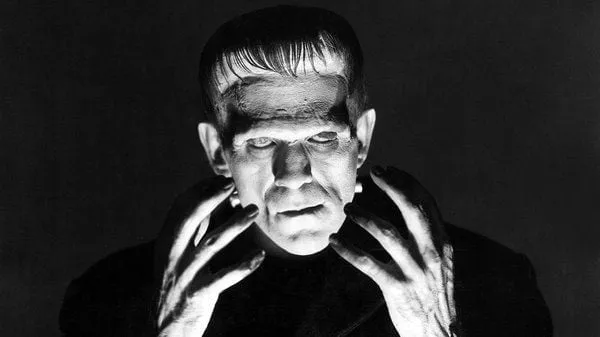
5. Frankenstein (1931) – James Whale
Cold body parts stolen from graves are brought together in the dim light of the laboratory for a single purpose. James Whale invites the audience into the black-and-white world of this classic film, to the point where science and hubris intersect. Bones gathered from beneath the earth and pieces of flesh sewn together begin to breathe as a result of a sickening ambition. Yet the being behind this artificial skin is far from the perfect triumph its creator envisioned. When this dark fairy tale spills out from a hellish laboratory into the outside world, fear and alienation spread through the streets. Frankenstein whispers the deep tragedy at the heart of the horror genre—man’s trial by the monster of his own making.
6. The Invisible Man (1933) – James Whale
Set in the snowy English countryside, the relentless chase that begins in the wake of a train crash blends with the black-and-white aesthetic of early cinema. In this science fiction and horror classic directed by James Whale, a scientist who experiments with the invisibility formula on himself finds his mind slowly sinking into darkness.
As the experiment spirals out of control, the story—drawn from the novel—spills out onto the streets. The ambition and madness carried by an invisible body turn into a hunt that terrifies the townspeople on freezing winter nights. That danger, invisible to everyone, lies silently in wait around every corner.
7. Island of Lost Souls (1932) – Erle C. Kenton
In the middle of the southern seas, on a desolate shore battered by waves, human will knows no bounds. An unlucky sailor who survived a shipwreck finds himself on an isolated patch of land where the laws of nature have long since been abandoned. In this dark sci-fi and horror atmosphere created by Erle C. Kenton, sounds rising from the mad doctor’s laboratory—the island’s ruler—pierce the silence of the night. In this landscape where genetic experiments have blurred the lines between human and animal, the helplessness of being trapped is felt in every cell. As the shadows of human-animal hybrids lurk around every corner, the price of playing God is paid dearly by the inhabitants of this strange island.
8. Doctor X (1932) – Michael Curtiz
As the full moon illuminates the streets of New York, an unsettling commotion begins in the city’s morgues. In this horror and suspense classic directed by Michael Curtiz, it falls to a curious reporter to track down the killer lurking in the shadows.
In laboratories where scientific ambition intersects with twisted experiments, the cold glow of the scalpel defines the hue of horror. A brilliant scientist pursuing outlandish theories and a journalist seeking the truth piece together the fragments of a dark puzzle.
Carrying the harsh and uncompromising tone of the pre-code era, this film infuses its suspense with science fiction elements. As the chain of murders in the city’s streets deepens, each new night promises a little more suspense.
9. The Most Dangerous Game (1932) – Irving Pichel, Ernest B. Schoedsack
In the middle of the southern seas, as the rocky outcrops of that desolate island—where the shipwrecked have taken refuge—slowly succumb to the darkness of evening, the line between hunter and prey begins to blur. Directed by Irving Pichel and Ernest B. Schoedsack, this thriller brings to the screen the suffocating nightmare of a man stranded at sea who becomes the prey. The eerie atmosphere created by the black-and-white imagery heightens the silence echoing through the depths of the forest and the footsteps of the approaching danger.
10. Mystery of the Wax Museum (1933) – Michael Curtiz
Footsteps echoing through London’s foggy streets follow the trail of a great fire that left behind memories reduced to ashes. Years later, as the wax museum reopens its doors and sparks curiosity with its new exhibition, strange cases of disappearances begin to multiply in the town’s dark corners.
Director Michael Curtiz masterfully weaves the early aesthetic of the horror and mystery genres, drawing the audience into a gothic labyrinth. The tension truly comes to the surface when the silence echoing in the museum’s shadows is broken by the footsteps of a curious reporter.
11. The Black Cat (1934) – Edgar G. Ulmer
An accident on the foggy roads of Hungary leads a newlywed couple to the mansion of a mysterious architect. The storm raging outside mirrors the silent tension inside.
Directed by Edgar G. Ulmer, this thriller unfolds amid the shadows created by the black-and-white contrast. Past conflicts between the host and the guest fuel the claustrophobic atmosphere that permeates every corner of the house. Step by step, the characters are drawn into the pull of a dark ritual.
Related Movements & Themes
120k reads
Klasik Filmler Listesi
221k reads
Kült Filmler Listesi
1k reads
Korku Gerilim Filmleri Listesi
Home
Film
Curation
Criticism
Menu