Turksploitation - List of Turkish Exploitation Films
0
Films
0 min.
Read Time
0k
Views
Contents
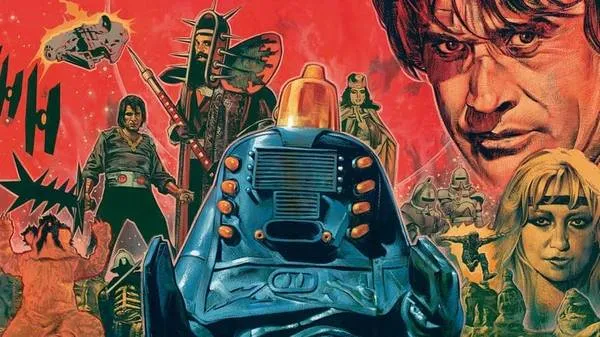
Turksploitation films fall under the category of country-specific subgenres within the exploitation genre. These films can generally be classified as B or Z movies. These films are classified as a subgenre of “mockbusters,” which are rip-offs of so-called “blockbusters.” Like other country-specific exploitation genres, Turksploitation films incorporate exploitation themes alongside motifs specific to Turkey. Turksploitation films held a significant share of the Turkish film market for a short time; they were produced in large numbers and became a major source of revenue for their producers. Films like *Dracula in Istanbul*, among the earliest examples of Turksploitation, initially attempted to stay true to their source material but, over time, began to deviate from the originals, becoming more sensational and evolving into something entirely different in order to reduce production costs.
BM
Bahadır Mahmut
Curator
Related Movements & Themes
69k reads
Kült Türk Filmleri Listesi
221k reads
Kült Filmler Listesi
22k reads
Bağımsız Filmler Listesi
16k reads
B Filmler Listesi
Turksploitation films should be classified as outright rip-offs (going a step beyond mere adaptations; they involve plagiarism and direct copying); they are productions that feature knockoff characters and screenplays—and sometimes even go so far as to include visuals, sound effects, and soundtracks—copied from the originals.
Setting aside the isolated successes of its major productions, Turksploitation films rank among the areas where Turkish cinema has carved out the most significant niche for itself on a global scale.
The Road to Turksploitation
Starting in the late 1940s, as Turkish cinema began to industrialize, and continuing through the 1950s, it began to adopt not only equipment, techniques, and methods but also cinematic elements such as storytelling, screenplays, and acting approaches from abroad—primarily from the United States. This was actually a situation experienced by the film industries of many countries that were striving to establish their own cinematic identities during the same period. In the early days of Turkish cinema, while theater culture still dominated the film industry, many adaptations and works inspired by foreign sources were produced with an effort to remain faithful to the originals. One of the best examples of this was the film *Dracula in Istanbul*.
By the 1960s, however, cinema had severed its ties with theater in many respects and had carved out a much more commercial niche for itself. With a few exceptions, the films produced were melodramas and comedies with a strong commercial focus. Breaking into the industry—and staying in it—was extremely difficult. However, there was a market that was constantly growing due to audience demand, and it was up for grabs. New actors, directors, and producers—who were generally trying to find a place for themselves in cinema for sociological and commercial reasons but were unable to succeed—were searching for a solution. These actors, directors, and producers would create their own closed economies by bringing along the audience base they had cultivated. Their solution was simple: to produce films that, by the standards of the time, contained high levels of sensationalism, violence, and sexuality. While commercially speaking, the ideal was to combine all three elements, the proportions would shift over time depending on the audience. While the issue of violence was addressed by a group of young, eager male actors known as “brawlers,” young women burning with the dream of becoming actresses and finding their place in cinema were ready to fill the role of sexuality. The only thing left was sensationalism. Rip-offs came to the rescue for the sake of sensation.
Positioning Turksploitation Films Within the Context of Exploitation Cinema
A “rip-off” (also known as a “knock-off”) refers to the act of constructing one’s own film—or perhaps just a single scene—by borrowing elements from other films. Rip-off productions select the films they will borrow from among blockbuster films—major productions aimed at box-office success, such as *Titanic* (1997)— (or works that, if made, could be blockbusters) as their sources, and if the resulting new film resembles a B-movie or Z-movie, what we are dealing with is a “mockbuster.” The “mock” in “mockbuster” stands in contrast to blockbuster films, carrying the meaning of “mockery” as much as “fake.” While mockbusters are generally considered a subgenre of exploitation cinema, the specific context in Turkey has created a unique situation for mockbusters produced there.
•
The lack of regulation in the film industry during the 1960s and 1970s,
•
the industry’s shift toward commercial growth,
•
political reasons,
•
The disregard for copyright infringements,
•
The low production costs resulting from copyright infringement,
•
The greed and overconfidence bordering on narcissism among producers and directors,
•
Digital effects that have become partially accessible—for some films—and
•
A sizeable domestic market that has embraced all these attractions
have driven the number of mockbuster films to a level that has given rise to “Turksploitation,” a subgenre unique to Turkey.
Turksploitation films represent a period situated between Turkish cinema’s stagnation in the quagmire of melodrama and comedy and the dissolution of its erotic era, exhibiting fluidity between both. This period is marked by a military coup at both its beginning and end.
The Limits of Exploitation
What distinguishes mockbusters—and, of course, Turksploitation films—from all other genres and subgenres of exploitation cinema is that the object of exploitation is cinema itself. In addition to the narration, depiction, and execution of exploitation, the exploited subject and the exploitative environment are intertwined. For the mockbuster viewer, if they have previously watched the original film (work) from which the mockbuster was ripped off, this situation also takes the form of an exploitation of their own memory. In the case of Turksploitation films specifically, the issue can sometimes go beyond exploitation itself. At times, these films have been marketed as originals in the domestic market. In cases where the original could not enter the Turkish market, while these promotions may seem much more sympathetic, it should not be forgotten that the “thing” at the center is more of a commercial product than a work of art. The interesting aspect is that, unlike in other countries, the audience also becomes a partner in this exploitation. Audiences, particularly in Anatolia, have not shunned these films, leading many of them to become part of film series. As the “erotic era” approached—a trend that continued throughout that period—film producers began shaping their films based on feedback received from theater operators. Ultimately, with producers and consumers sharing the same mindset, “cinema”—which had become increasingly shallow—turned into a self-destructive phenomenon, leading to the chaotic situation from which we still cannot extricate ourselves.
Originals
A common characteristic of the majority of these exploited works is that they originate from the United States. The fact that comic books and films—which, like many others, resonate with the Turkish public—originate from the U.S., along with the high viewership and global recognition these original films achieve in their own region, and the political influences of the era, are critical reasons for targeting the U.S.
Turksploitation films sometimes seek to settle scores with the U.S., sometimes to establish parity, sometimes to demonstrate superiority, and sometimes simply to mock the U.S. The films being parodied are America’s most iconic movies, comic books, and other classics: Superman, Star Wars, Star Trek, Spider-Man, E.T., The Wizard of Oz, and many others. In particular, *The Man Who Saved the World*, which can be considered the best *Star Wars* mockbuster, is a film that showcases the art of rip-off at its highest level and has quickly achieved cult status.
The End of Turksploitation
For the reasons mentioned above, unlike mockbusters from other countries, Turksploitation films feature top-tier actors and directors from the region where they were filmed: Metin Erksan, Eşref Kolçak, Sadri Alışık, Cüneyt Arkın, and Neriman Köksal are just a few of them. As the triangle of audience, theater owner, and producer became increasingly intertwined within the market they themselves had created, elements of sensationalism, violence, and sexuality began to be portrayed more frequently and more explicitly. This continued until VHS and television effectively confined the “female segment” of the movie-going audience—and ultimately couples—to their homes. Movie theaters were left to a crowd of adolescents struggling to navigate—or unable to navigate—their adolescence within a repressive society. The Turksploitation formula had collapsed. This end also marked the beginning of the erotic era—which would be cinema’s final gasp.
Best Of
Selection List
Curator's Order
1. The Deathless Devil (1972) – Yılmaz Atadeniz
Yılmaz Atadeniz’s *The Indomitable Devil* brings the unique, boundless cinematic chaos of 1973 directly to the streets. The moment a young man learns he is actually descended from a superhero, he puts on his mask and sets out to seek justice in the city’s dark streets.
Standing against him is a mustached villain plotting to take over the world. This low-budget action and sci-fi experiment completely defies the rules of conventional logic. Inviting its audience into a strange sense of nostalgia and absurd adventures, the film takes its place on our cinematic table as one of the most unique cult classics in the history of Turkish cinema.
2. Three Giant Men (1973) – Tevfik Fikret Uçak
The streets of Istanbul have been plunged into chaos far beyond ordinary waves of crime. As the police force searches for a way out of this bottomless pit, two unusual figures arriving from beyond the borders become entangled in the city’s fate. This absurd action universe, shaped by Tevfik Fikret Uçak, stands before us as one of the wildest examples of camp aesthetics and the audacity of Turkish cinema.
In this underground world inhabited by masked killers and assassins, iconic heroes are drawn into a fierce battle in a landscape we’ve never seen before. The raw and authentic texture created by the low-budget production transports the audience to the dusty Istanbul of the 1970s. In these streets where rules don’t apply, justice is sought through the fists of unlikely allies.
3. Omer the Tourist in Star Trek (1973) – Hulki Saner
When the sterile corridors of the Atılgan spaceship clash with the absurd humor of Yeşilçam, a whole new universe emerges. In this film directed by Hulki Saner, while science fiction clichés remain firmly in place, the guest transported by the time machine changes everything.
While Captain Kirk and his crew are shaken by a mysterious death on the planet Orin 7, Ömer the Tourist—who has wandered off from his wedding reception—finds himself in the depths of space. Blending comedy and science fiction elements with a unique sense of naturalness, the film brings Yeşilçam’s experimental yet equally innocent sense of humor to the big screen. The infinite silence of space meets an Istanbul-born mixed-race character who speaks in street slang for the very first time.
4. Zorro, the Horseman with the Whip (1969) – Yılmaz Atadeniz
In the Mexican countryside, groaning under Don Alvarez’s tyranny, the people’s only hope is a shadow clad in a black cloak. While the governor searches everywhere for this secret hero, Alberto—the rancher’s delicate son, who has just returned from the city—is, unfortunately, out of touch with the town’s harsh reality. Yılmaz Atadeniz’s camera, as it follows the trail of a masked avenger riding through dusty roads, blends the Western aesthetic of the era with a unique local cinematic language. The dusty atmosphere of that era—filled with courage and disguises—plunges the viewer directly into the heart of a folk legend.
5. Golden Boy (1966) – Memduh Ün, Ray Bowman
Spanning from the crisp air of London’s streets to the dusty, bustling neighborhoods of Istanbul, this adventure offers much more than a classic spy story. Directed by the duo Memduh Ün and Ray Bowman, the film greets viewers with the sound of fists echoing through the city streets and a relentless pace of chase scenes.
As a dangerous man—who adores his white cat—plots to build an atomic bomb, threatening the entire city in the background, our hero is forced to break free from that familiar vacation vibe. Set at the crossroads of East and West, this crime-and-adventure thriller offers a unique viewing experience that blends the cinematic aesthetics of the era with its own local spirit.
6. Örümcek Adam (1966) – Cevat Okçugil
The only thing left of a lost reel is the silhouette of a masked man walking through dark streets. In this crime-and-adventure experiment directed by Cevat Okçugil, the hero—a figure we’re familiar with—steps outside the lines and finds himself right in the middle of criminal networks.
Caught between the sounds of police radios and the shadowy dealings of the underworld, this fragment of science fiction takes its place in cinema’s lost archives. An eerie street story that no one has seen, its traces surviving only on yellowed paper.
7. Killing in Istanbul (1967) – Yılmaz Atadeniz
Istanbul’s dusty and eerie streets tremble under the shadow of Turkish cinema’s most distinctive villain. As Yılmaz Atadeniz moves his camera along the boundaries of the crime and fantasy genres, he ignites the fuse of a dark conspiracy centered on the city. Along the path he takes to seize the secret formula, dungeons reeking of medicine and masked faces await the viewer. Standing before him is that strange threshold where an ordinary man undergoes a transformation through supernatural power. This relentless architect of evil loses his trail with steps that navigate the city like a labyrinth.
8. Bedmen (1973) – Günay Kosova
Directed by Günay Kosova, this 1973 science fiction and comedy experiment transports Gotham’s familiar streets to a completely different universe. In this absurd world where capes are sometimes caught in the wind and other times disappear entirely, the duo spends their moments away from fighting crime in strip clubs. A cat-loving, bald villain and scenes set to James Bond themes point to one of the strangest corners of the era’s local film culture. Leaping off the pages of comic books yet writing its own rules, this night promises the audience a completely different kind of nostalgia.
9. The Return of Superman (1979) – Kunt Tulgar
Supernatural forces emerging from the depths of the sky echo through the back alleys of Yeşilçam, unique to that era. In this extraordinary sci-fi and adventure universe directed by Kunt Tulgar, our hero—endowed with extraordinary abilities—embarks on a relentless battle against underground gangs that are turning the city upside down.
The naive atmosphere created by plastic capes and makeshift special effects brings the bold and absurd spirit unique to Turkish cinema of that era directly to the screen, without the need for any embellishment. Under the yellow glow of street lamps, the concept of justice is rewritten according to its own unique set of rules.
10. Black Lightning (1985) – Çetin İnanç
The void left by his brother’s absence is filled with shadow boxing that echoes through the concrete rooms. As Serdar soothes the pain of the life he lost by pounding the punching bags, he prepares to walk toward the lights of the ring. Directed by Çetin İnanç, this Turkish drama brings to the screen the stubborn struggle of a man trying to rise from his own ashes on the dusty streets of the countryside. It is a story of determination—one that speaks without grand words, reeks of sweat, and draws its strength from reality itself.
11. The Exorcist (1974) – Metin Erksan
Nervous fingers gliding across the Ouija board bring a dark visitor into twelve-year-old Gül’s room. That invisible weight seeping into the walls of the house is neither a childhood nightmare nor a temporary fever. In this horror tableau, where Metin Erksan weaves tension thread by thread behind the camera, we bear witness to the silent loss of innocence.
The psychiatrist struggling to cope with the foreign entity within his daughter and the seasoned exorcist stand on the threshold of an unforgettable test of faith. As prayers and medical interventions intertwine, the room slowly transforms into a somber ritual space.
12. Badi (1983) – Zafer Par
On the dusty, desolate country roads of the ’80s, a silent visitor from outer space sets foot on Earth. Directed by Zafer Par, this film captures the moments when a lost soul longing for home intersects with the innocence of childhood.
Straddling the boundaries of science fiction and family genres, the film centers on a pure friendship formed with an alien being. Far from the clamor of big-budget productions, this encounter—which takes shape amid local streets and quiet corners—immerses the audience in a nostalgic and melancholic atmosphere.
13. The Man Who Saved the World (1982) – Çetin İnanç
A desolate desert planet covered in plaster-and-wire rocks stands before us as the rawest embodiment of a low-budget space opera. Directed by Çetin İnanç, this film offers an absurd adventure shaped by boundless imagination and the limitations of its era. Primitive fights echoing across the desert sands and rough-and-ready special effects point to one of the most distinctive corners of cinema history. Rather than transporting the viewer to another universe, this peculiar experience draws them into its own strange reality, showcasing Yeşilçam’s cheap yet bold aesthetic.
Related Movements & Themes
69k reads
Kült Türk Filmleri Listesi
221k reads
Kült Filmler Listesi
22k reads
Bağımsız Filmler Listesi
16k reads
B Filmler Listesi
Home
Film
Curation
Criticism
Menu