List of Banned Movies
0
Films
0 min.
Read Time
0k
Views
Contents
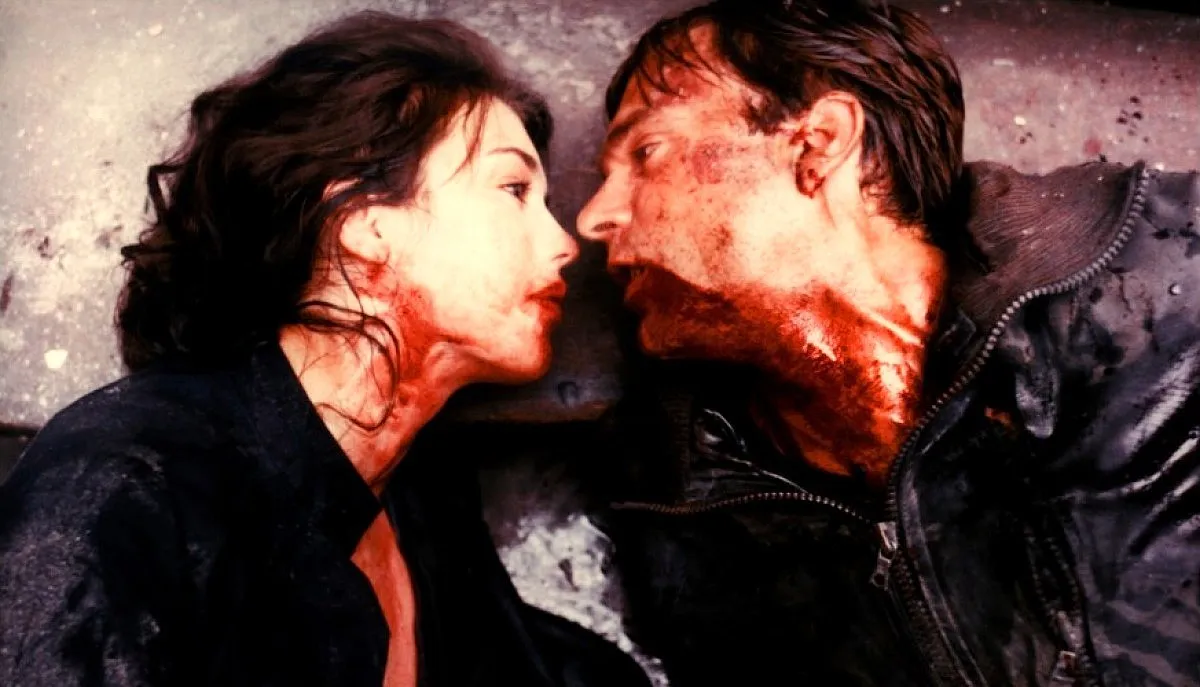
The list of banned films consists of Turkish and foreign films that have been banned from screening by censorship boards in Turkey and many other countries around the world due to their erotic, horror, political, controversial, and disturbing content.
BM
Bahadır Mahmut
Curator
Related Movements & Themes
221k reads
Kült Filmler Listesi
10k reads
Splatter Filmler Listesi
7k reads
Mondo (Shockumentary) Filmler Listesi
1k reads
Korku Gerilim Filmleri Listesi
Banned Movies
Banned films are those whose distribution to audiences has been partially or completely blocked by censorship boards directed by the authorities—sometimes because they violate moral values, and sometimes because they do not align with the authorities’ objectives.
The banning of a film significantly alters many aspects, ranging from the film’s popularity and how it is received by different audience groups to its revenue-expense balance and how its intended message is understood by the audience.
A Brief Historical Overview of Banned Films
There can be various reasons for banning works of art. A work of art may be banned because it violates human rights, animal rights, ethics, or social values. For works of art to resonate with people, they must establish a connection with them. This connection can generally be described as the person’s display of empathy, sympathy, attachment, or even fanaticism toward the artwork. For a work of art to establish this connection, it must touch upon the emotional sensitivities of the art lover. If these points run counter to the prevailing authority of the era or region, mechanisms of censorship and prohibition come into play. Some works do not always seek to connect with the art lover through empathy or sympathy; sometimes they attempt to do so effectively through exploitation and provocation—and are often successful. If these aggressive methods work against the authorities, the film is likely to face bans and censorship.
The history of bans and censorship in cinema is as old as the history of cinema itself. In the United States, bans began with the widespread adoption of films in 1896. Among the first films to be banned was Thomas Edison’s *Kiss* (1896). The film, which consisted of an innocent kissing scene, was deemed obscene for its time. By 1907, the first censorship law was passed in Chicago. In 1909, the National Board of Review of Motion Pictures (NAACP) was established. The NAACP and other organizations protested D.W. Griffith’s film *Birth of a Nation* (1915)—which dealt with the Civil War and Reconstruction—on the grounds that it incited riots in Ohio, Massachusetts, Pennsylvania, and Colorado. *Birth of a Nation* quickly became the most banned film in the United States. Thanks to the efforts of women’s rights groups, human rights organizations, and Christian and Protestant institutions, numerous decisions were made to ban films produced in the United States. With the enactment of the Motion Picture Production Code (Hays Code) in 1930, numerous restrictions came into effect that would lay the foundations for modern cinema. Several key prohibitions outlined in the Hays Code are listed below.
•
Passionate kissing and love-making scenes
•
Depictions of a man and a woman in the same bed
•
Glorifying villains, creating anti-heroes, or including content that elicits sympathy for villains
•
Depicting methods of murder or fraud in an instructional manner
•
Negative criticism of prophets and religions, or the expression of ideas that could be interpreted as criticism
•
Nudity, sexual content
•
Homosexual content
•
Profanity and vulgar language
•
Depictions of drug use
•
Depictions of scenes that could be considered violent or gory
In the early days of cinema, the way authorities banned films was designed to prevent the production of films containing potentially banned content; later, a method of cutting scenes or shots from films was developed. In later periods, the ban evolved into restricting the distribution channels of films that had already been shot. Rather than banning films entirely, censorship bodies adopted a rating system based on predetermined and published criteria, thereby creating the necessary space (though insufficient for some) for films to continue to exist.
Similar censorship laws and boards gradually emerged in all countries where film production was on the rise and cinema was becoming widespread. As cinema globalized in terms of exhibition, box office, festivals, audience demographics, narrative techniques, and so on, censorship methods also became standardized and globalized. Films containing elements of sexuality, eroticism, pornography, violence, and abuse were generally classified as banned in all countries. The status of films containing ethnic, political, military, or sociological content, however, was determined by censorship boards based on the motivations of political authorities. For example, as is often the case in authoritarian regimes, some films containing racism—which should have been banned—were not banned because they served the authorities’ propaganda, while films expressing dissenting views were banned even if they did not pose a moral problem. This situation cast doubt on the legitimacy of many censorship boards, which were supposed to be tasked with safeguarding moral values, the sociological structure, and cultural values. In the 1960s and beyond, critical changes took place, such as increased economic prosperity compared to the past, the spread of liberal views, and technological advancements. These changes, coupled with a decrease in the costs of film production, distribution, and exhibition, led to an increase in the number of films subject to bans. Film producers turned to alternative channels through which they could generate revenue from their films, even if they were banned from the mainstream. VHS, home theater systems, midnight movies, grindhouse theaters, drive-ins, and private screenings were just some of these channels.
All these developments led to the emergence and growth of certain exploitation genres—nearly all of which were classified as banned—as well as an increase in the production and widespread distribution of B movies and a trend toward more daring content in films categorized as art films. As production numbers rose, so did the number and variety of films classified as banned. After the 1970s, censorship boards began to adopt a more flexible approach in their evaluations, in line with the times. Following the first 100 years of cinema, aside from subjective decisions prompted by authorities, a common understanding regarding the scope of censorship emerged among censorship boards, filmmakers, and audiences.
The Characteristic Structure of Banned Films
The "banned films" category is quite broad, much like the "cult films" category. Banned films transcend era, region, movement, genre, content, and style. For this reason, it is possible to find a political film shot in the Middle East alongside a film shot in the Far East that contains gore scenes within the category of banned films. The most significant factor that brings banned films together under the same umbrella is the censorship boards operating under the authority of the banning authorities. These boards act in accordance with the authorities’ desires and concerns, attempting to shape art, the industry, and the audience through artificial interventions. The banning of a film results in the film first being evaluated within the framework of the authorities, the censorship board, and the bans themselves. The status of being banned can overshadow what the film intends to convey, render it invisible, or unduly emphasize its intended message.
Notable Banned Film Directors
•
Tinto Brass
•
Gaspar Noé
•
Sam Raimi
•
Pier Paolo Pasolini
•
Tobe Hooper
•
John Waters
•
Ken Russell
•
Yılmaz Güney
•
Stanley Kubrick
•
Sergei Eisenstein
The Best Banned Movies
Selection List
Curator's Order
1. Titicut Follies (1967) – Frederick Wiseman
Behind the thick walls of the Bridgewater State Prison, time consists solely of the sounds echoing through the concrete corridors. Frederick Wiseman pushes the boundaries of observational cinema to the limit, capturing the ordinary flow of this closed-off world. The routine of the security guards and the helplessness of the inmates merge within the same frame.
The stifling atmosphere of the cells and examination rooms lays bare the institution’s inner workings in their rawest form. Navigating the boundaries between drama and documentary, this film presents the human landscape within without any commentary, leaving it directly to the viewer.
2. The Exorcist (1973) – William Friedkin
Set against the cold streets of Washington, D.C., this William Friedkin classic begins inside an ordinary apartment, caught in a spiral of crisis and disbelief. That first moment when the silence is broken evokes not so much the shifting of objects in the room as the unease of a person’s alienation from their own sense of the sacred.
As a mother’s helplessness echoes within the stark walls of the Roman Catholic Church, the cold breath of the supernatural traps the viewer in those dimly lit corridors as well. The darkness deep within grows with whispers and begins to shake even the sturdiest pillars of faith.
3. The Dreamers (2003) – Bernardo Bertolucci
As street demonstrations and political anger spill onto the streets of Paris in 1968, a different time flows in the darkness of apartment buildings. Bernardo Bertolucci captures that fragile moment of youth and limbo within the atmosphere of a closed room, detached from the uprisings in the outside world.
In this love triangle set in France, a world where boundaries dissolve is created between the cinema-loving twins and Matthew, the foreign student who joins them. As the clamor of the street protests pounds against the windows, the minds and bodies inside slowly begin to write their own radical rules.
4. Trainspotting (1996) – Danny Boyle
Amid the gray concrete of Edinburgh’s streets, a handful of will-less souls struggle to stay awake on the edge of a fix. Danny Boyle brings the raw reality of drug addiction and friendship to the screen through the eyes of antiheroes wandering the fringes of modern society. Spanning from the confines of gray suburbs to the neon lights of London, this dark comedy centers on that toxic cycle from which escape is impossible. Renton and his crew, while trying to escape the clamor of life, find themselves trapped in their own chaos.
5. The Devils (1971) – Ken Russell
The sound of bells ringing through the streets of Loudun in the late sixteenth century opens the gates to a hell where bigotry and passion intertwine. This harrowing period drama by Ken Russell exposes the sordid alliance between faith and politics while plunging the audience into an eerie atmosphere. Desires locked away within the monastery walls poison the fate of a town under the guise of a witch hunt. The screams echoing through the streets and the chaos created by obsessed minds leave the audience in the midst of a dark chapter of history.
6. Possession (1981) – Andrzej Żuławski
In the shadow of a city torn in two, a woman trapped between the cold walls of marriage and a husband crumbling in his pursuit of the truth. Andrzej Żuławski’s camera, set against the destructive atmosphere of the Berlin Wall, observes how an ordinary separation evolves into a grotesque nightmare.
One of the most jarring examples of the horror genre, this film transforms a pursuit that begins with suspicion of infidelity into a fit of hysteria that teeters on the edge of sanity, step by step. The psychological breakdown unfolding behind closed doors is sealed by a dark obsession that spreads to the streets and into the human body.
7. Salò, or the 120 Days of Sodom (1976) – Pier Paolo Pasolini
In the final days of World War II, fascism’s thirst for absolute power remains locked away in a quiet corner of Italy. As Pier Paolo Pasolini brings the Marquis de Sade’s perverse text to the screen, he traps the audience in a dark mental siege. The domination that power intoxication and sadism exert over human flesh creates a suffocating heaviness that seeps from the screen. On the fringes of political decay and depravity, humanity’s most primal instincts are disregarded.
One of the harshest examples of the horror and drama genres, this film stands in one of the most unsettling corners of cinematic history due to its banned past. This enclosed space, controlled by four depraved libertines, lays bare the absolute destruction that authority inflicts upon the individual. Pasolini’s uncompromising philosophy leaves the viewer face to face with a sense of unease that cannot be easily digested.
8. Häxan (1922) – Benjamin Christensen
That strange scent of incense rising from the dark recesses of the Middle Ages comes to life through Benjamin Christensen’s camera at the eerie intersection of history and fear. Under the guise of witchcraft and sorcery, we witness how mental anguish, repressed urges, and social paranoia are intertwined.
Woven with the possibilities of silent cinema, these black-and-white scenes lay bare an obsessive witch hunt stretching from the Inquisition’s interrogation tables to the monasteries. This folkloric nightmare, which illustrates how superstitions enslave the human mind, invites us on an unsettling journey through history’s strangest pages.
9. Law of the Border (1966) – Lütfi Akad
In the dusty villages along Urfa’s border with Syria, the wind always blows with the same intensity. *The Law of the Border*, directed by Lütfi Akad, slowly explores how the landscape corners its people. Hıdır, who lives in the shadow of the landowner, wants to break free from this cycle of crime. But poverty and the feudal system push him down a different path.
Smuggling along the border is not just a matter of making a living—it is a matter of survival. Herds smuggled across the border in the darkness of night and the sound of gunfire are like the unchanging fate of this landscape. The burden on Hıdır’s shoulders is not merely about herding the flock; it is a silent act of resistance against the harsh rules of these lands.
10. On Fertile Lands (1980) – Erden Kıral
Leaving the village’s dusty roads behind and stepping into the scorching heat of Çukurova, the three friends are not yet aware of the grueling labor that awaits them in the valley of white gold. This striking drama, captured through Erden Kıral’s lens, lays bare the exploitative system in which the land swallows up its people.
Their saddlebags, once brimming with hope, slowly dwindle amid the endless hours and grueling labor in the cotton fields. Amid class inequality and destitution, the workers’ struggle for survival draws the viewer into a relentless tragedy.
11. Emmanuelle (1974) – Just Jaeckin
Bangkok’s stifling humidity and the insular routine of French diplomatic circles mark a whole new threshold for Emmanuelle. Set against the tropical backdrop of the Far East, this drama sets aside the familiar routines of marriage to create a space of discovery that redraws the boundaries of desire. Just Jaeckin’s camera meticulously tracks the character’s inner transformation, beginning with the plane ride. The freedom brought by an open marriage takes on a new dimension in the streets of Bangkok and in hotel rooms. As the character redefines her own body and sexuality, the exotic landscape around her becomes a silent witness to this transformation. Going beyond romantic expectations, this journey traces the path of repressed emotions and physical awakening, inviting the viewer into the same warm and suffocating atmosphere.
12. A Serbian Film (2010) – Srđan Spasojević
When a retired porn star accepts one last offer that will provide financial relief for her family, her ordinary life is suddenly shattered. This dark crime-horror experiment by Srđan Spasojević opens the door to a nightmare that pushes the boundaries of sanity in the gloomy streets of Serbia. As Milos struggles to preserve his sanity amid a spiral of depravity and violence staged under the guise of art, the savagery behind the camera lens deepens with every passing second. Unshy about unsettling the audience, this thriller lays bare the unchecked darkness at the very extremes of cinema.
13. Irreversible (2002) – Gaspar Noé
In the dark tunnels of Paris, time flows backward. This harrowing drama and thriller, directed by Gaspar Noé, invites the audience on a reverse journey beyond the moment it begins—back to the roots of the catastrophe. Footsteps echoing in the faint glow of streetlights trace the path of an irrevocable night. A relentless film that blends nihilistic rage with a blind thirst for revenge, it traps the viewer in a mental dead end. This journey against the flow of time continues to echo through the city’s underground nightmare.
14. Caligula (1979) – Tinto Brass
The Roman Empire, inherited from the shadow of Tiberius, begins to rot from within, along with the absolute power that comes with rule. As Tinto Brass opens the doors to the passion and unimaginable madness echoing through the corridors of ancient Rome’s palaces, he maps out the mind of one of history’s most controversial figures.
The toxic family ties and political corruption forged behind closed doors turn into time bombs that undermine the very foundations of the palace. Spanning from the shores of Capri to the heart of Rome, this historical drama lays bare—without holding anything back—the moral collapse unfolding behind the magnificent facades.
15. Faces of Gore (1999) – Todd Tjersland
Navigating through police reports and emergency dispatch archives, this documentary brings to the screen the darkest realities that reveal the fragility of the human body. Directed by Todd Tjersland, the film presents a disturbing compilation centered on themes of violence and death.
Guided by Dr. Vincent Van Gore, this secret archive is entirely free of fiction. This dark world, which pushes the boundaries, creates a harsh and uncompromising atmosphere that catches the viewer off guard.
16. Faces of Death (1978) – John Alan Schwartz
We oscillate between the fading television images on the screen and the dark moments captured by amateur Super 8 cameras. This work by John Alan Schwartz presents an unsettling archive that documents the idea of death and the end of human life.
In this jarring “video nasty,” where reality and fiction blur, the viewer is left face-to-face with the cold reality of violence and autopsy tables. For those who wish to confront the taboo in the darkness of the movie theater.
17. Dry Summer (1963) – Metin Erksan
In the arid soil under the scorching heat, water is the very essence of both life and death. This dark drama by Metin Erksan is consumed by the greed of a selfish farmer who alters the flow of water in the Aegean countryside. The tension among landowners turns into a poisonous vine at the point where the bond of brotherhood intersects with the struggle over property.
The gloomy atmosphere that descends upon the village deepens as the most basic source of life is transformed into a tool of domination. The fierce clash between conscience and greed lays bare the human mind darkened by the summer sun. No one will emerge from this relentless struggle unscathed.
18. Island of Lost Souls (1932) – Erle C. Kenton
In the middle of the southern seas, on a desolate shore battered by waves, human will knows no bounds. An unlucky sailor who survived a shipwreck finds himself on an isolated patch of land where the laws of nature have long since been abandoned. In this dark sci-fi and horror atmosphere created by Erle C. Kenton, sounds rising from the mad doctor’s laboratory—the island’s ruler—pierce the silence of the night. In this landscape where genetic experiments have blurred the lines between human and animal, the helplessness of being trapped is felt in every cell. As the shadows of human-animal hybrids lurk around every corner, the price of playing God is paid dearly by the inhabitants of this strange island.
19. Pink Flamingos (1972) – John Waters
In a dilapidated trailer park on the outskirts of Baltimore, a provocation knows no bounds. This comedy-crime hybrid from John Waters defies all the conventions of popular culture to write its own rules. Divine, the queen of the underworld, faces off against a corrupt couple determined to dethrone her. This absurd clash—which transforms the concept of filth into an aesthetic act of resistance—shatters traditional family values and social norms piece by piece. With every frame functioning like a non-conformist installation, the film completely uproots the viewer from their comfort zone. When the squalor of trailer parks collides with obsessive competition, the result is a scene of utter chaos.
20. The Great Dictator (1940) – Charlie Chaplin
The sound of scissors echoing through the narrow streets of the Tomanian ghetto is lost amid the gears of a vast world on the brink of collapse. In this life cast under the shadow of war and fascism, the fates of an ordinary barber and a dictator sworn to conquer the world intersect through an incredible coincidence. In this comedy-war film, where Charlie Chaplin brings humor and war together on the same set, he brings to the screen how the machinery of propaganda and social paranoia grinds humanity down. Every gesture that emerges from the black-and-white imagery is part of both an absurd sensibility and a sharp satire that raises its voice against authority. The barber’s reflection in the mirror, caught in the midst of the chaos, whispers just how close power and wretchedness really are.
21. Cannibal Holocaust (1980) – Ruggero Deodato
The tin cans left behind by a documentary crew that vanished in the humid and eerie depths of the Amazon rainforest bring to light the dark side of humanity, which claims to be civilized. Directed by Ruggero Deodato, this horror film goes beyond a mere rescue mission, plunging the viewer into the heart of the swamp and savage rituals. This found-footage film, which shows how boundaries dissolve while the camera is rolling, leaves the viewer alone in an eerie landscape where civilization clashes with the primitive.
22. The Bus (1974) – Tunç Okan
On a gray and cold morning in Stockholm, a group of people finds itself stranded in the middle of a foreign city. Directed by Tunç Okan, this film brings to the screen the helplessness of migrants in a foreign land after their passports and all their money have been stolen.
Time passing within the bus’s metal walls clashes with the harsh reality of the modern world outside. Blending elements of drama and crime, the film focuses on the characters’ struggle for survival and their sense of alienation as they find themselves trapped in a confined space.
23. Battleship Potemkin (1925) – Sergei Eisenstein
The maggots on the rotten meat are the first spark of the uprising that erupted in the port of Odessa. Directed by Sergei Eisenstein, this silent film portrays the grassroots anger against the injustices of Tsarist Russia through the eyes of the crew aboard the battleship Potemkin. It is not merely a historical drama, but a revolutionary manifesto woven with the rhythm of its editing.
The sound of boots echoing on the stairs and the crowd spiraling out of control lay bare the mechanical coldness of violence. That moment, which altered the course of history, merges with the narrative power of cinema to leave an indelible mark on the silver screen.
24. A Clockwork Orange (1971) – Stanley Kubrick
In the gothic and decaying streets of London, the world of Alex DeLarge—who spreads terror alongside his gang—is enveloped by Beethoven’s symphonies and the sounds of Beethoven’s music. In this science-fiction nightmare by Stanley Kubrick, woven with dystopian and dark humor, extreme violence becomes the sole law of the street.
The state’s brutal methods, which eliminate individual will in the name of maintaining public order, drive the concepts of crime and punishment into a dark impasse. Unfolding with mischievous mockery against the backdrop of Britain’s gloomy atmosphere, this system paints the harshest portrait of a decaying society and authority.
25. Freaks (1932) – Tod Browning
In that dim world behind the tent, the oppressive stares of those wandering through the circus tent with a spiritual arrogance reign supreme. In this dark drama and horror narrative, Tod Browning leaves the audience face to face with the truest face of freak shows. The trapeze artist’s dazzling allure fuels the illusion of a dangerous romance unfolding in the midst of the crowd. Love and betrayal grow side by side under the same roof, in the whispers behind the scenes. While the circus regulars take refuge in their bonds with one another, the hypocrisy of the outside world slowly comes to the surface. Under the circus tent’s fading lights, the true identity of the monsters begins to emerge.
26. The Texas Chain Saw Massacre (1974) – Tobe Hooper
As the stifling Texas heat gives way to an increasingly oppressive odor and tension inside the minivan, the paths of five young people cross at a secluded gas station. What began as a summer vacation turns into a nightmare when the short trip loses its way in the abandoned and rusted-out countryside.
Directed by Tobe Hooper, this horror film unfolds amid a mind-bending family bond and a perversion fueled by grave robbing. As the violence behind the leather masks shatters the silence with the sharp sound of a chainsaw, the threat lurking around every corner draws the viewer into a trap from which there is no escape.
27. The Evil Dead (1982) – Sam Raimi
That dilapidated wooden cabin in the middle of the forest quickly turns five teenagers’ weekend getaway into an eerie nightmare. Directed by Sam Raimi, this horror classic begins with an old audio tape emerging from the basement and a cursed Sumerian book. The gloom seeping into the walls is a harbinger of a dark force that slowly takes hold of the young people’s minds. In this dilapidated place, cut off from the outside world, even nature turns its back on them. Every corner is filled with an ancient threat waiting to awaken in the darkness of the night.
28. Day of the Woman (1978) – Meir Zarchi
Far from the city, the silence of a desolate cabin serves as a refuge for a young woman trying to write. This isolated setting deep in the forest soon turns into a suffocating nightmare marked by the violence of local thugs.
Directed by Meir Zarchi, this independent horror film centers on a struggle for survival and a meticulously planned act of revenge. Jennifer has been left for dead after the brutal attack she endured, but she is determined to counter the devastation she has suffered with the resolve of a cold-blooded hunter.
The narrative, in which a systematic hunt is set in motion step by step, draws the viewer into the character’s mental transformation. This dark, irreversible reckoning is a silent yet brutal settling of scores in the heart of nature.
29. Straw Dogs (1971) – Sam Peckinpah
The peaceful, green landscape of rural Cornwall is slowly poisoned by the gaze of the locals, who put up a wall against outsiders. David, an American academic, and his British wife, Amy, shut themselves away in their home, hoping to build a quiet life in this isolated town. However, in this spiral of suspense and drama directed by Sam Peckinpah, the townspeople’s humiliating harassment escalates exponentially.
Over time, in this rural landscape where boundaries are pushed to the limit, the darkest and most primitive corners of human nature begin to surface. As David’s passive demeanor nears a breaking point under the pressures he faces, the villagers’ brute force transforms into a suffocating atmosphere that descends upon the town.
Related Movements & Themes
221k reads
Kült Filmler Listesi
10k reads
Splatter Filmler Listesi
7k reads
Mondo (Shockumentary) Filmler Listesi
1k reads
Korku Gerilim Filmleri Listesi
Home
Film
Curation
Criticism
Menu